TechMahaImpacT 2026: How CSR-Funded Government Digital Pilots Survive Officer Transfers (Maharashtra Playbook)
Quick Answer
TechMahaImpacT 2026 concluded on 20 May 2026 in Mumbai with 24 organisations committing nearly ₹155.75 crore in CSR towards digital governance initiatives across Maharashtra. Themes included AI in governance, digital public infrastructure, healthcare, education, district transformation, cybersecurity, and inclusive development. The applause is well earned. The uncomfortable question that was not asked on stage: how many of these CSR-funded pilots will still be running after the next two officer transfers? Most won't, because CSR-funded government digital pilots typically die between Year 2 and Year 3, when the officer who championed the work transfers out and the incoming officer has no context, no SOPs, no audit trail, and no vendor continuity. The fix is architectural and contractual — six patterns: a UX4G-grade UX baseline, SOPs embedded inside the platform, a leadership dashboard designed as a handover tool, on-site delivery that lasts through adoption, audit-traceable workflows, and contractual continuity clauses baked into the original CSR-funded procurement. Departments that lock these patterns can survive 3-4 officer transitions without losing momentum and remain CM-defensible at every milestone.
What Was Committed at TechMahaImpacT 2026
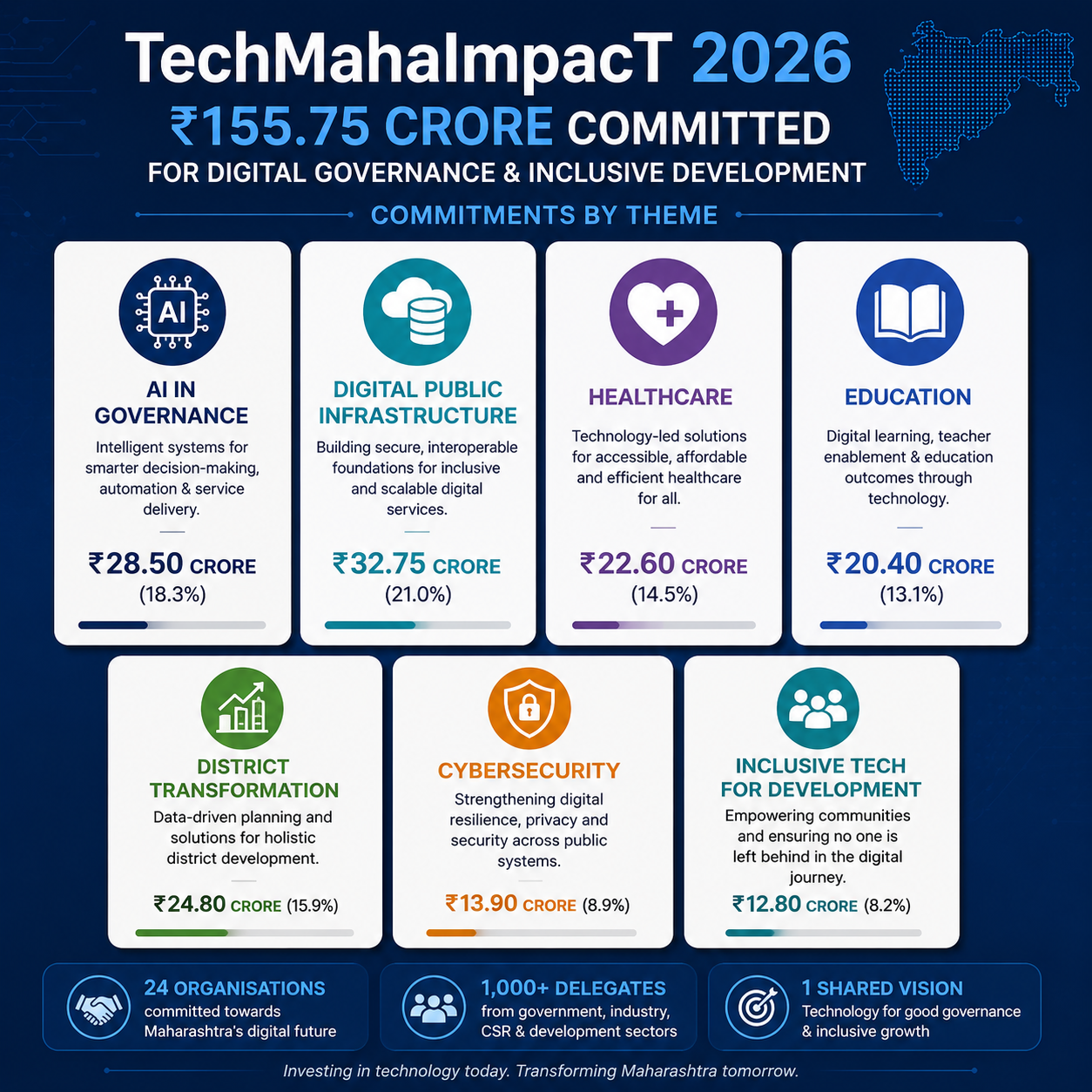
The 20 May 2026 conclave brought more than 1,000 delegates to Mumbai — senior government leaders, policymakers, technology experts, CSR heads, industry stakeholders, and development organisations. The headline number: 24 organisations committed nearly ₹155.75 crore in CSR towards digital governance and inclusive-development initiatives across Maharashtra.
The themes are the right ones: AI in governance, digital public infrastructure, healthcare, education, district transformation, cybersecurity, and inclusive development through technology-based CSR collaboration.
If the commitments translate into running platforms in 2028 and 2030, this is the kind of compounding investment that moves a state. If they translate into MoU photos, post-launch fanfare, and quiet stalls by Year 2, it is just another budget cycle.
The difference is not the money. The difference is the delivery architecture.
The CSR-Funded Pilot Problem Nobody Talked About on Stage
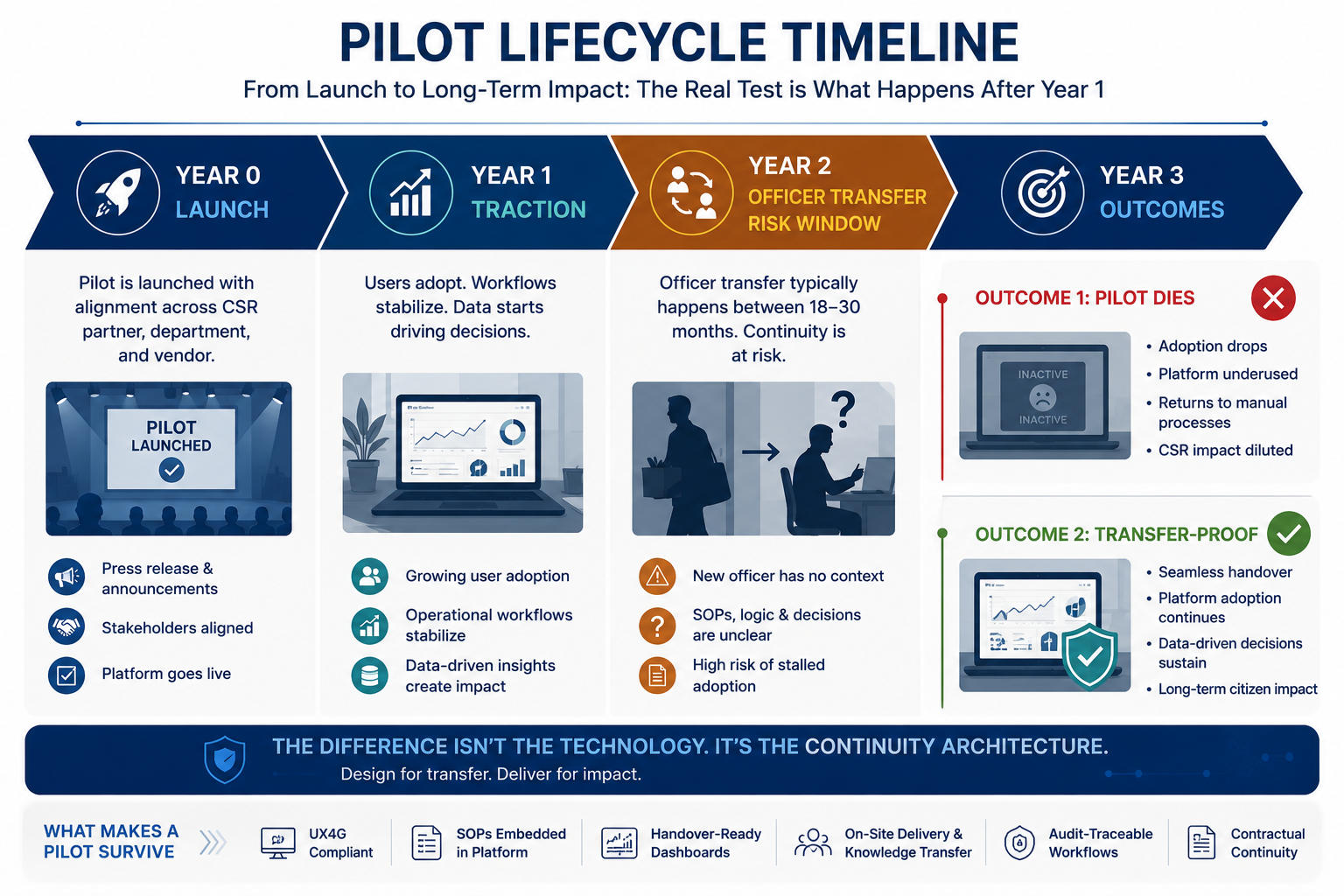
Across 10-15 connected projects we've delivered for a Mumbai government housing authority over the past several years, and observed across other Maharashtra state authorities, there is one consistent failure pattern for CSR-funded government digital pilots:
They launch beautifully. The CSR head, the IT Officer, the HoD, and the funding corporate are aligned. Press release goes out. The CM or the Minister speaks at the launch. The platform goes live.
Between Month 12 and Month 24, the IT Officer transfers. Sometimes the HoD too.
The new officer arrives. They have no shared context, no documented workflows, no idea which CSR partner committed which scope, no view into which dashboards mean what, no understanding of the vendor relationship.
Within 90-180 days of the transfer, one of three things happens:
- The platform quietly stalls. Staff revert to paper or to the previous system. The vendor goes quiet.
- The new officer commissions a fresh consultant to "audit" the existing platform. The audit takes 6 months. By the time it lands, the original CSR cycle has closed.
- The platform survives but loses adoption — the dashboard becomes a reporting facade, not an operational tool.
None of this shows up at the next CSR review. The commitment letter has been honoured. The platform exists. The Annual Report ticks a box. But the actual citizen impact has hollowed out.
This is the version of the continuity trap that should worry every CSR head who signed at TechMahaImpacT.
Why CSR-Funded Pilots Die Between Year 2 and Year 3
Five structural reasons:
- The procurement was scoped for Year 1, not Year 5. Most CSR-funded RFPs ask for a platform, training, and a 12-month support window. Officer transfers happen on a 2-4 year cadence. The contract ends before the first transfer happens.
- The vendor relationship is personal, not institutional. The CSR head trusts the vendor's CEO. The IT Officer trusts the vendor's delivery lead. When the IT Officer transfers, the trust does not.
- SOPs live in Word documents on shared drives. They are not embedded in the platform. The new officer has no way to discover them quickly.
- The dashboard was designed for the launching officer's mental model. It assumes context the new officer does not have.
- Audit trails are spotty. The new officer cannot reconstruct why decisions were made, which means they default to caution — which means the pilot stalls.
None of these are technology problems. They are architectural and contractual problems. Which means they can be designed out from the start.
The 6 Patterns That Make a CSR-Funded Government Project Transfer-Proof
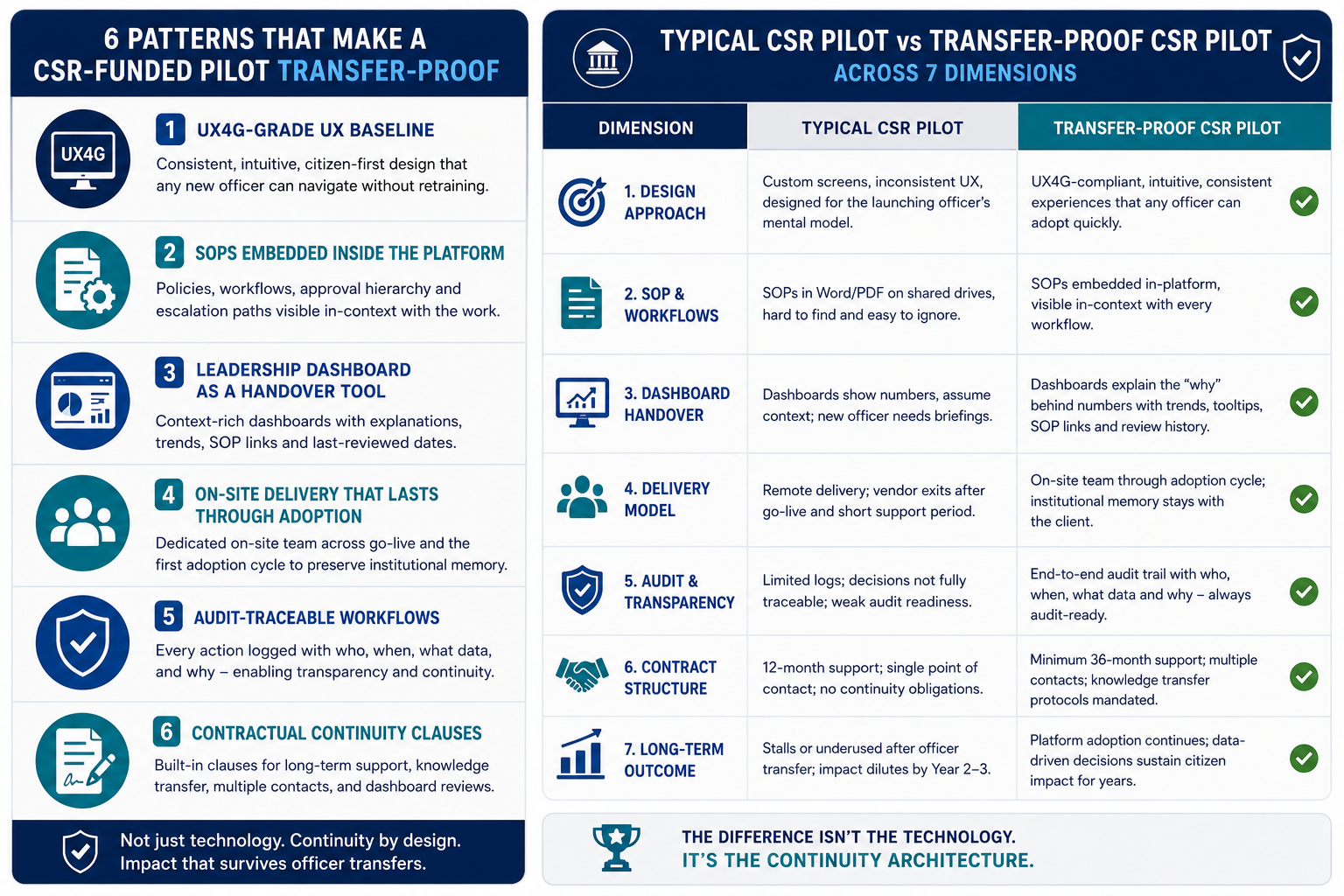
Pattern 1: A UX4G-Grade UX Baseline
UX4G is the Government of India's UX framework for citizen-facing digital services. A CSR-funded pilot that adopts UX4G as the baseline will produce screens, flows, and interactions that any new officer can pick up without retraining. UX4G compliance is also a procurement-defensible signal at every leadership review.
We used UX4G as the design baseline on a CM-recognised citizen-services website built for a Maharashtra state authority. The site has survived multiple officer transitions and continues to receive positive citizen feedback.
Pattern 2: SOPs Embedded Inside the Platform
Every workflow includes its SOP inline — the policy, the approval authority, the escalation path — visible in the same screen as the work. New officers see the rule alongside the action.
This single pattern eliminates 60-70% of the post-transfer context loss.
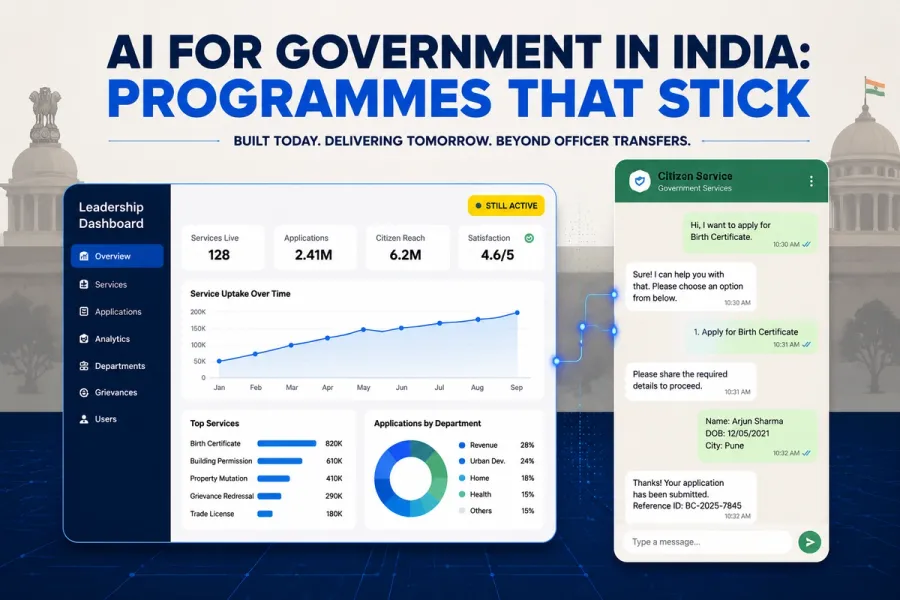
Pattern 3: Leadership Dashboard as a Handover Tool
The dashboard should not just report metrics. It should narrate them. Every tile includes a tooltip explaining what the number measures, the historical trend, the SOP that drives it, and the date the threshold was last reviewed.
When the new officer opens the dashboard on Day 1, they can read the department's state without a briefing meeting.
Pattern 4: On-Site Delivery That Lasts Through Adoption
The vendor stations 2 delivery staff at the client site through go-live and across the first adoption cycle (typically 3-6 months minimum, longer for multi-location authorities). When the IT Officer changes, those staff are the institutional memory. They brief the new officer on what was built, what is pending, and where the risks sit.
This pattern is what's allowed our engagements at a Mumbai government housing authority to survive multiple IT Officer changes over the past several years without losing momentum.
Pattern 5: Audit-Traceable Workflows
Every approval logs the approver, the timestamp, the data on which the decision was made, and a free-text reasoning field. The new officer can audit-trail backward through 12-24 months of decisions and understand the rationale before changing course.
This pattern also discharges DISHA and ABDM-style audit expectations as a side effect.
Pattern 6: Contractual Continuity Clauses in the Original Procurement
This is where most CSR-funded pilots fail before they begin. The contract should require:
- A minimum 36-month delivery and support window (covering one likely officer transfer)
- A documented institutional knowledge transfer protocol — vendor obligated to brief any incoming officer within 2 weeks of transfer
- Multiple named delivery contacts on the vendor side, not a single point of failure
- A dashboard handover specification with quarterly UX reviews to keep it relevant
- An audit log retention SLA aligned with state archival requirements
A CSR head reading the next procurement document can add these clauses in a single review pass. Doing so changes the survival odds of the funded pilot more than any technology choice that follows.
Anonymised Reference — What Transfer-Proof Looks Like in Production
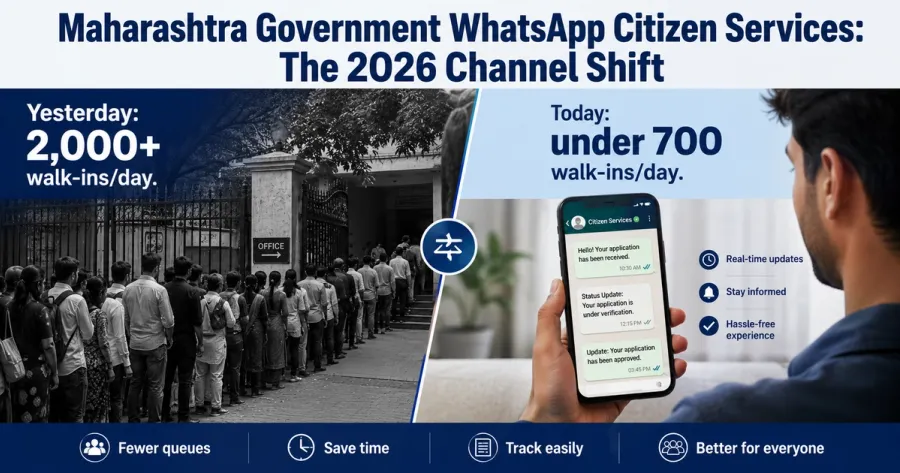
A Mumbai government housing authority commissioned 10-15 connected digital projects with us between 2019 and 2026. The portfolio includes a CM-recognised citizen-services website built to UX4G standards, a visitor management platform that reduced daily footfall from over 2,000 to under 700, and 10-15 connected operational modules across departments.
During that period:
- The IT Officer changed twice
- The HoD changed once
- The departmental Commissioner changed once
- The CM-level leadership changed twice
At every transition, the platforms remained operational. The on-site Accucia team briefed the incoming officers within 2 weeks. The dashboards stayed live. The vendor relationship held — because it was contractually institutional, not personally dependent.
This is what ₹155.75 crore could look like across Maharashtra in 2030. It does not happen automatically. It is architected.
What CSR Heads, IT Officers, and HoDs Should Put Into the Next Pilot Procurement
For anyone scoping a CSR-funded government digital pilot in Maharashtra in the next 90 days:
- Specify UX4G compliance as a baseline, not a nice-to-have.
- Require SOPs to be embedded inside the delivered platform, not delivered as a Word document annex.
- Mandate a 36-month minimum support and delivery window in the CSR contract — not 12 months.
- Require on-site delivery presence through the first adoption cycle, with named staff and escalation paths.
- Specify the dashboard handover tooling — tooltips, historical trends, SOP cross-links — in the RFP.
- Specify audit-trail retention and reasoning capture at the workflow level.
- Build the 'new officer onboarding' screen into the platform spec from Day 1.
These seven specifications turn an MoU into a sustained pilot. Without them, the CSR cheque clears, the press release goes out, and the platform quietly dies between Year 2 and Year 3.
FAQ: CSR-Funded Government Digital Continuity
Why do most CSR-funded government digital pilots in India fail by Year 3?
The procurement is scoped for Year 1, the vendor relationship is personal rather than institutional, SOPs live outside the platform, and the dashboard is designed for the launching officer's mental model. When the championing IT Officer transfers — typically between Month 18 and Month 30 — the new officer has no on-ramp to the existing system and the pilot quietly stalls.
Does UX4G compliance help with officer-transfer survival?
Yes — directly. UX4G enforces consistency across citizen-facing flows so any new officer can navigate the system without retraining. It is also a CM-defensible standard at every leadership review, which protects the pilot during transitions.
What clauses should a CSR-funded government IT procurement include to maximise continuity?
At minimum: a 36-month support window covering at least one likely officer transfer, a written institutional knowledge transfer protocol, multiple named delivery contacts, embedded SOPs, audit-traceable workflows, and a quarterly dashboard relevance review.
How long does it take a new CSR-funded pilot to become transfer-proof?
If the patterns are baked in from Day 1 (UX4G, embedded SOPs, dashboard handover tooling, on-site delivery, audit trails, contract clauses), the pilot is transfer-proof from go-live. Retrofitting an existing pilot typically takes 4-6 months of focused continuity work.
Does this approach scale beyond Maharashtra to other Indian states and the central government?
Yes. The patterns are governance-agnostic and apply to any Indian department where officer transfers happen on a regular cadence. We have applied variations of this approach to municipal bodies, regional development authorities, and statewide service departments.
What To Do Next
For CSR heads, IT Officers, HoDs, and corporate philanthropy leads funding government digital work in Maharashtra:
- Audit the procurement template you used at TechMahaImpacT — does it include the 7 specifications above?
- If not, add them before the contract is signed. The marginal cost is zero. The survival benefit is everything.
- Insist on UX4G compliance, embedded SOPs, and on-site delivery in writing.
- DM 'CSR-CONTINUITY' on LinkedIn for our 1-page procurement clause checklist used on CM-recognised Maharashtra deployments.
Build Pilots That Survive Leadership Change.