Intelligent Process Automation

Automate the repetitive work — and the reporting on top of it.

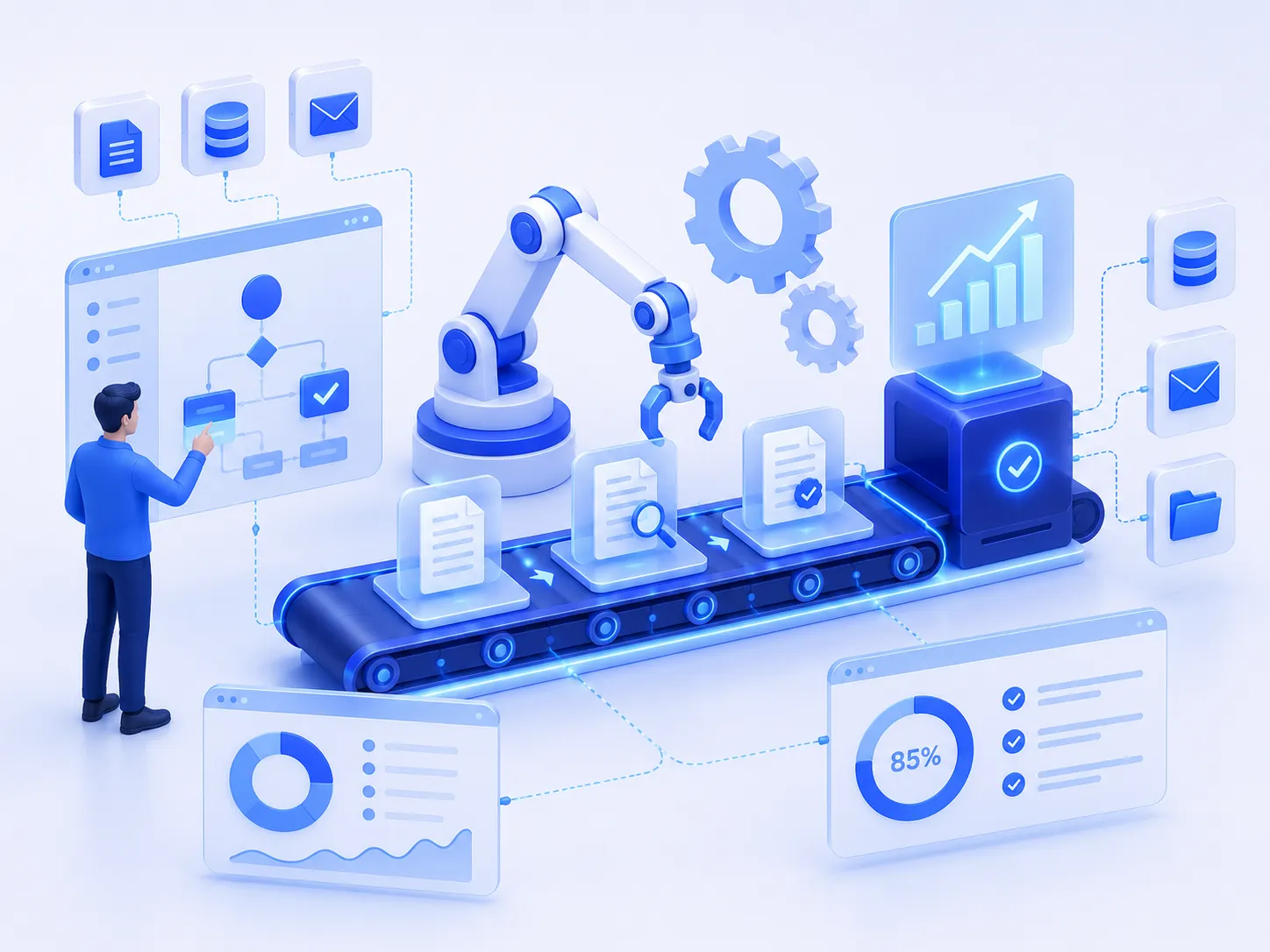
Intelligent Process Automation (IPA) combines Robotic Process Automation (RPA) with AI so software can handle not just rules-based tasks but also judgement, unstructured data and exceptions. Classic RPA clicks through fixed steps; IPA reads documents, understands context, makes decisions within policy, and generates the reporting on top — automating whole processes, not just keystrokes.

Intelligent Process Automation services by Accucia Softwares — Pune, India
730+
Projects Delivered
500+
Clients Worldwide
15+
Years Engineering
25+
Industry Verticals
Overview

What is Intelligent Process Automation?

Intelligent Process Automation (IPA) combines Robotic Process Automation (RPA) with AI so software can handle not just rules-based tasks but also judgement, unstructured data and exceptions.

Classic RPA clicks through fixed steps; IPA reads documents, understands context, makes decisions within policy, and generates the reporting on top — automating whole processes, not just keystrokes.

Key areas

Rules-based RPA

Cognitive / document automation

Decision automation with AI

Reporting automation

Why it matters now

Most teams still do work software should do — manual data entry, attendance and HR admin, approval chasing, and rebuilding the same reports every week. These quietly drain hours and introduce errors. IPA removes the repetitive layer and frees people for work that needs them, with accuracy that manual processing can't match.

What We Build

Six intelligent automation capabilities — from workflow automation to AI-generated reporting

Workflow Automation (RPA + AI)

RPA combined with AI handling repetitive processes end to end — not just keystrokes, but judgement, unstructured data and exceptions too.

Document & Data Processing

Extract, classify and route information automatically from forms, invoices, IDs and other unstructured inputs — with accuracy that manual processing can't match.

AI Attendance Management

Automated attendance capture with AI-driven exception handling — eliminating manual admin and ensuring accurate records without staff intervention.

HRMS Automation

AI-driven HR workflows — onboarding, leave, performance — with fully automated AI-generated reporting so HR teams focus on people, not paperwork.

Automated AI Reporting & Dashboards

Reports that build and explain themselves on schedule — generated, formatted and narrated by AI so management gets the insight without anyone assembling it manually.

System-to-System Integration

Automations that run across your existing tools via APIs and integrations — no new software required, no replacement of systems already working.

Types of Automation

01

Rules-based RPA

For high-volume, structured tasks.

02

Cognitive / document automation

For unstructured inputs — forms, invoices, IDs.

03

Decision automation with AI

Within defined policy boundaries.

04

Reporting automation

Scheduled, AI-generated and explained.

05

Human-in-the-loop

For exceptions and approvals.

Where Intelligent Automation Is Used

By function

HR & attendance Finance — invoices, reconciliation Operations & supply chain Compliance reporting Customer onboarding Data migration & entry

By industry

  • Manufacturing
  • Logistics
  • Finance & banking
  • Healthcare admin
  • Government
  • Retail back-office

Automation Technology Stack

RPA tooling + custom workflow engines · Document AI / OCR · Python & Node.js · AI-generated reporting & dashboards

Our Automation Process

From process discovery through on-site adoption — six stages to measurable hours saved

1

Process Discovery

Find the highest-volume, most repetitive workflow in your business — the one that drains the most hours and introduces the most errors when done manually.

2

Feasibility & Design

Define what to automate, where AI judgement is needed, where humans stay in the loop for exceptions and approvals, and what the success metric looks like.

3

Build & Integrate

Build the automation across your existing systems via APIs and integrations — no replacement of tools, no data migration.

4

Test & Validate

Test for accuracy, edge cases and exceptions — validate that the automation handles real-world messiness, not just the clean-path scenario.

5

Deploy with Monitoring

Production rollout with monitoring, audit logs, exception queues and automated reporting — so you have full visibility and nothing is silently mishandled.

6

Embed On-Site & Measure Adoption

We stay until your team is actually using the automation and trusting the output — tracking utilisation and hours saved until targets are met.

Why Accucia for Intelligent Automation?

End-to-end: process automation and reporting — already in production

End-to-End: Process + Reporting

We automate the process and the reporting on top of it. AI-generated reports and dashboards are built in — not a bolt-on.

Integration-First

Automations run across your current tools, no replacement needed. We use your existing systems' APIs to build the automation layer on top.

Real Deployments

AI-based Attendance Management system and AI-driven HRMS with automated reporting already shipped and in production use.

Adoption-First

We stay on-site after go-live and track utilisation. An automation your team doesn't trust or use isn't done — we iterate until adoption targets are met.

Human-in-the-Loop Built In

Exceptions route to human review queues — nothing is silently mishandled. Sensitive steps keep human approval throughout the workflow.

Fast Time-to-First-Automation

A first automation on a defined process typically ships in 3–8 weeks — fast enough to demonstrate hours saved before rolling out further.

Shipped in Production

AI-based Attendance Management system

Automated attendance capture with AI-driven exception handling — in production use.

AI-driven HRMS with automated reporting

HR workflows with fully automated, AI-generated reporting — in production use.

Engagement Models

Fixed-Price for a Defined Process

A scoped automation delivered at a fixed price.

Time & Materials

Flexible engagement for multi-process automation rollouts.

Dedicated Team

An embedded team for enterprise-wide automation programmes.

A first automation ships in 3–8 weeks

Frequently Asked Questions

Everything you need to know about intelligent process automation

RPA follows fixed rules; intelligent automation adds AI so the system can handle judgement, unstructured data and exceptions.

Usually the highest-volume, most repetitive workflow — we identify it in discovery and start there.

Yes — we automate across your current tools via APIs and integrations.

Yes — reports are generated, formatted and explained by AI on a schedule.

They route to a human-in-the-loop queue for review, so nothing is silently mishandled.

With document AI plus validation and audit logging, accuracy typically exceeds manual processing; sensitive steps keep human approval.

A first automation typically ships in 3–8 weeks.

Name Your Most Repetitive Task — We'll Show You the Automation

Book a discovery call. Bring the workflow that costs your team the most hours every week and we'll show you what's automatable and how fast.

Chat With Us