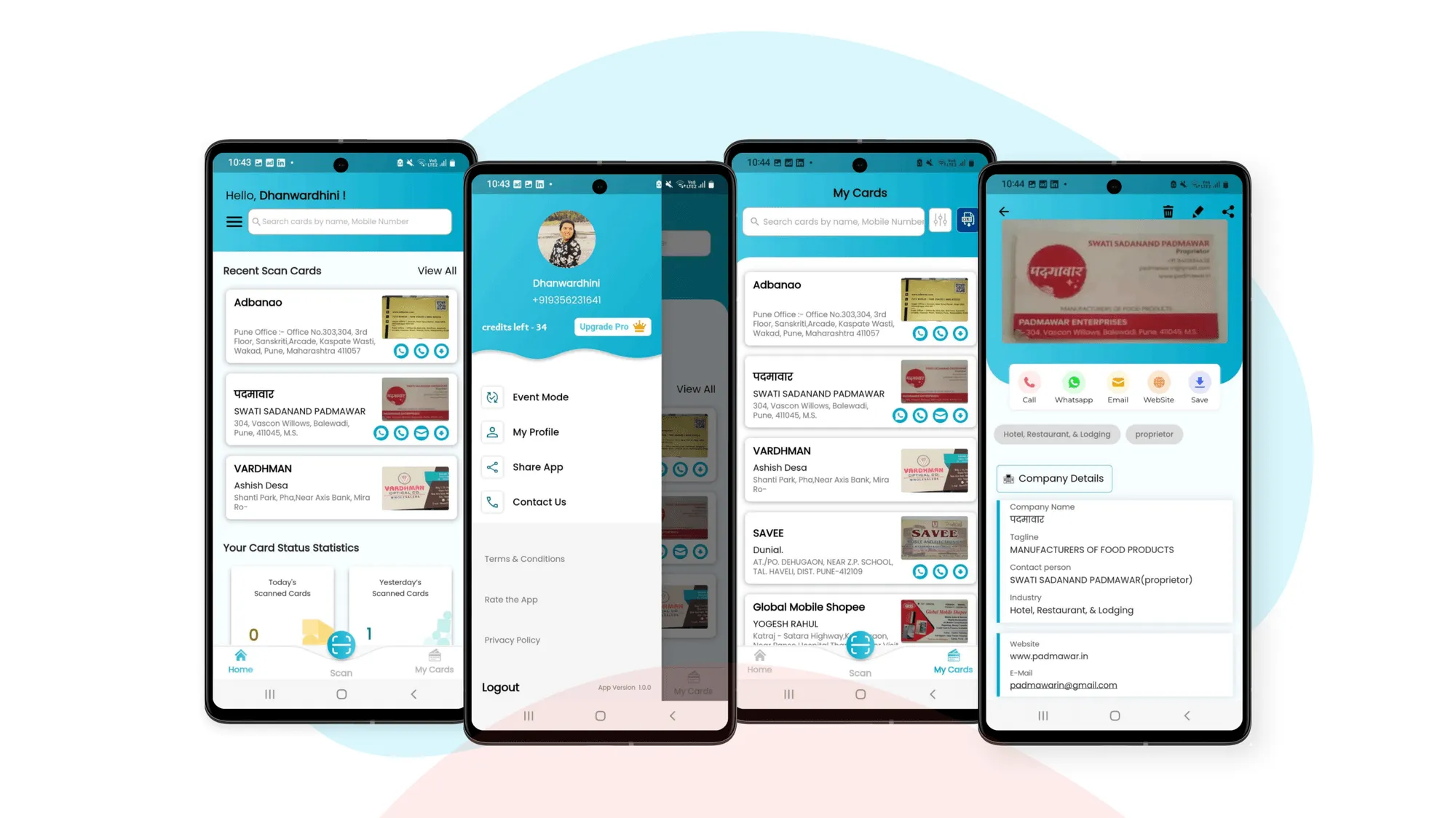
AI Agents & Agentic Automation

Software that doesn't just answer — it acts.

We build autonomous AI agents and multi-agent systems that execute real business workflows by voice or chat — model-agnostic, securely integrated into your existing tools, and adopted on-site until your team actually uses them.

AI Agents & Agentic Automation services by Accucia Softwares — Pune, India
730+
Projects Delivered
500+
Clients Worldwide
15+
Years Engineering
25+
Industry Verticals
Overview

What is an AI agent?

An AI agent is software that perceives context, reasons over it, and takes actions across your systems to complete a goal — not just reply with text. Where a chatbot answers a question, an agent plans and executes the steps: it retrieves data, decides within set rules, calls other tools, and reports the result.

Multi-agent systems coordinate several specialised agents to run complex, end-to-end workflows.

Key areas

Conversational agents

Workflow / process agents

Analytical / decision agents

RAG-grounded agents

Why agentic AI matters now

2026 is the year agents move from demo to production. Gartner expects 40% of enterprise apps to embed task-specific AI agents this year, up from under 5% in 2025, and analysts project the agent market will grow from ~$7.8B to over $52B by 2030. Only ~17% of organisations have deployed agents so far while 60%+ plan to within two years — the early movers set the standard in their category.

What We Build

Six types of agentic AI — from conversational agents to full multi-agent orchestration

Voice & Chat Agents

Autonomous agents that understand natural-language instructions and act on them — by voice or text — across your systems in real time.

Task & Workflow Agents

Agents that execute multi-step business processes across your tools without manual handoffs — from data retrieval through action to reporting.

Multi-Agent Systems

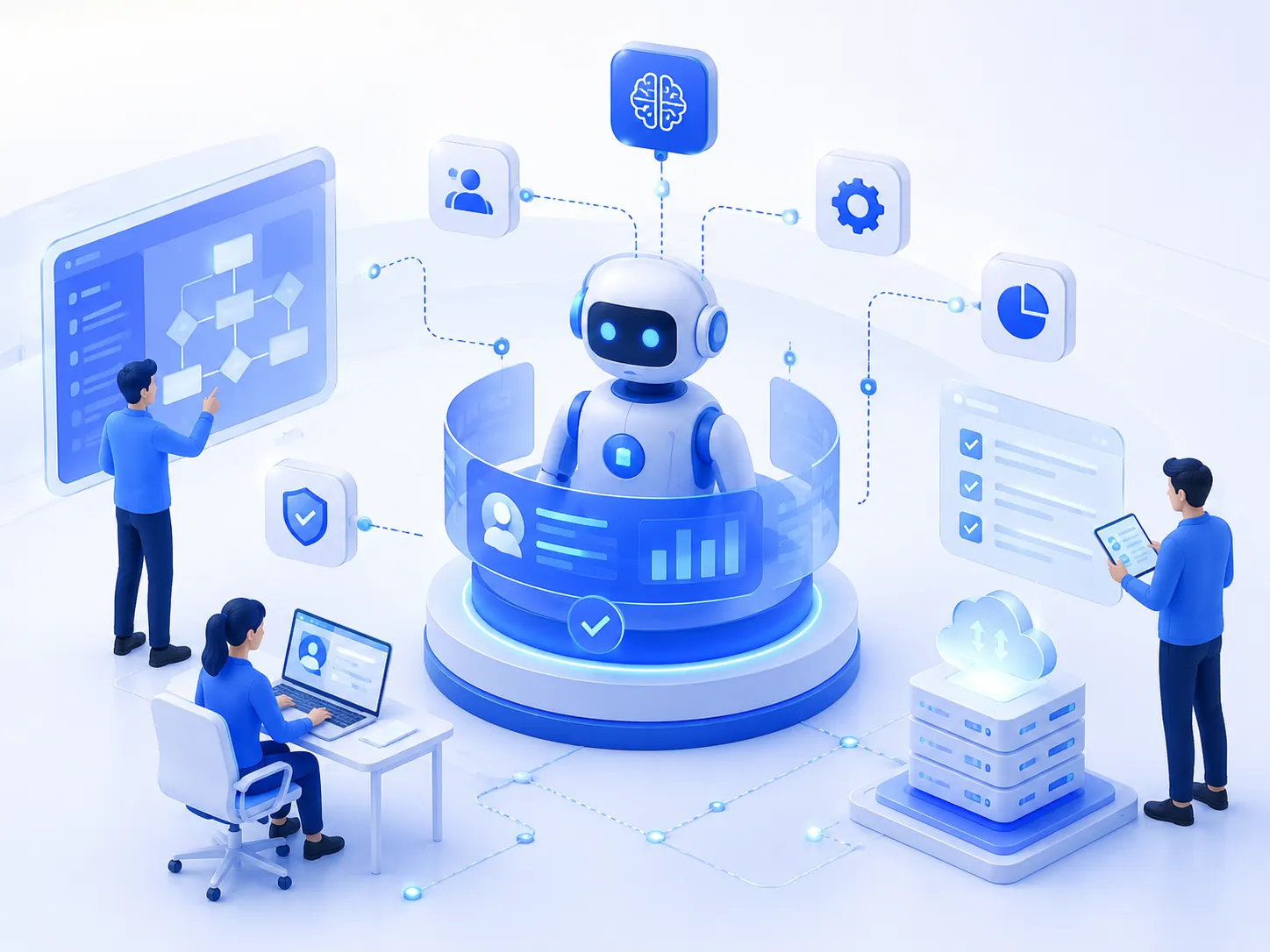
An orchestrator coordinates specialised agents to run complex, end-to-end workflows. Each agent owns a domain; the orchestrator governs the process.

Tool-Using Agents (MCP)

Agents that call your APIs, databases and apps — including via the Model Context Protocol (MCP) — to read live data and take real actions within limits.

Domain Copilots

Embedded AI copilots inside your own product, web or mobile app — giving your users a powerful assistant that works within your context and data.

Human-in-the-Loop Controls

Approval gates, action limits and full audit trails on every agent action — so agents operate within defined policy and humans control sensitive steps.

Types of AI Agents

01

Conversational agents

Support, sales and internal-knowledge assistants.

02

Workflow / process agents

Automate a defined business process end to end.

03

Analytical / decision agents

Monitor data and recommend or trigger actions within boundaries.

04

RAG-grounded agents

Answer and act using your own documents.

05

Multi-agent orchestration

A control layer governing how agents collaborate, escalate and comply.

Where AI Agents Are Used

By function

Customer support automation Sales qualification & follow-up Internal IT / helpdesk HR & operations Finance ops & reconciliation Data analysis and reporting

By industry

  • Healthcare — patient & staff assistance
  • Government — citizen services, case handling
  • Manufacturing — maintenance & production queries
  • Finance — advisory, compliance checks
  • Real estate — lead, inventory & contract queries
  • Logistics — status, routing
  • Retail — product & order assistance

Agent Technology Stack

Orchestration: LangGraph, LangChain, LlamaIndex, CrewAI · Models: GPT, Gemini, Claude, Llama · Retrieval: Pinecone, Milvus, FAISS · Build: Python, Node.js, Flutter, React

Our Agent Development Process

From workflow discovery through on-site adoption — six stages that close the gap most vendors leave open

1

Discovery

Map the workflow, data sources, tools and success metric. Define what the agent must do, what data it needs and how success is measured.

2

Scoping & Guardrail Design

Define what the agent may do and where a human must approve — guardrails, role permissions and escalation rules designed before any code is written.

3

Integration

Connect the agent to your data, tools and systems via APIs, databases and the Model Context Protocol (MCP) — no rip-and-replace required.

4

Build & Evaluate

Develop the agent, then test against real use cases for accuracy, safety and edge-case handling. Iterate until the bar is met.

5

Deploy

Production rollout with monitoring, logging, observability and alerting so you have full visibility into every agent action.

6

Embed On-Site & Measure Adoption

We stay until your team is actually using it — tracking the 6-month utilisation rate and resolving friction as it appears in daily use.

Why Accucia for AI Agents?

Adoption-first, model-agnostic, already shipped in production

Adoption-First

We measure the 6-month utilisation rate, not just delivery. We embed on-site after go-live and stay until your team is genuinely using the agent.

Model-Agnostic & Integration-First

Agents work through the systems you already run via MCP and APIs — no rip-and-replace. We choose the best model (GPT, Gemini, Claude, Llama) for your accuracy, privacy and cost.

Already Shipped

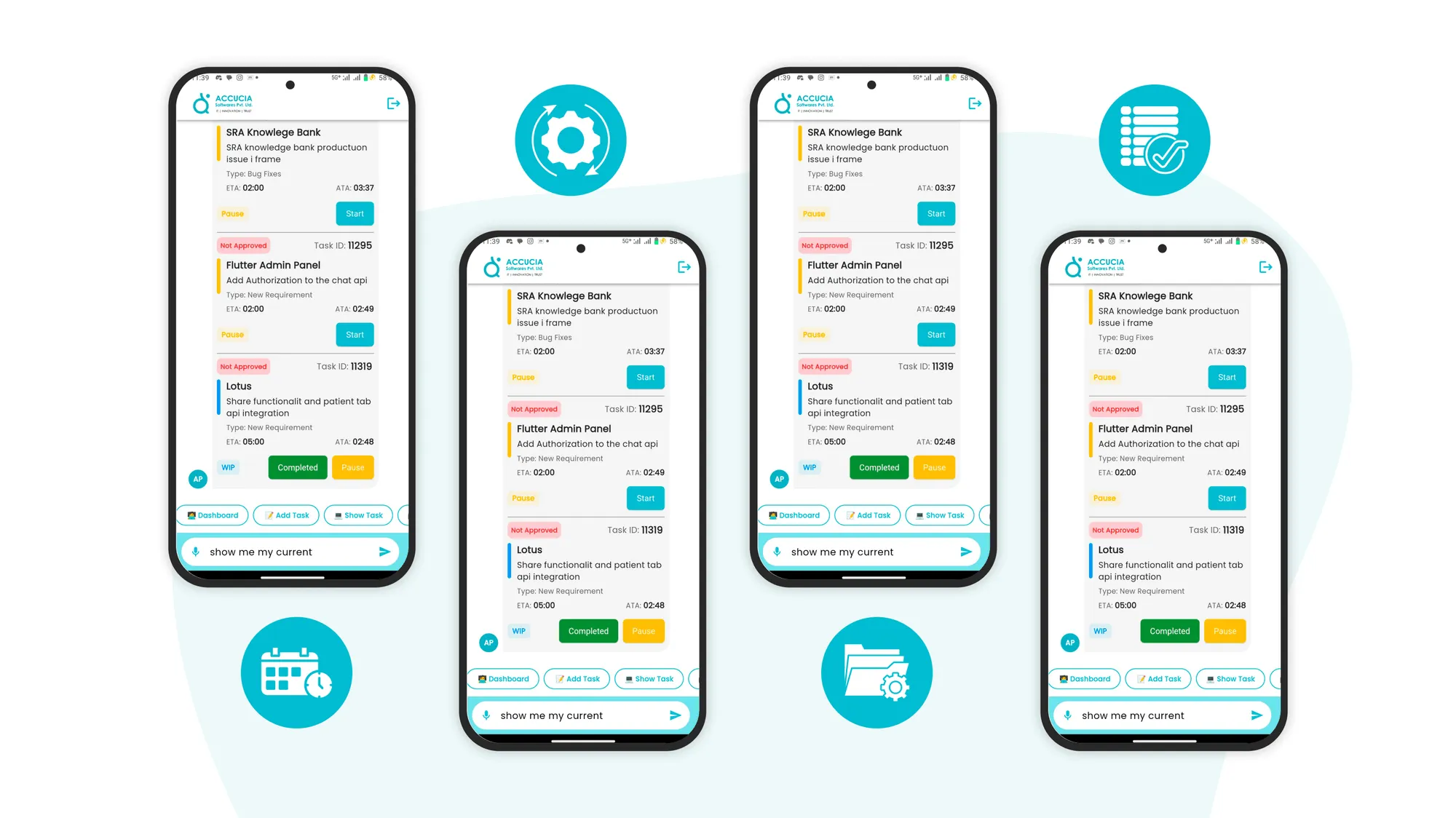
Real agentic products in production — including a GenAI voice-and-chat project-management agent built on Flutter, Node.js and Gemini. Not slideware.

Enterprise & Government-Grade Security

Role-based permissions, human approval gates, full audit trails, data-residency options and evaluation harnesses — security and guardrails built in from day one.

Shipped in Production

GenAI voice-and-chat project-management agent

Run your day by talking or typing ("show my tasks", "mark task 100 complete"). Built with Flutter, Node.js, Gemini, Pocketbase.

Agentic layers on enterprise ERP via MCP

AI agents operating on live ERP data through the Model Context Protocol — see MCP Integration for details.

Engagement Models

Fixed-Price Pilot

A scoped agent delivered at a fixed price — ideal for validating agentic AI quickly.

Time & Materials

Flexible build-and-iterate engagement for evolving agent requirements.

Dedicated AI Team

An embedded team for enterprise multi-agent programmes running 3–6 months.

A focused agent ships in 4–8 weeks · Enterprise multi-agent systems run 3–6 months

Security, privacy & governance

Role-based permissions, human approval gates, full audit trails of every agent action, data-residency options (cloud or on-prem), and evaluation/guardrails to keep behaviour within policy.

Frequently Asked Questions

Everything you need to know about AI agents and agentic automation

A chatbot answers questions; an AI agent takes action — it executes multi-step tasks across your systems and reports back.

Several specialised agents coordinated by an orchestrator to complete a complex workflow together.

Yes — we build role-based permissions, approval steps and full audit trails so agents act only within defined limits.

A focused agent typically ships in 4–8 weeks; enterprise multi-agent systems run 3–6 months.

We're model-agnostic — GPT, Gemini, Claude or open models, chosen for your accuracy, privacy and cost needs.

Yes — agents call your APIs, databases and apps, including via the Model Context Protocol (MCP).

We ground agents in your data (RAG), constrain actions with guardrails, require human approval for sensitive steps, and continuously evaluate.

Yes — for data-sensitive and government workloads.

Tell Us One Workflow You'd Hand to an Agent

Book a discovery call and we'll map the workflow, the data and the outcome together. No commitment required.

Chat With Us