AI for Government in India: Programmes That Stick
Quick Answer
AI helps Indian government departments most in routine citizen interactions and internal knowledge access WhatsApp service bots, AI website assistants trained only on approved documents, and AI-assisted visitor management freeing staff from repetitive queries. But the deciding factor isn't the AI; it's whether the system is built to survive officer transfers and daily operational load. That requires on-site, workflow-first delivery, SOPs built into the platform, and government-grade standards (UX4G, data residency, role-based access). Programmes built this way last; press-release launches return to paper within months. By Mr. Sumeet Katariya, CEO Accucia Softwares
Key Takeaways
- AI's best government use today is routine citizen interaction and internal knowledge access.
- Most department software fails not on technology but on adoption and continuity.
- Build transfer-proof: SOPs and workflows inside the platform, full state on a day-one dashboard.
- Government-grade = UX4G, data residency on Indian soil, role-based access, on-site delivery.
- Proof beats promises: channels that cut footfall from 2,000+ to under 700, a CM-recognised UX4G site.
Where AI genuinely helps government today
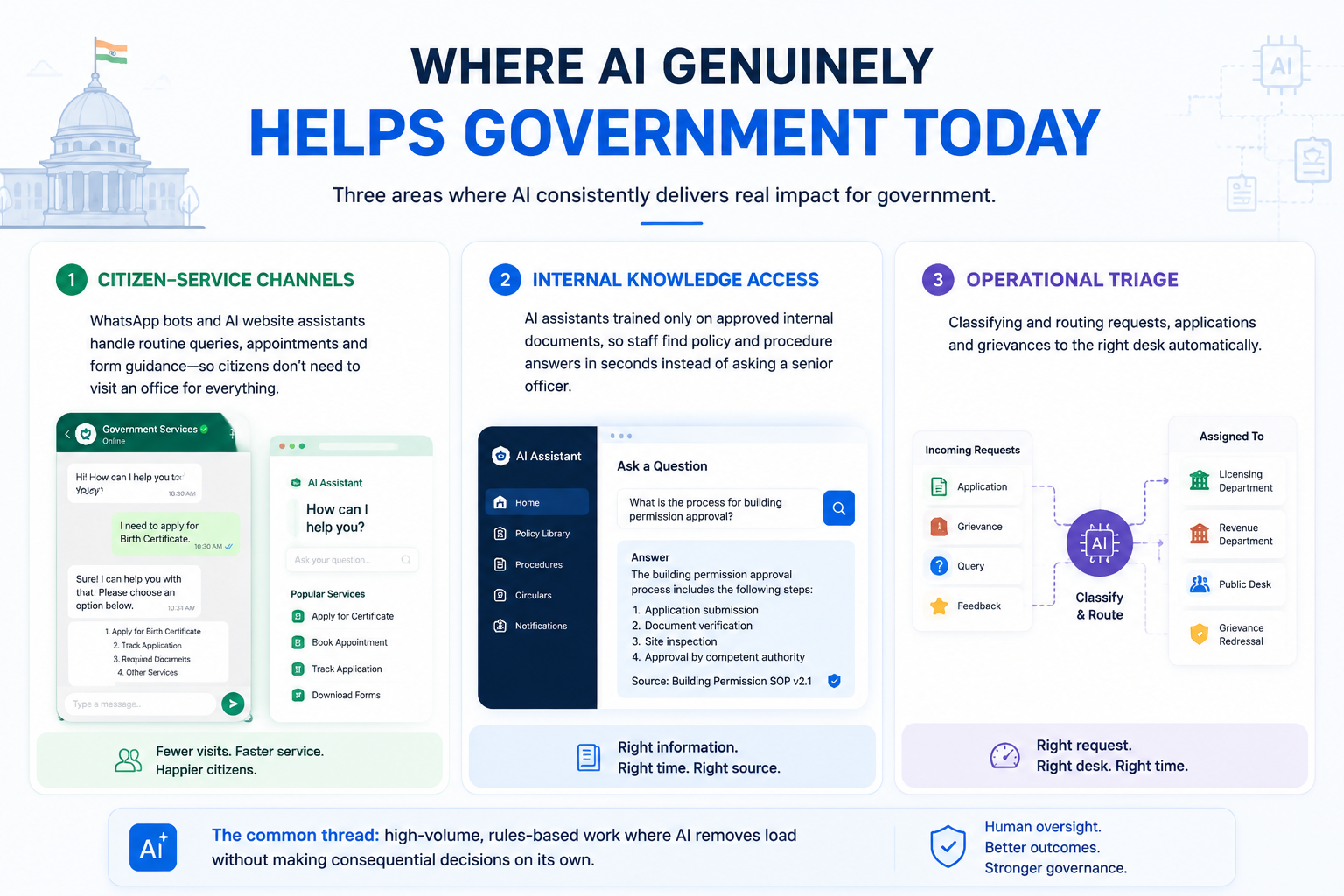
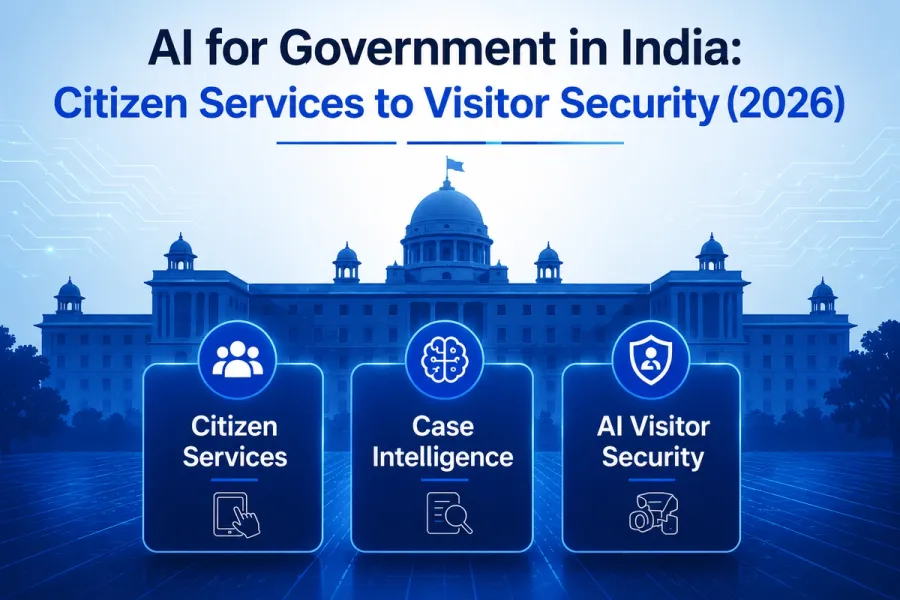
The hype around government AI is large; the genuinely useful surface area is specific. Three areas consistently deliver:
- Citizen-service channels — WhatsApp bots and AI website assistants that handle routine queries, appointments and form guidance, so citizens don't need to visit an office for everything.
- Internal knowledge access — AI assistants trained only on approved internal documents, so staff find policy and procedure answers in seconds instead of asking a senior officer.
- Operational triage — classifying and routing requests, applications and grievances to the right desk automatically.
The common thread: high-volume, rules-based work where AI removes load without making consequential decisions on its own.
Why most department software returns to paper
The pattern is familiar across India: a digital programme launches with a press-release photo, then quietly returns to paper within three months. The cause is rarely the software. It's that nobody planned for adoption across divisions, districts and — the killer — officer transfers. When the officer driving a programme moves on, the knowledge and momentum often leave with them.
Citizen channels: off the office counter
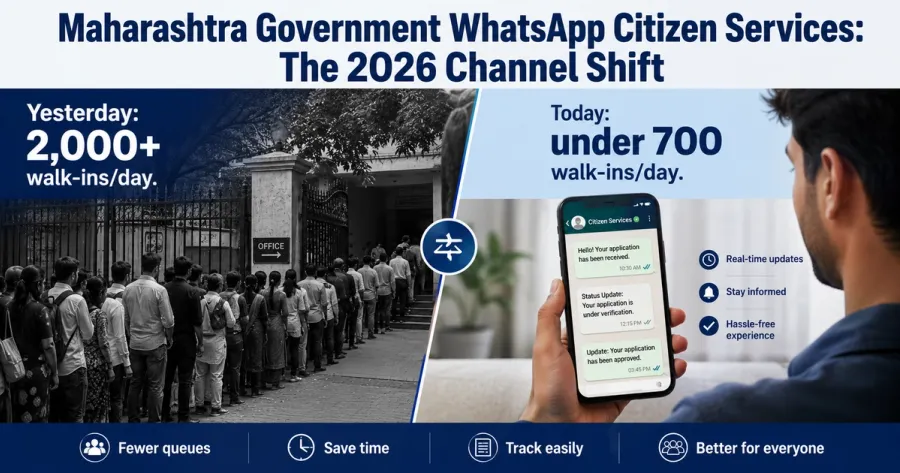
Every routine query that walks into a government office is time a department can't get back. Moving the routine to digital channels — WhatsApp service bots, AI website assistants trained on approved documents, QR-code appointment flows — frees staff for the work that genuinely needs them. For one Maharashtra authority, channels like these helped cut daily footfall from over 2,000 to under 700, with a visitor-management platform delivered in under 45 days.
The continuity trap: building transfer-proof systems
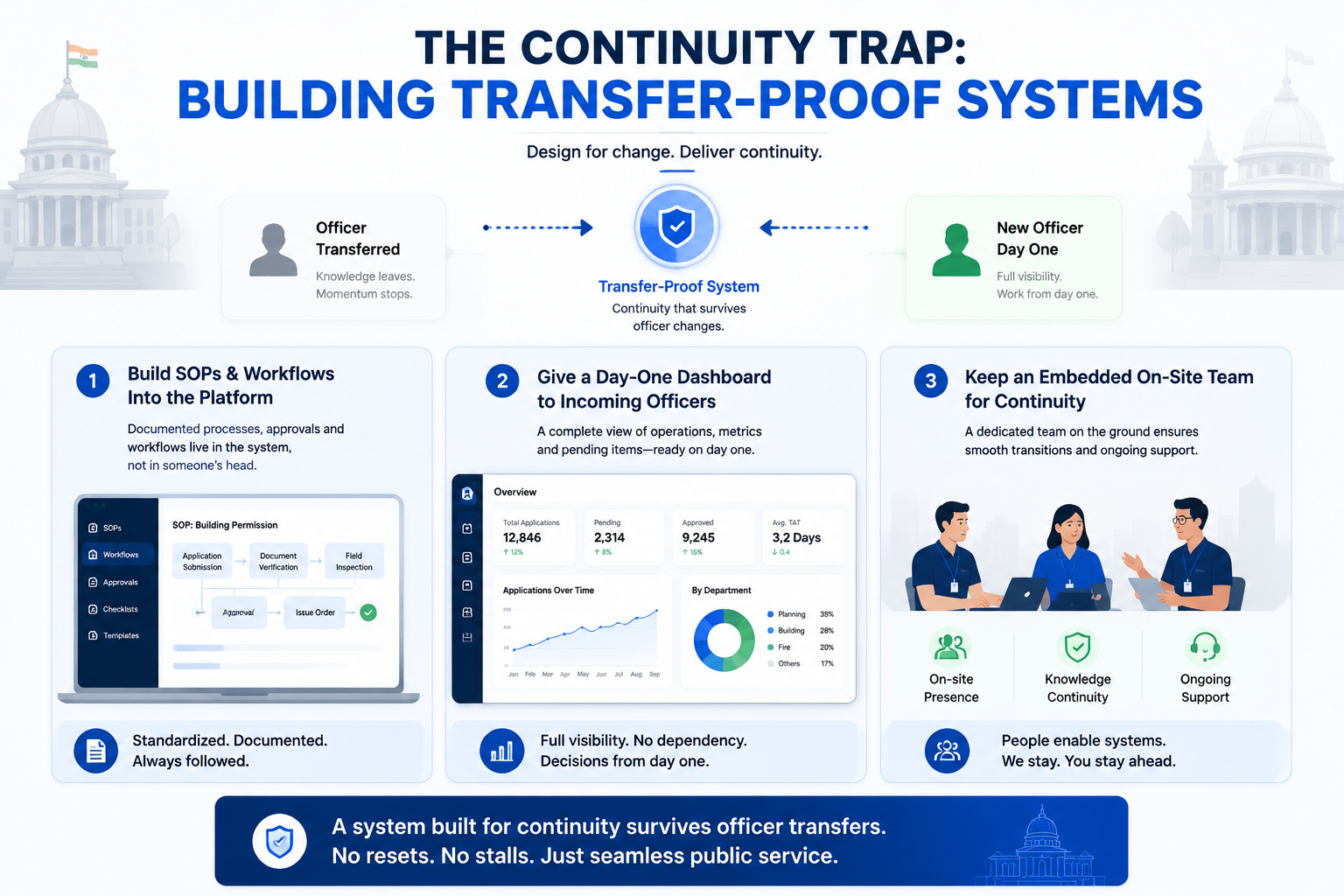
The single biggest risk to a government digital programme is the officer transfer. The fix is to design for it from the start:
- Build SOPs and workflows directly into the platform, not into one person's head.
- Give the incoming officer a day-one dashboard showing the full state of operations.
- Keep an embedded on-site team that carries continuity through the transition.
A system built this way survives the change of officer that would otherwise stall it.
Government-grade delivery
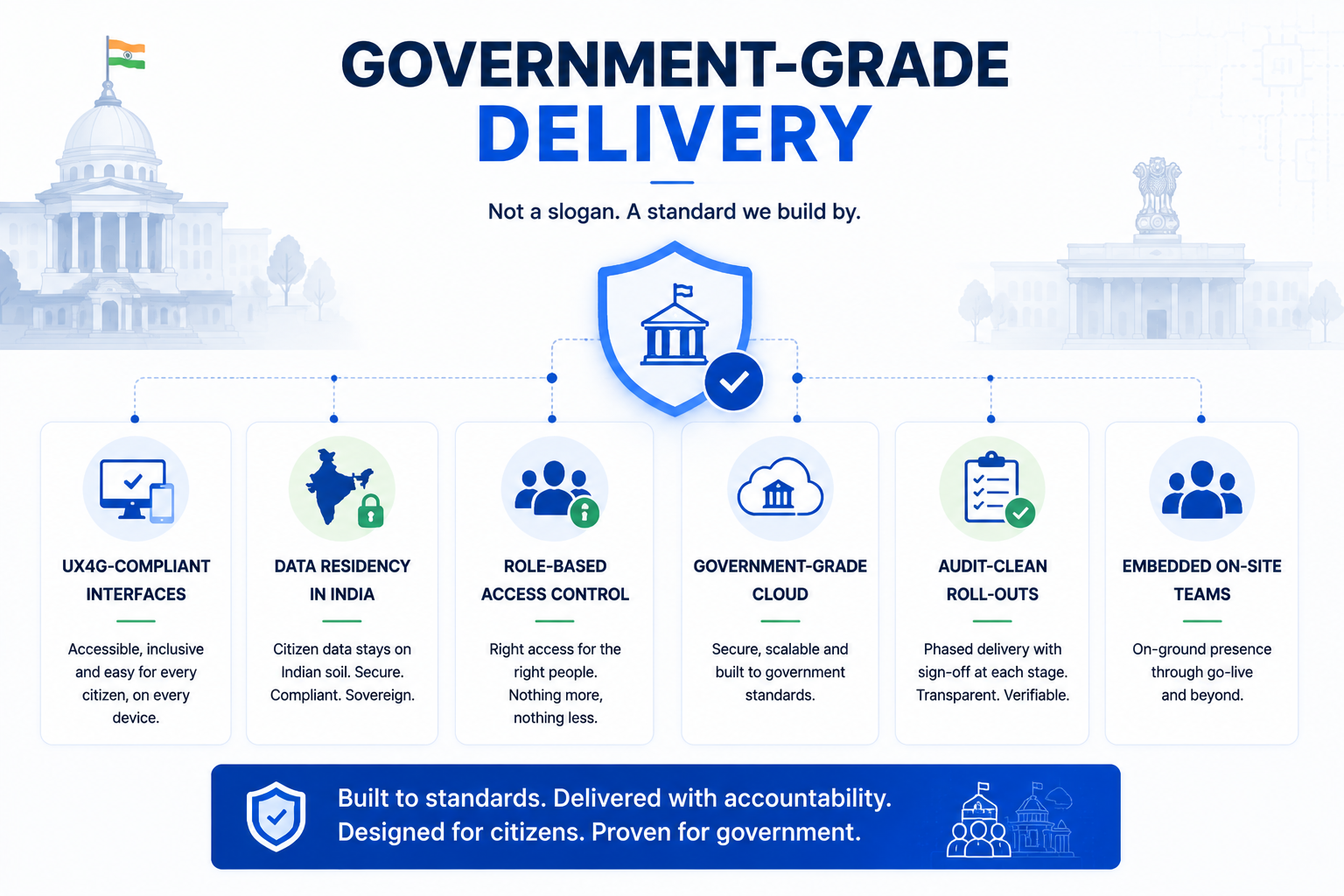
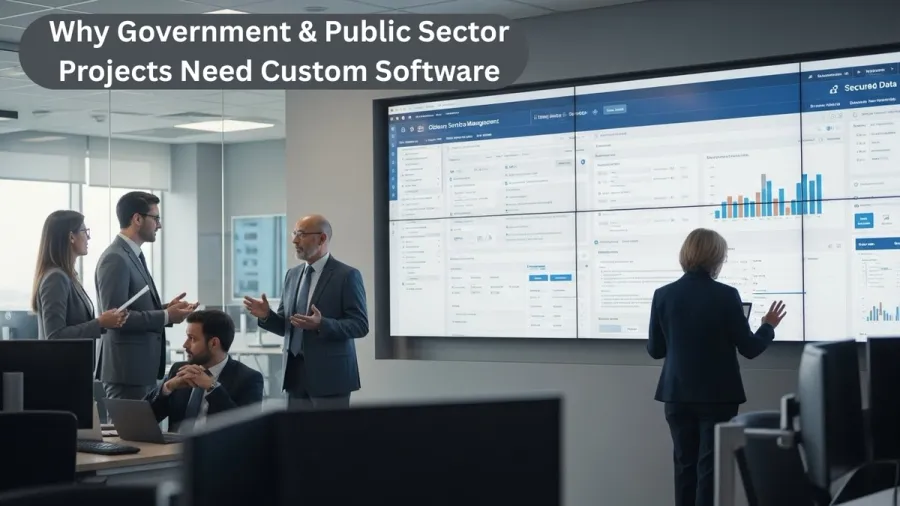
"Government-grade" is a checklist most agencies skip, not a slogan. For public-sector delivery it means UX4G-compliant, accessible citizen interfaces; data residency on Indian soil; role-based access control; government-grade cloud; audit-clean phased rollouts with sign-off at each stage; and embedded on-site teams through go-live.
Proof, not promises
For a Mumbai housing authority, building to these standards produced a UX4G-compliant citizen website that earned an award from the Chief Minister of Maharashtra, live leadership dashboards across 10–15 connected projects, and the AI visitor-management system mentioned above. The lesson generalises: build for the upstream review and for the officer who arrives next — not just for launch day.
Frequently Asked Questions
Where should a government department start with AI?
With high-volume, low-risk routine work — citizen FAQs, appointments, application routing, and internal document search.
How do you keep a digital programme running after an officer is transferred?
Build SOPs and workflows into the platform and document the full operational state in-system, so the incoming officer sees everything on day one. On-site teams carry continuity through the change.
What does "government-grade" actually require?
Data residency on Indian soil, role-based access, UX4G-compliant interfaces, government-grade cloud, audit-clean phased rollouts, and embedded on-site delivery.
Can AI citizen services be trusted for government use?
Yes, when the AI is trained only on approved internal documents, respects role-based access, and is deployed with audit trails — so it answers from authorised sources only.
Build Future-Ready Government Systems