AI for Government in India: Citizen Services to Visitor Security (2026)
Quick Answer
AI for government in India means applying AI to public-sector work delivering citizen services digitally, processing cases and documents faster, securing premises with AI visitor and anomaly detection, and automating compliance reporting. The technology is the easy part. What separates programs that stick from the ones that quietly return to paper is adoption: data residency, role-based access, audit discipline, and a delivery partner who stays on-site until departments actually use the system. By Mr. Sumeet Katariya, CEO Accucia Softwares
Key Takeaways
- AI in government spans four areas: citizen services, case/document intelligence, visitor & premises security, and automated reporting.
- The failure mode is rarely technology it's adoption after the launch photo.
- Data residency, role-based access and audit trails are non-negotiable for public-sector AI.
- Accucia has delivered an AI citizen-services & legal-case platform for the Government of Maharashtra (SRA).
- AI visitor security with automated reporting has been deployed for a government organization in Maharashtra.
Why government digital programs stall
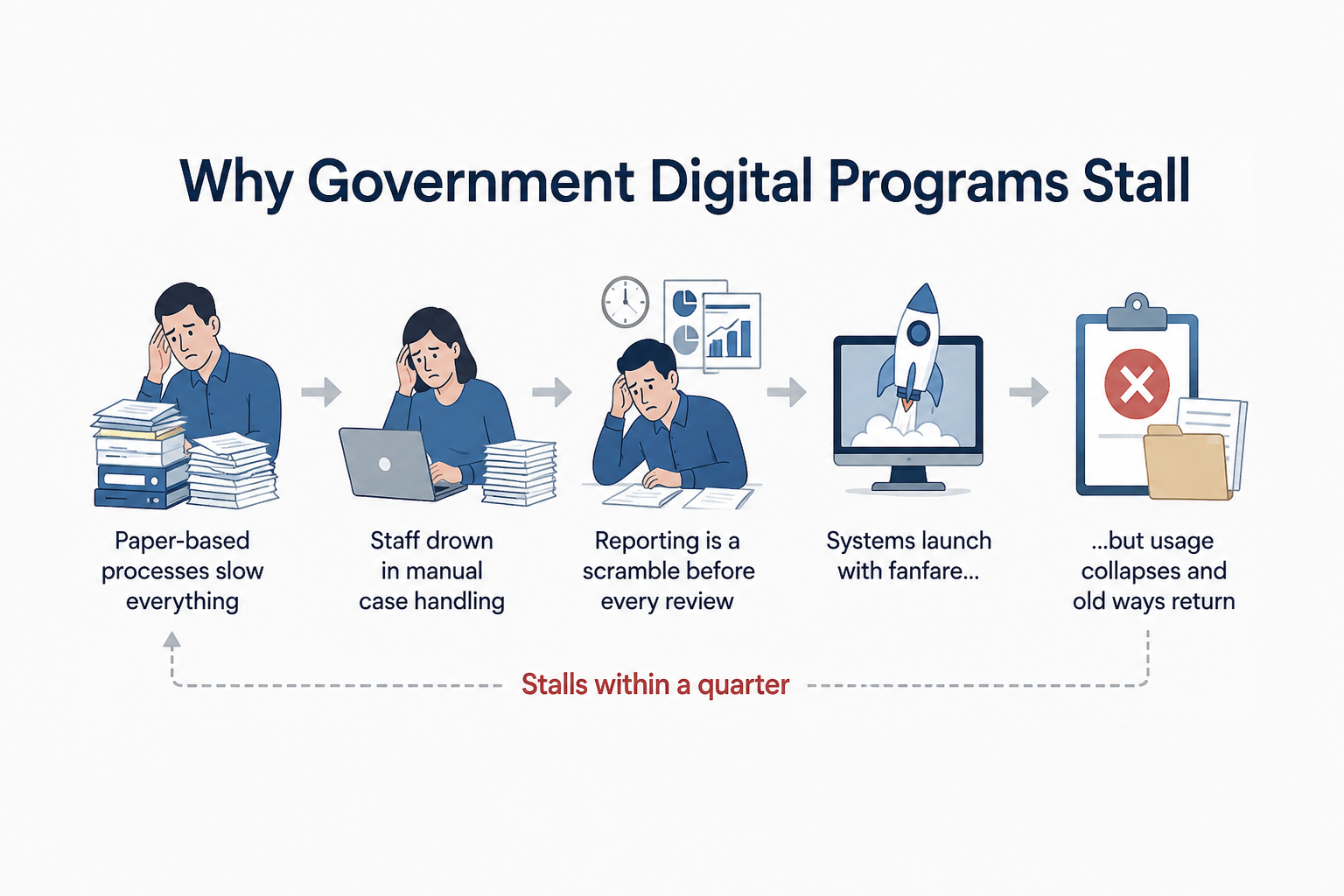
Paper-based processes and office dependency slow everything: citizens make repeat visits, staff drown in manual case handling, and reporting is a scramble before every review. Departments do launch digital systems but most vendors deliver and disappear, so usage collapses once the champion officer is transferred. The result is a press-release launch that reverts to the old way within a quarter.
What AI actually changes for a department
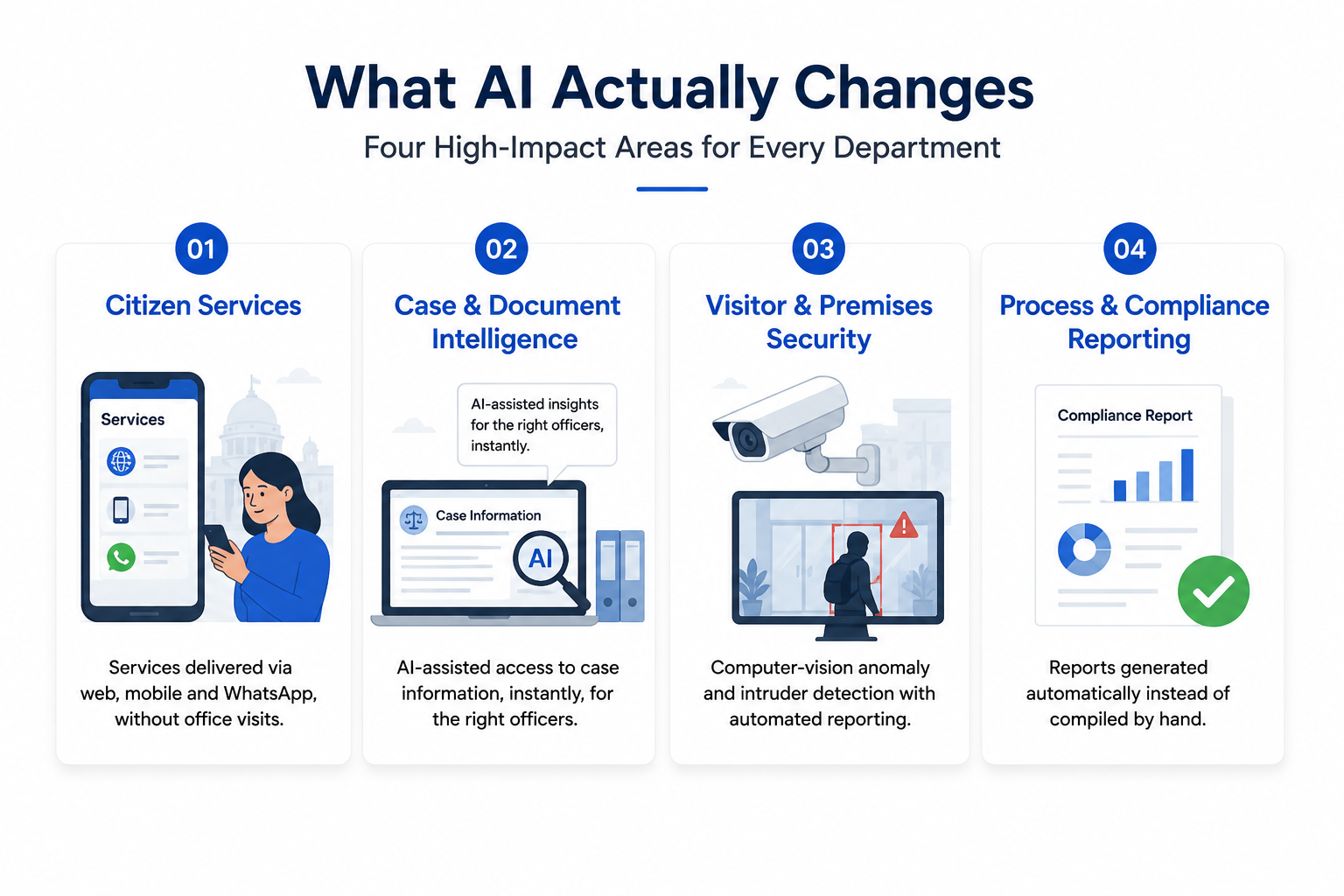
Four high-impact areas:
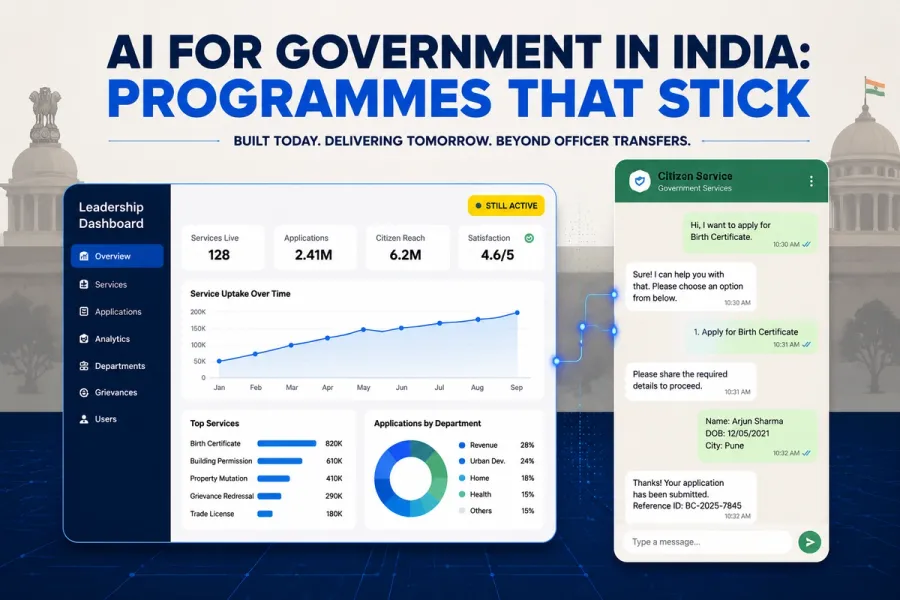
- Citizen services services delivered via web, mobile and WhatsApp, without office visits.
- Case & document intelligence AI-assisted access to case information, instantly, for the right officers.
- Visitor & premises security computer-vision anomaly and intruder detection with automated reporting.
- Process & compliance reporting reports generated automatically instead of compiled by hand.
Proof: what this looks like in Maharashtra
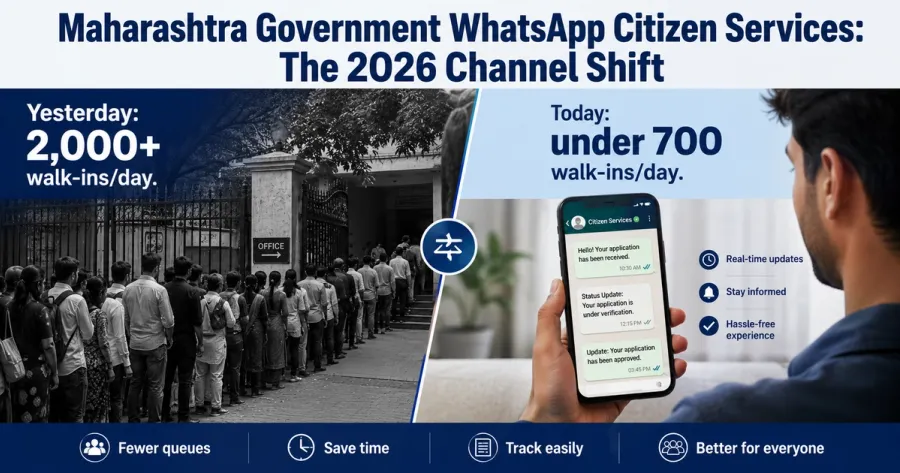
Accucia worked with SRA (Government of Maharashtra) to build a central citizen app that uses AI to handle legal cases and service requests cutting physical office dependency drastically and giving legal teams instant case intelligence. Separately, for a government organization in Maharashtra, we delivered an AI visitor management system (mobile + tablet apps) that detects anomalies and unauthorised people on-site, backed by fully automated AI reporting. Both were built to government security standards.
What “government-grade” really means
For public-sector AI, the bar is higher than enterprise: encryption, role-based access, complete audit trails, data residency on Indian soil, and secure deployment (on-prem or government cloud where required). Integration is API-first so AI works with existing department systems rather than replacing them.
The part most vendors skip: adoption
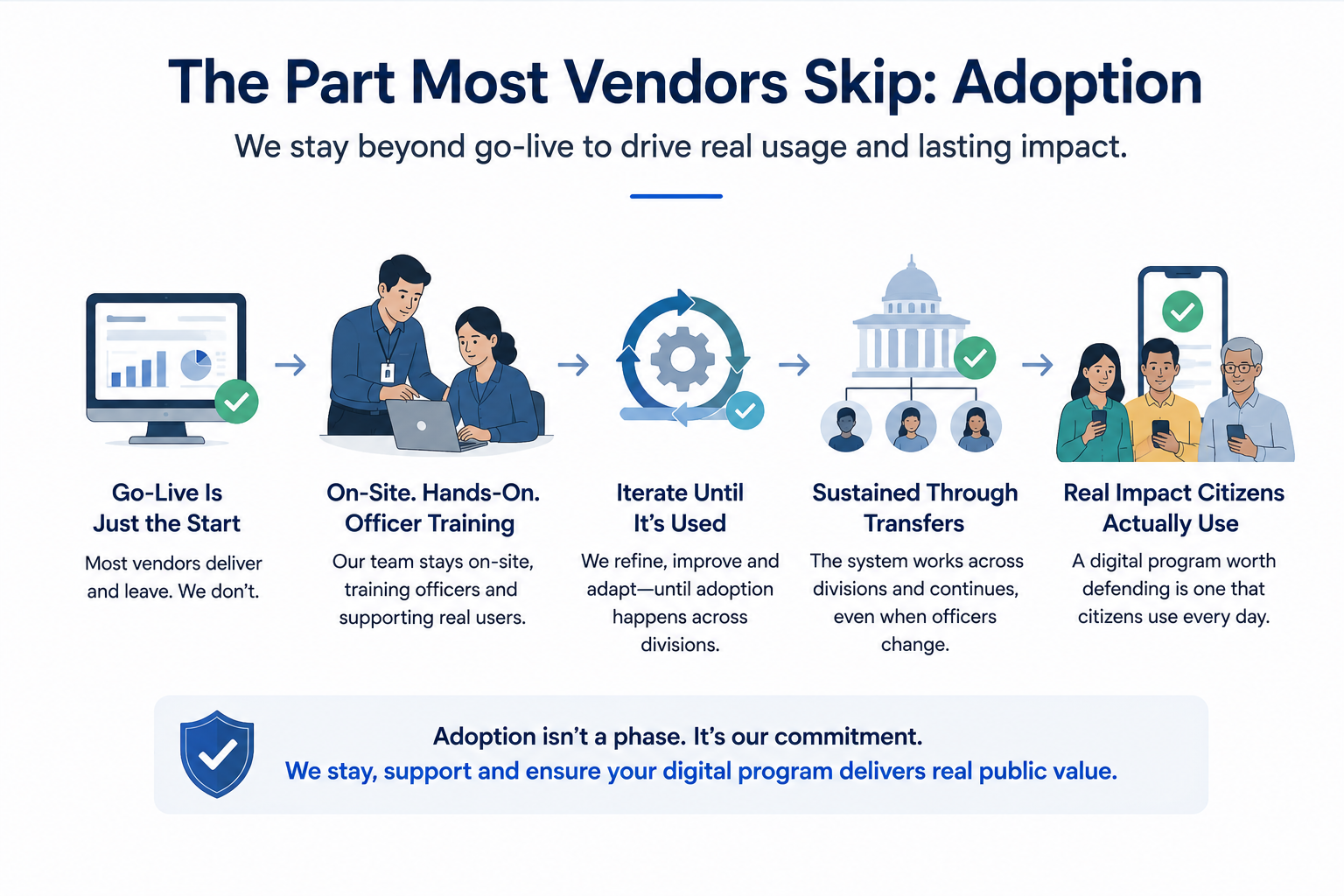
Government is where the adoption gap is most visible usage is audited, not assumed. That's why our model keeps delivery staff embedded on-site after go-live, training officers and iterating until the system is genuinely in use across divisions and through officer transfers. A digital program leadership can defend at a review is one citizens are actually using not one that looks good on launch day.
How a department should start
Begin with one service or one premises, scope the security and data-residency posture in writing, integrate with what exists, pilot, then expand division by division — with an explicit adoption phase funded into the engagement.
Frequently Asked Questions
What is AI for government?
Applying AI to public-sector work citizen-service platforms, case and document intelligence, AI visitor/anomaly security, and automated reporting built to government security and data-residency standards.
Does Accucia have government project experience?
Yes including an AI citizen-services and legal-case platform for the Government of Maharashtra (SRA), and an AI visitor management system for a government organization in Maharashtra.
How is data secured in government AI projects?
Through encryption, role-based access, audit trails and data residency, with on-premise or government-cloud deployment where required.
Can AI integrate with existing government systems?
Yes via secure, API-first integration, so existing systems are extended rather than replaced.
Why do government digital programs fail, and how do you prevent it?
They usually fail at adoption, not technology, especially after officer transfers. Accucia stays on-site after go-live and measures utilisation until the system is genuinely in use.
Turn launch into adoption