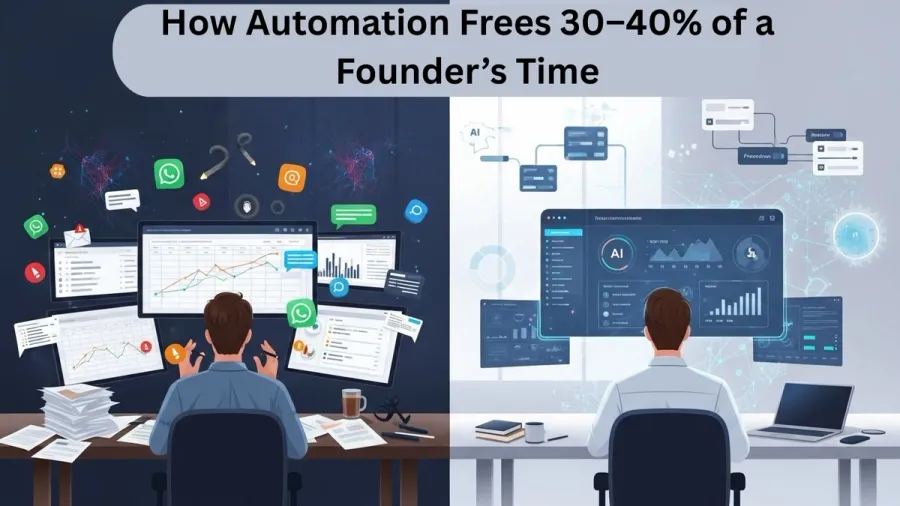
Founder Liberation: Get 20+ Hours a Week Back
Quick Answer
Founder dependency is when a business can only operate while the founder is personally available because approvals, exceptions and knowledge all route through them. The fix is not hiring more managers (which adds faster escalation to the founder) but building an operating model where approvals follow rules, escalations resolve before reaching the top, and the founder's knowledge lives in the system. Done well, founders routinely reclaim 20+ hours a week, and the business holds even when they're not in the room. By Mr. Sumeet Katariya, CEO Accucia Softwares
Key Takeaways
- If the business stalls when you take a week off, the problem is your operating model, not your team.
- More managers won't fix it — they escalate to you faster.
- Route approvals by rules, resolve escalations before they reach you, move knowledge into the system.
- Founders who do this routinely reclaim 20+ hours a week.
What is founder dependency?
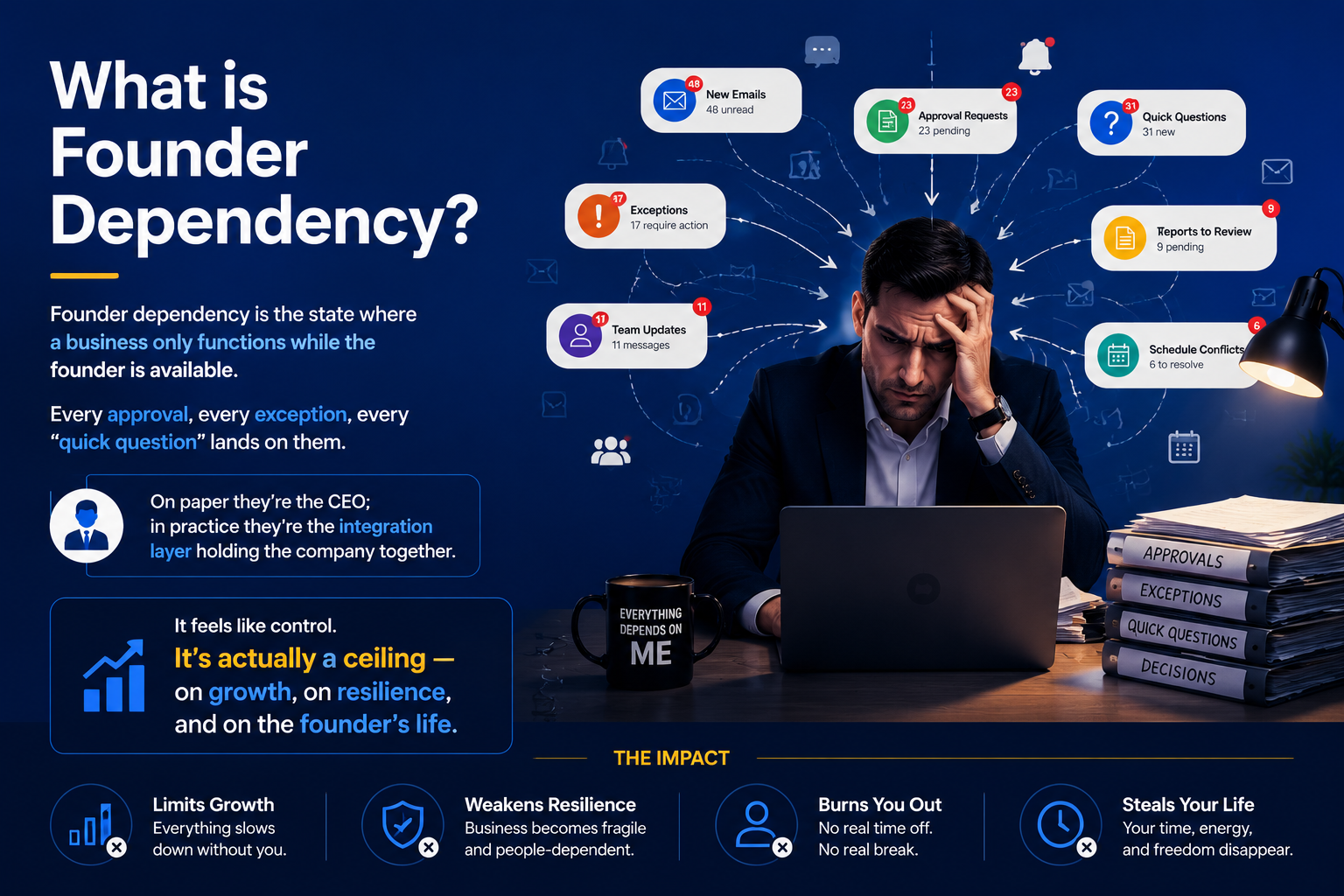
Founder dependency is the state where a business only functions while the founder is available. Every approval, every exception, every "quick question" lands on them. On paper they're the CEO; in practice they're the integration layer holding the company together. It feels like control. It's actually a ceiling — on growth, on resilience, and on the founder's life.
Why hiring more managers doesn't fix the bottleneck
The instinctive fix is to hire. But adding managers to a people-dependent operating model usually just creates more people who escalate to the founder — faster. The bottleneck isn't a shortage of people; it's the absence of a system that lets decisions resolve without the founder. Until that changes, every new hire is another tributary feeding the same overloaded inbox.
The Approval Routing Framework
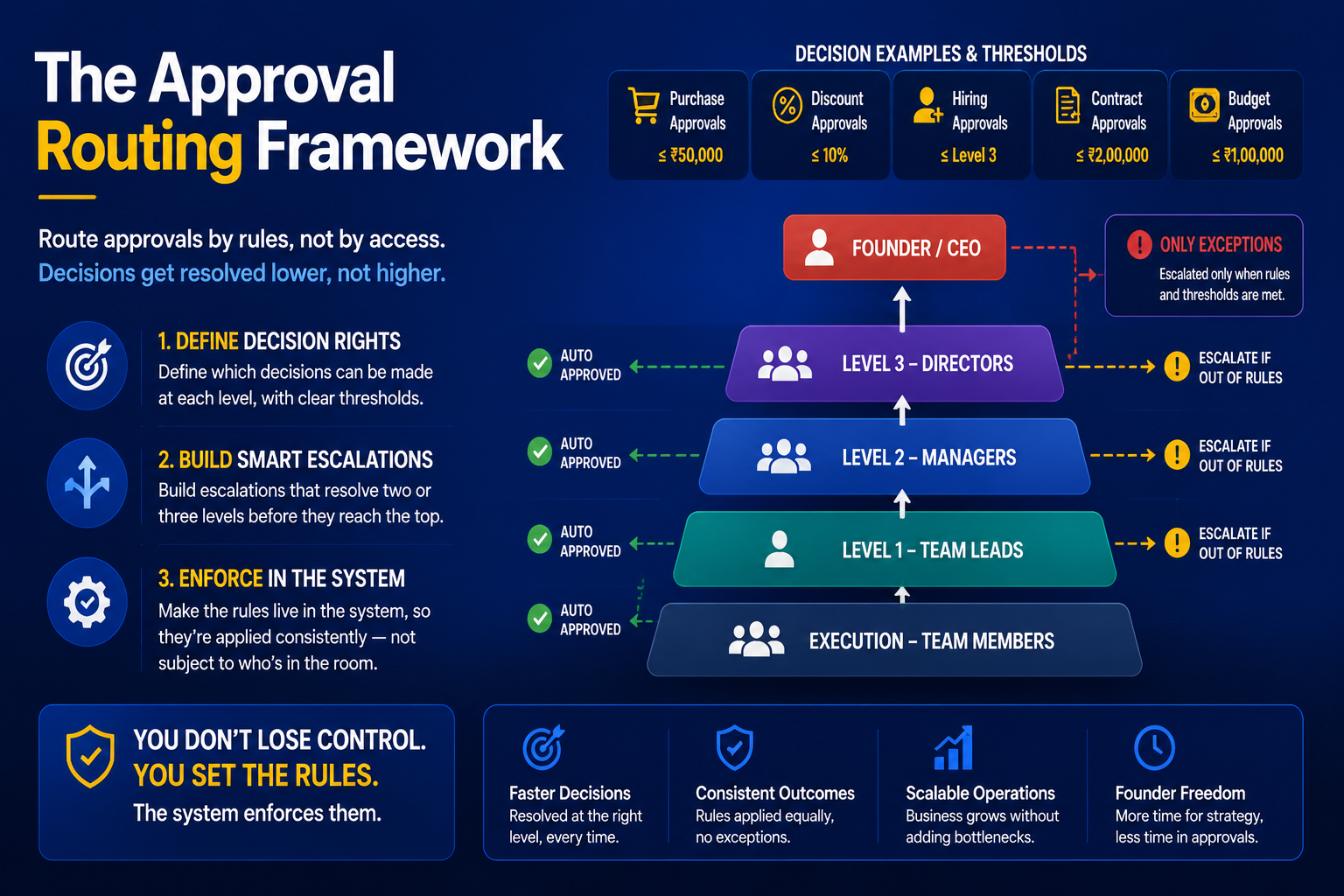
The first lever is approvals. Most decisions that reach a founder shouldn't. The fix is to route approvals by rules:
- Define which decisions can be made at each level, with clear thresholds.
- Build escalations that resolve two or three levels before they reach the top.
- Make the rules live in the system, so they're applied consistently — not subject to who's in the room.
You don't lose control; you set the rules and the system enforces them.
Documenting the business out of your head
The second lever is knowledge. When critical know-how lives only in the founder's head, the business is fragile and the founder is trapped. Moving that knowledge into documented workflows and into the system — so the platform guides the right action — is what lets the team operate without constant founder input. It's also what makes the business survivable if a key person leaves.
The 10 decisions that should never reach you
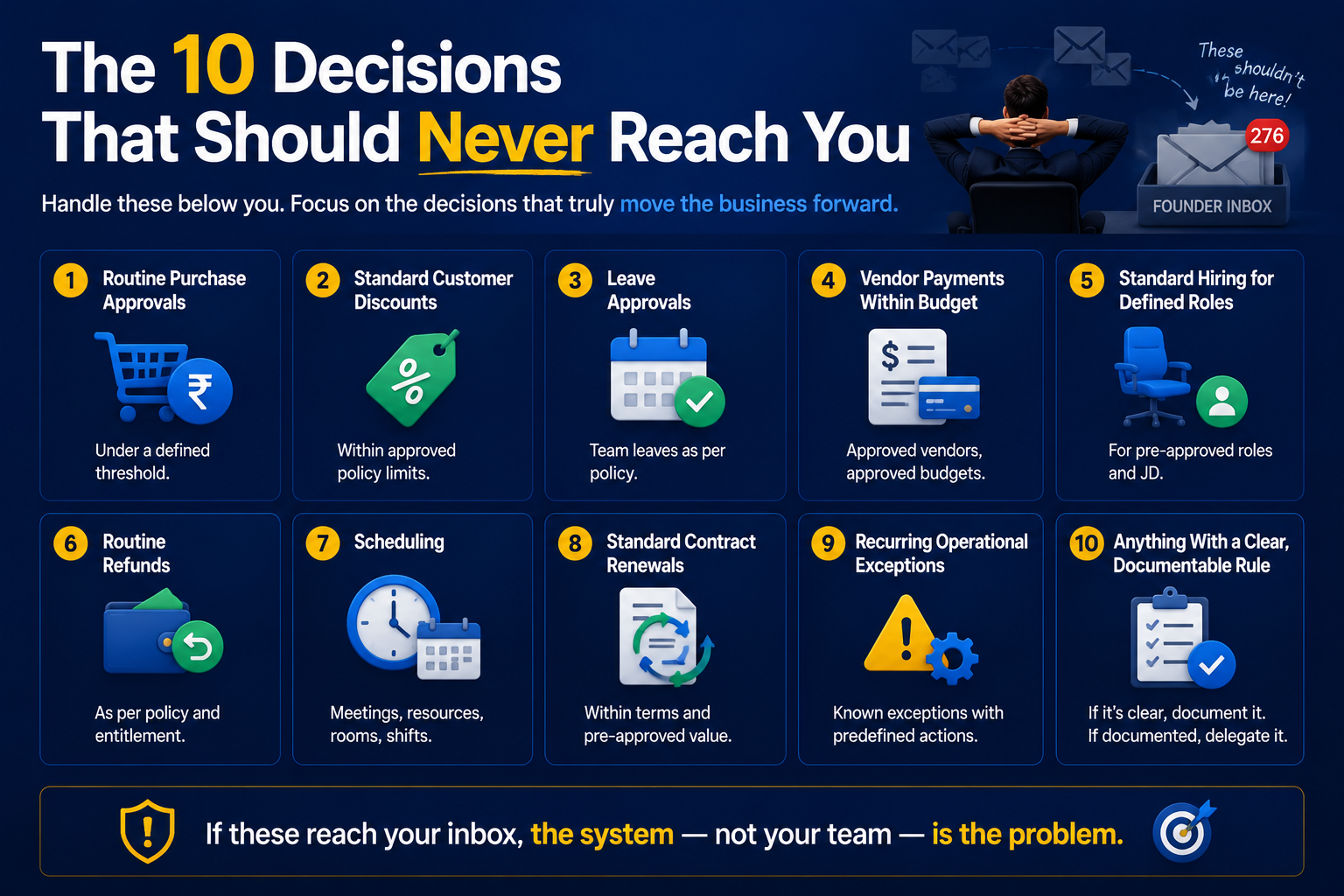
As a rule of thumb, these should be handled below the founder: routine purchase approvals under a threshold, standard customer discounts within policy, leave approvals, vendor payments within budget, standard hiring for defined roles, routine refunds, scheduling, standard contract renewals, recurring operational exceptions, and anything with a clear, documentable rule. If these reach your inbox, the system — not your team — is the problem.
Proof: quotations from days to minutes
Utech Waterproofing was losing time and deals to one bottleneck: quotations took days, and most ran through the founder. We rebuilt the quotation and approval workflow into a digital system. Quotes now take minutes and no longer depend on one person being available — and the founder got his evenings back after years without a real break. The partnership has lasted 7+ years across multiple US locations, because the system kept holding as the business grew.
Frequently Asked Questions
How do I stop being the bottleneck in my own business?
Route approvals by rules, document tribal knowledge into the system, and define which decisions should never escalate to you. Build an operating model that runs on process, not on your availability.
Will building systems mean losing control?
No — you gain visibility and set the rules; the system enforces them consistently. You trade being personally involved in every decision for designing how decisions get made.
How long does it take to reduce founder dependency?
Meaningful relief often comes within 90 days by fixing the one or two workflows that break first — typically approvals and a core operational process.
Isn't hiring a COO the answer?
Sometimes, eventually — but a COO inside a people-dependent model inherits the same bottleneck. Build the systems first, so any senior hire amplifies a working operating model rather than patching a broken one.
Build Systems That Let Your Business Run Without You →