AI Agents for Enterprise Operations: Use Cases That Ship (2026)
Quick Answer
An AI agent is software that doesn't just answer questions — it takes action across your systems to complete a goal, planning and executing multi-step tasks within set rules. In enterprise operations, the agent use cases that reliably ship in 2026 are bounded and data-grounded: customer and internal support, sales qualification, IT/helpdesk triage, finance reconciliation, and on-demand reporting. The ones that fail are open-ended, unguarded, or disconnected from real data. Start with one bounded workflow, ground the agent in your systems, and keep a human in the loop. By Mr. Sumeet Katariya, CEO Accucia Softwares
Key Takeaways
- An agent acts; a chatbot only answers. Multi-agent systems coordinate several specialised agents.
- Gartner expects 40% of enterprise apps to embed task-specific AI agents in 2026.
- Agents that ship are bounded, data-grounded and guard-railed; open-ended agents fail.
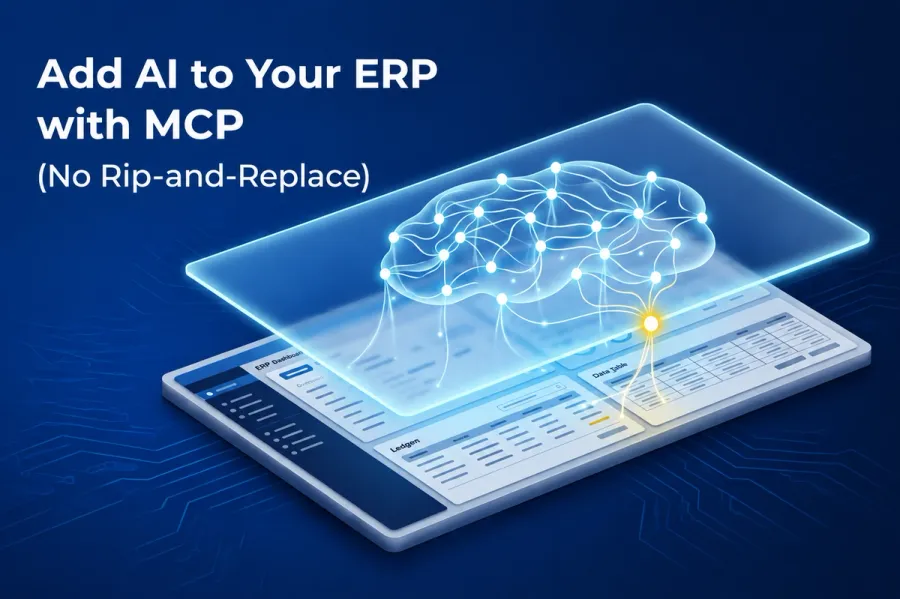
- Ground agents in your systems via MCP and your documents via RAG.
- Start with one workflow, prove it, then expand with a human-in-the-loop on sensitive steps.
What an AI agent actually is
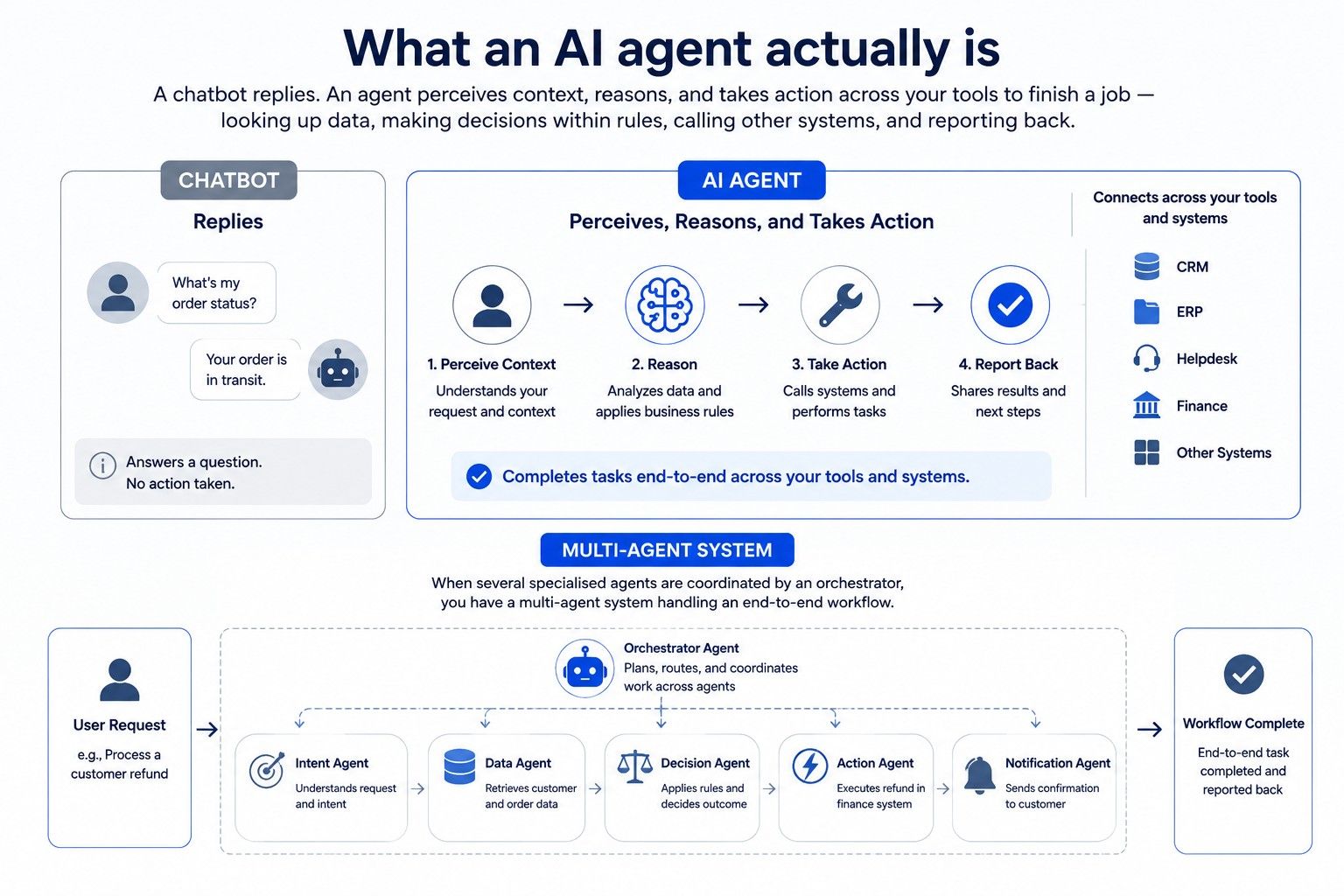
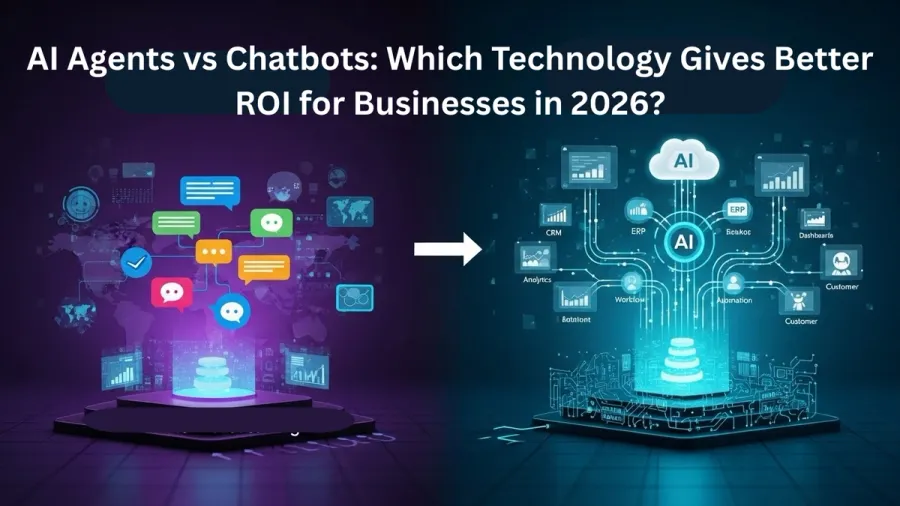
A chatbot replies. An agent perceives context, reasons, and takes action across your tools to finish a job looking up data, making decisions within rules, calling other systems, and reporting back. When several specialised agents are coordinated by an orchestrator, you have a multi-agent system handling an end-to-end workflow.
The use cases that actually ship
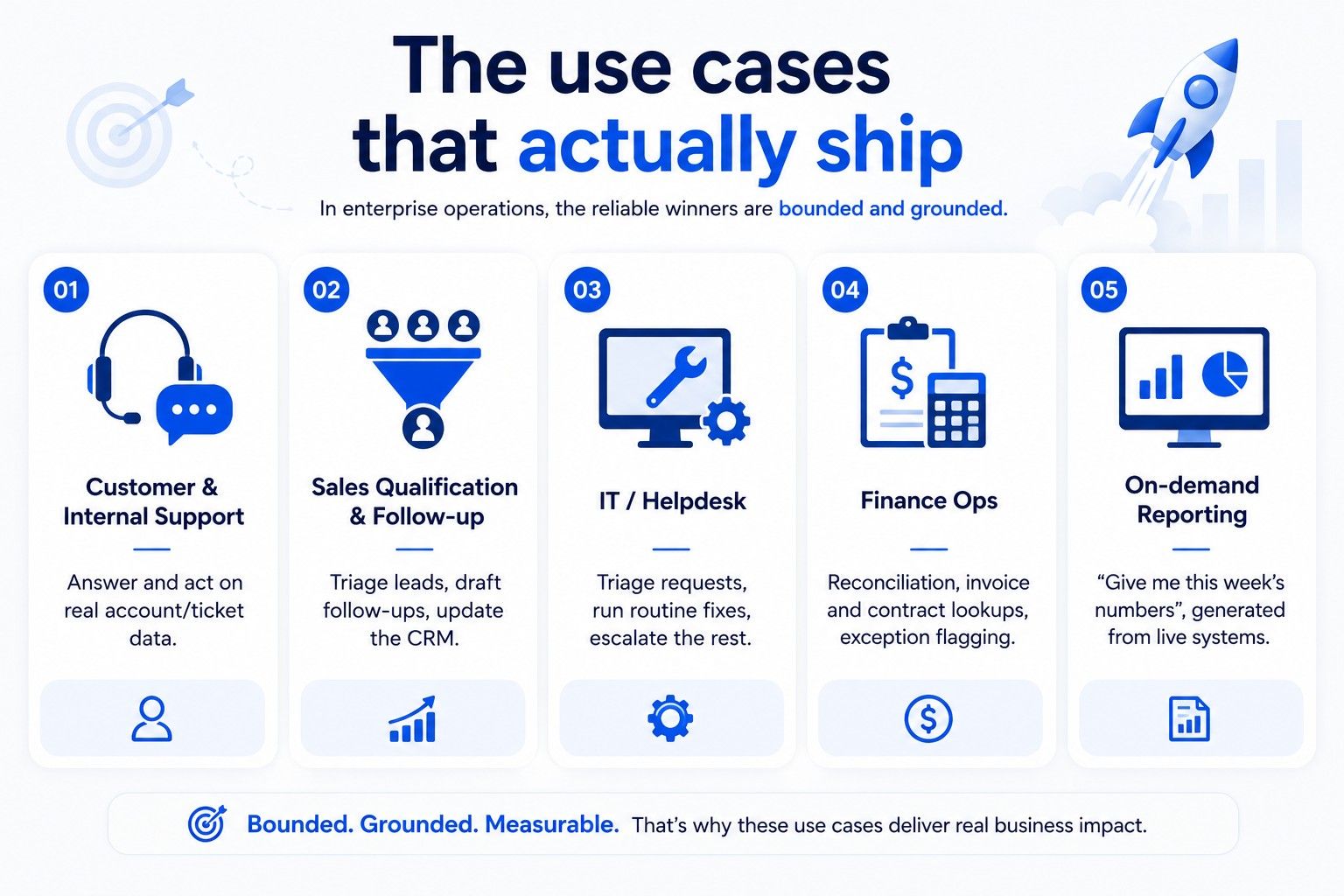
In enterprise operations, the reliable winners are bounded and grounded:
- Customer & internal support — answer and act on real account/ticket data.
- Sales qualification & follow-up — triage leads, draft follow-ups, update the CRM.
- IT / helpdesk — triage requests, run routine fixes, escalate the rest.
- Finance ops — reconciliation, invoice and contract lookups, exception flagging.
- On-demand reporting — “give me this week's numbers”, generated from live systems.
The three that usually don't (yet)
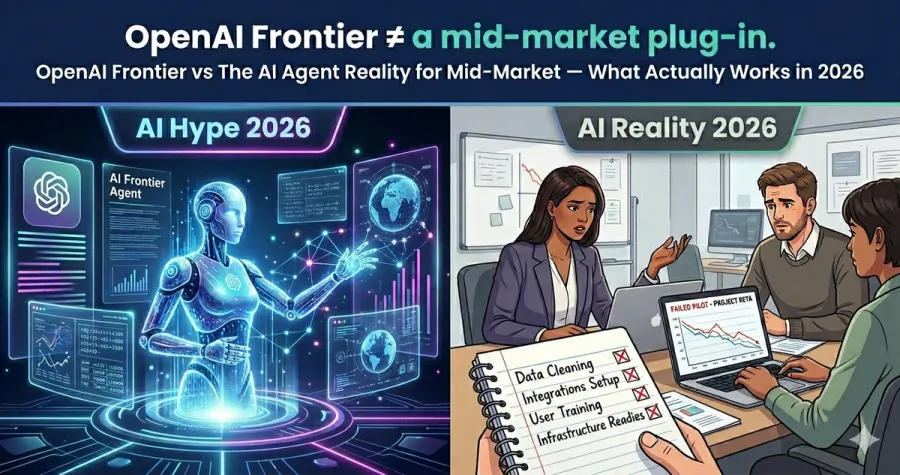
- Fully autonomous, open-ended agents with no bounded scope — they drift and break.
- Agents without data access — a clever model with no connection to your systems is a demo, not a tool.
- Unguarded agents on sensitive actions — no approvals, no audit; a compliance incident waiting to happen.
The common thread: success is about boundaries, data and guardrails not model cleverness.
What makes an agent reliable
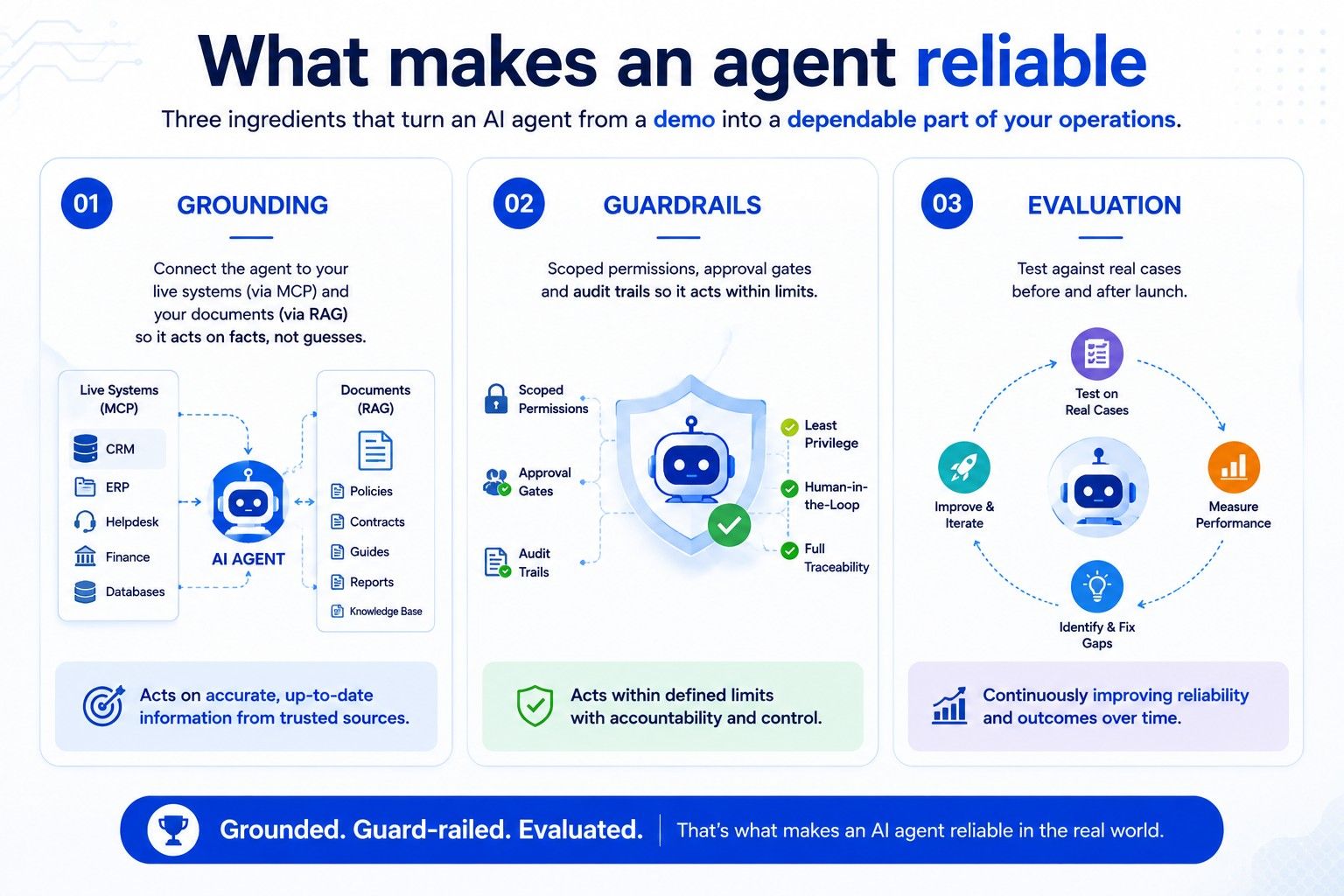
Three ingredients. Grounding connect the agent to your live systems (via MCP) and your documents (via RAG) so it acts on facts, not guesses. Guardrails scoped permissions, approval gates and audit trails so it acts within limits. Evaluation test against real cases before and after launch.
Proof: agents in production
We built a GenAI voice-and-chat project-management agent where users run their day by talking or typing “show my tasks”, “mark task 100 as completed” built on Flutter, Node.js and Gemini. The lesson from production is consistent: a narrow, well-grounded agent that genuinely removes work beats an ambitious one that impresses in a demo and stalls in reality.
How to start
Pick one bounded workflow with a clear success metric. Ground it, guard it, evaluate it, ship it then expand. And budget for adoption: like any enterprise system, an agent only delivers ROI once the team actually uses it, which is why we stay on-site until they do.
Frequently Asked Questions
What is the difference between an AI agent and a chatbot?
A chatbot answers questions; an AI agent takes action it executes multi-step tasks across your systems and reports back.
What is a multi-agent system?
Several specialised AI agents coordinated by an orchestrator to complete a complex workflow together.
Which enterprise AI agent use cases work best in 2026?
Bounded, data-grounded ones: customer and internal support, sales qualification, IT/helpdesk triage, finance reconciliation, and on-demand reporting.
How do you stop an agent from acting wrongly?
Ground it in your data, scope its permissions, require human approval for sensitive steps, and continuously evaluate.
How do we start with AI agents?
Start with one bounded workflow, ground it via MCP and RAG, add guardrails, prove it, then expand funding the adoption phase.
Start Your AI Journey