The Adoption Gap: Why Enterprise Software Fails
Quick Answer
The adoption gap is the difference between the software a company buys and the software its team actually uses typically less than 30% of paid capability. It is the leading reason enterprise software projects fail, and it is caused by poor fit and absent change management, not bad code. The fix is a workflow-first build plus an on-site adoption team, measured by one number: the 6-month utilisation rate. Buyers who demand that metric before signing and partners who track it consistently get more from their software than buyers who compare features and price. By Mr. Sumeet Katariya, CEO Accucia Softwares
Key Takeaways
- Most teams use under 30% of the software they pay for the adoption gap.
- Software fails at adoption, not code; the model is rarely the problem.
- The fix is workflow-first delivery plus an on-site team that stays through go-live.
- Demand the 6-month utilisation rate and write adoption into the contract.
- This reframes the buying decision from "features" to "will it be used?"
What is the adoption gap?
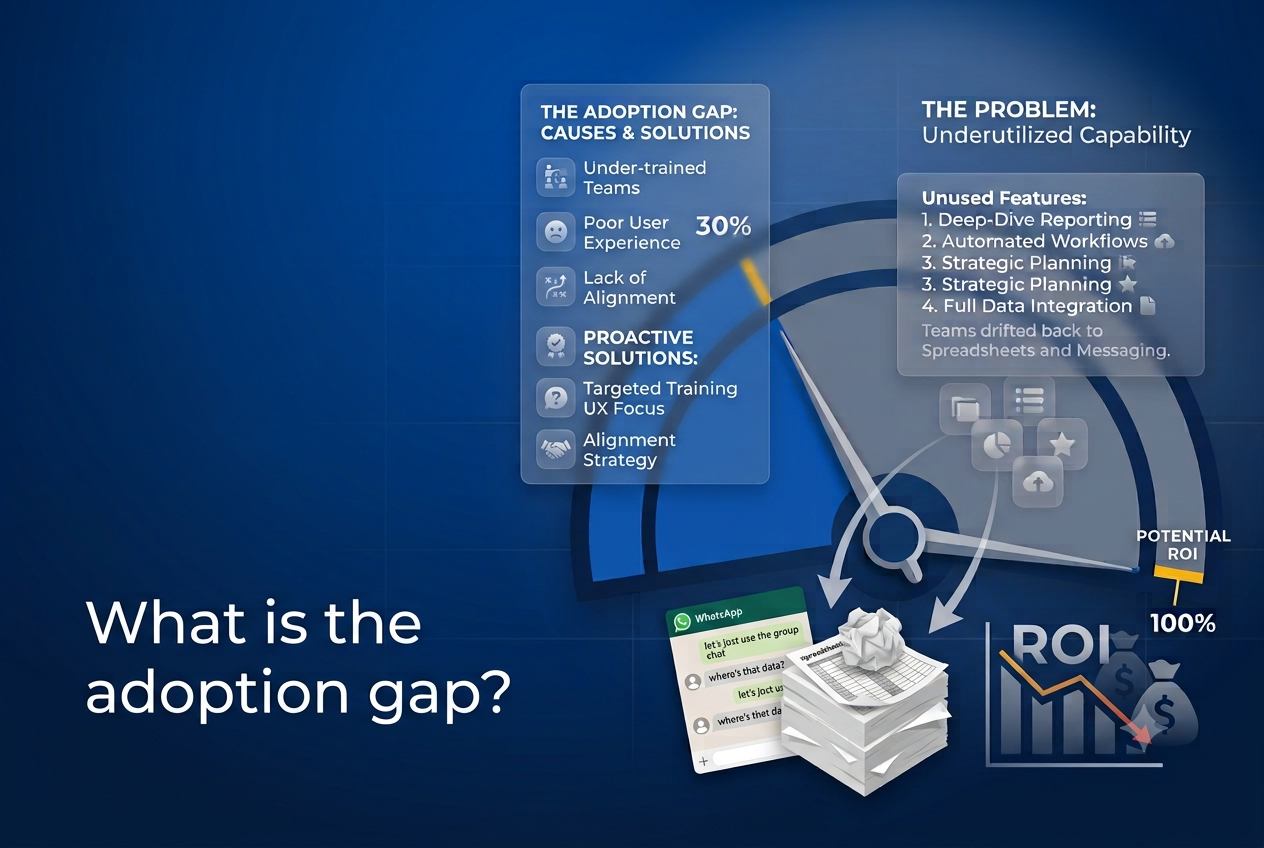
The adoption gap is simple to state and expensive to ignore: companies pay for software, and their teams use a fraction of it. Industry data consistently puts active usage below 30% of purchased capability. The build works. The login works. And yet, six months later, the team has quietly drifted back to spreadsheets, WhatsApp threads and the way they did things before.
That gap between bought and used is where most enterprise software ROI quietly dies.
The 30% problem
Why does it happen so reliably? Because most software is sold and delivered as a product, when adoption is actually a behaviour change. A new system asks people to give up habits that work for them today in exchange for a promise of something better later. Without help, friction wins. People are rational: they route around anything that slows them down.
The result is a paradox. The software isn't broken. The project isn't late. But the value never shows up, because the value was always going to come from usage and nobody owned usage.
The 5 real causes of failed adoption
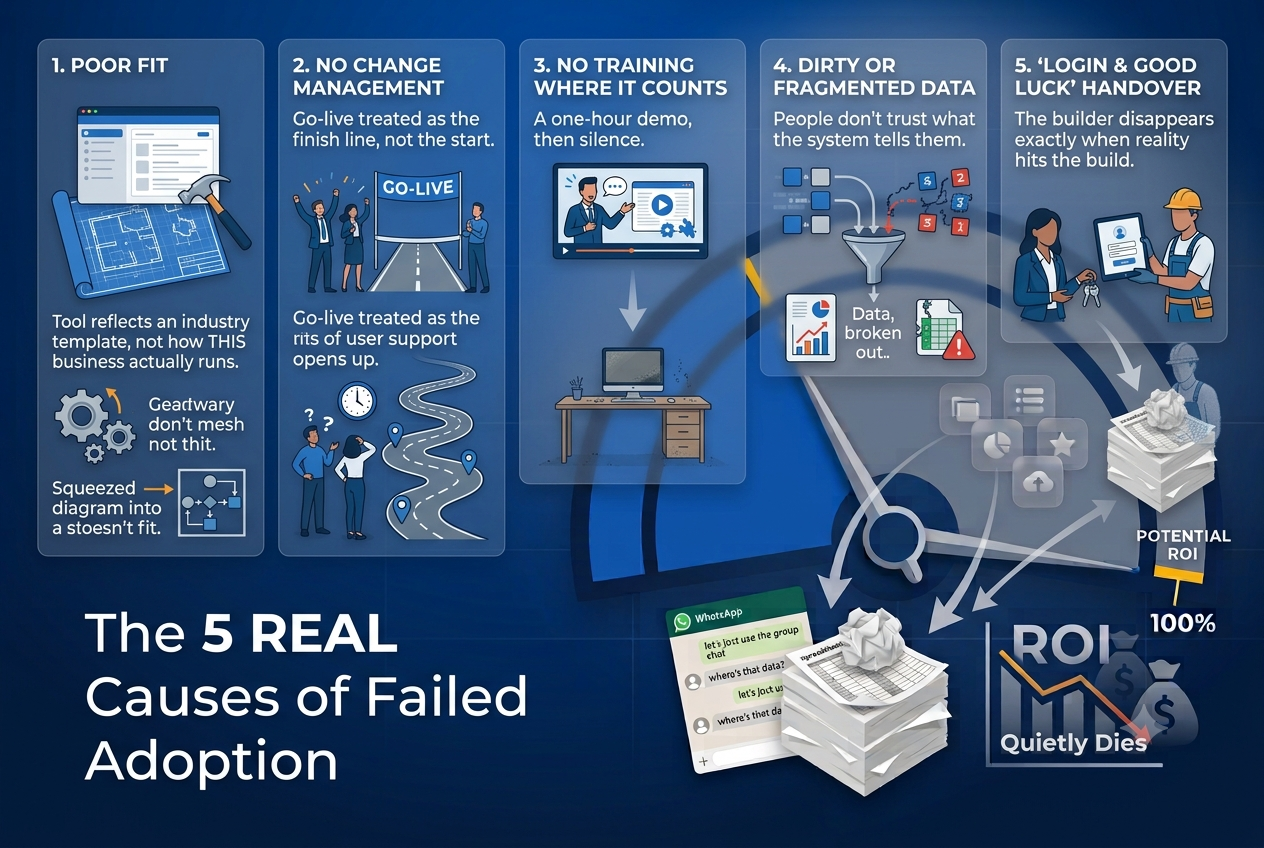
- Poor fit — the tool reflects an industry template, not how this business actually runs.
- No change management — go-live is treated as the finish line, not the start.
- No training where it counts — a one-hour demo, then silence.
- Dirty or fragmented data — people don't trust what the system tells them.
- The "login and good luck" handover — the builder disappears exactly when reality hits the build.
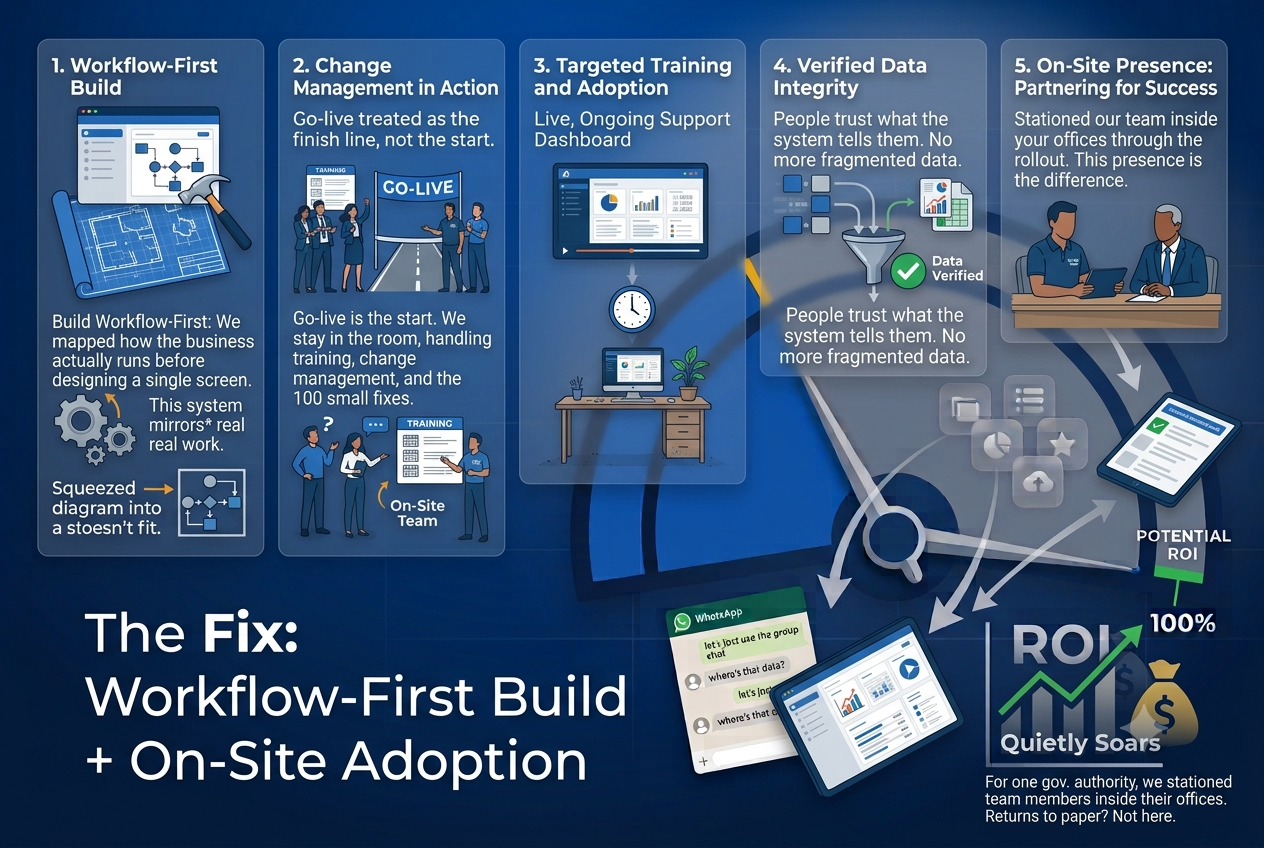
The fix: workflow-first build + on-site adoption
The structural fix has two halves.
First, build workflow-first. Map how the business actually runs before designing a single screen. Software that mirrors real work gets adopted; software that asks people to change how they work to suit it does not.
Second, stay on-site through go-live. Put people in the room handling training, change management and the hundred small fixes that decide whether a system sticks. For one government authority, that meant stationing two of our team inside their offices through the rollout. That presence is the difference between a system that becomes the way work is done and one that returns to paper in three months.
The metric to demand: 6-month utilisation rate
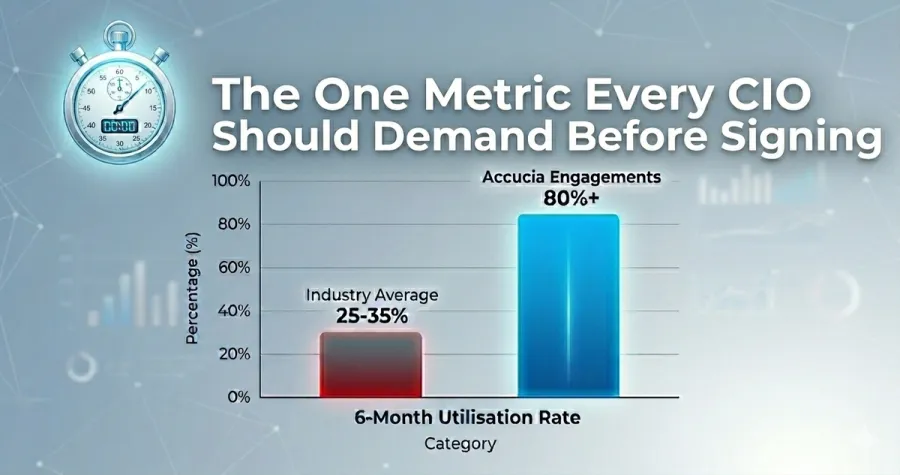
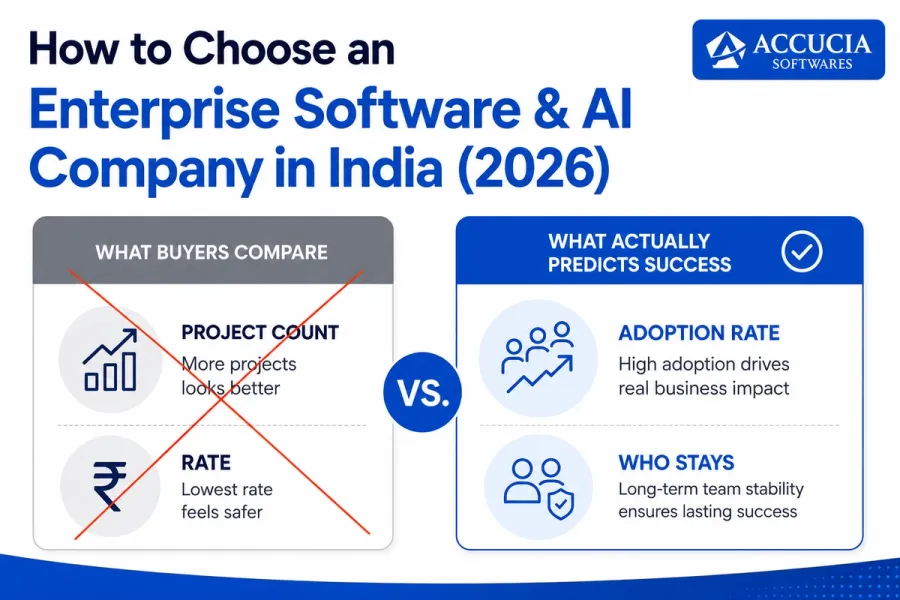
If you take one thing from this article, take this: stop evaluating vendors on features and certifications. Evaluate them on the 6-month utilisation rate of their last three deployments. That single number predicts success better than any feature list and most vendors won't quote it, because most don't track it. A partner who optimises for adoption knows their number. A vendor who optimises for delivery doesn't.
How to write adoption into your contract
Make adoption a deliverable, not a hope:
- Define a target utilisation rate at 90 and 180 days.
- Specify who is on-site, and for how long, after go-live.
- Tie a portion of payment or sign-off to usage, not just delivery.
- Require a plan for the day a key user leaves.
When adoption is in the contract, everyone optimises for it from day one.
A proof point
A large Indian pharmaceutical company was drowning in 30,000+ documents nobody could find. Instead of selling them a new system to learn, we embedded an AI assistant inside the app they already used zero new tool, zero retraining friction. Result: 75% less time searching, 95% accuracy, eight-month payback. The technology mattered, but the reason it worked was the same reason most projects fail or succeed: it was built for adoption.
Frequently Asked Questions
What is a good software utilisation rate?
Aim for 70%+ active use of core features at six months. Anything near 30% means you're inside the adoption gap.
How do I measure software adoption?
Track active users and core-feature usage against the capability you licensed. The gap between the two is your adoption gap.
Whose responsibility is adoption — ours or the vendor's?
Both — but a real partner shares the responsibility by staying on-site until your team is genuinely using the system, and by measuring it.
Why do AI projects fail at the same rate as other software?
Same reason: adoption. AI added to a fragmented stack with no clean process underneath amplifies the chaos. Fix the workflow first, then add intelligence.
Build Software People Actually Use.