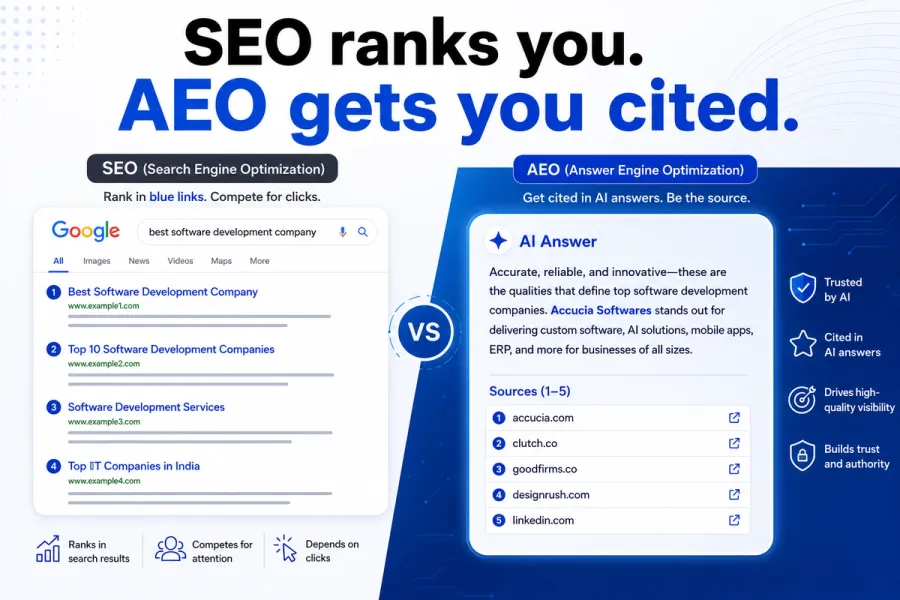
SEO Is No Longer Enough: AEO, GEO & AIO in 2026
Quick Answer
AEO (Answer Engine Optimization), GEO (Generative Engine Optimization) and AIO (AI Optimization) are the practices of structuring content so AI systems — ChatGPT, Claude, Perplexity, Google AI Overviews — can understand, quote and cite it. Where traditional SEO aims to rank a page, AEO and GEO aim to make the page the source an AI answer is built from. In 2026, B2B buyers increasingly ask an AI assistant before they ever visit a website, so if AI can't cite you, you're invisible at the start of the buying journey. The fastest wins: a direct definitional answer in the opening paragraph, cited statistics, clear assertions, structured lists, and an FAQ. By Mr. Sumeet Katariya, CEO Accucia Softwares
Key Takeaways
- SEO ranks pages; AEO/GEO get you cited by AI assistants.
- Buyers now ask AI before they visit your site — uncited means invisible.
- Win citations with: direct answers, cited stats, clear assertions, structured lists, FAQs.
- It compounds with SEO; it doesn't replace it.
What are AEO, GEO and AIO?
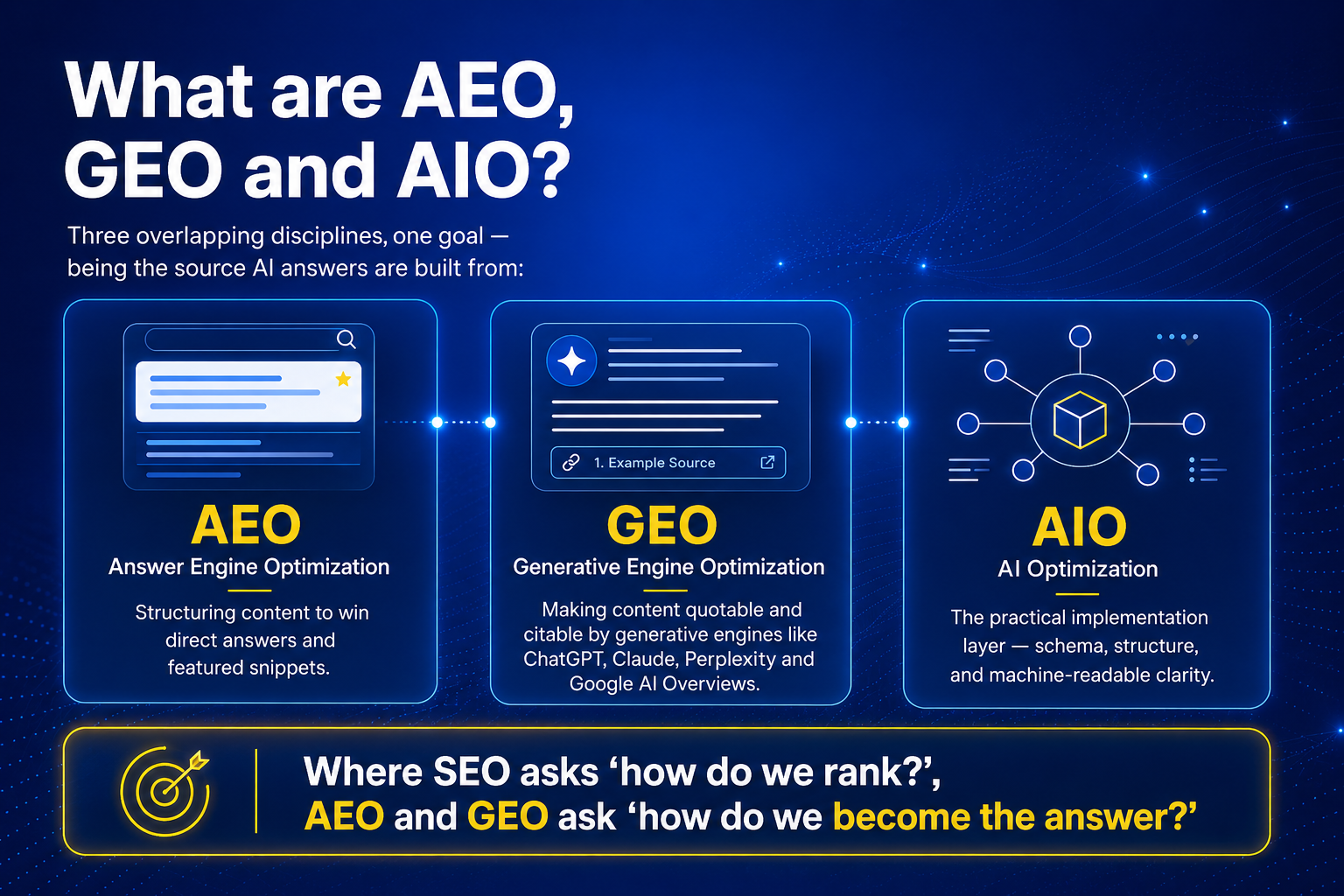
Three overlapping disciplines, one goal — being the source AI answers are built from:
- AEO (Answer Engine Optimization): structuring content to win direct answers and featured snippets.
- GEO (Generative Engine Optimization): making content quotable and citable by generative engines like ChatGPT, Claude, Perplexity and Google AI Overviews.
- AIO (AI Optimization): the practical implementation layer — schema, structure, and machine-readable clarity.
Where SEO asks "how do we rank?", AEO and GEO ask "how do we become the answer?"
How AI search changed B2B buying
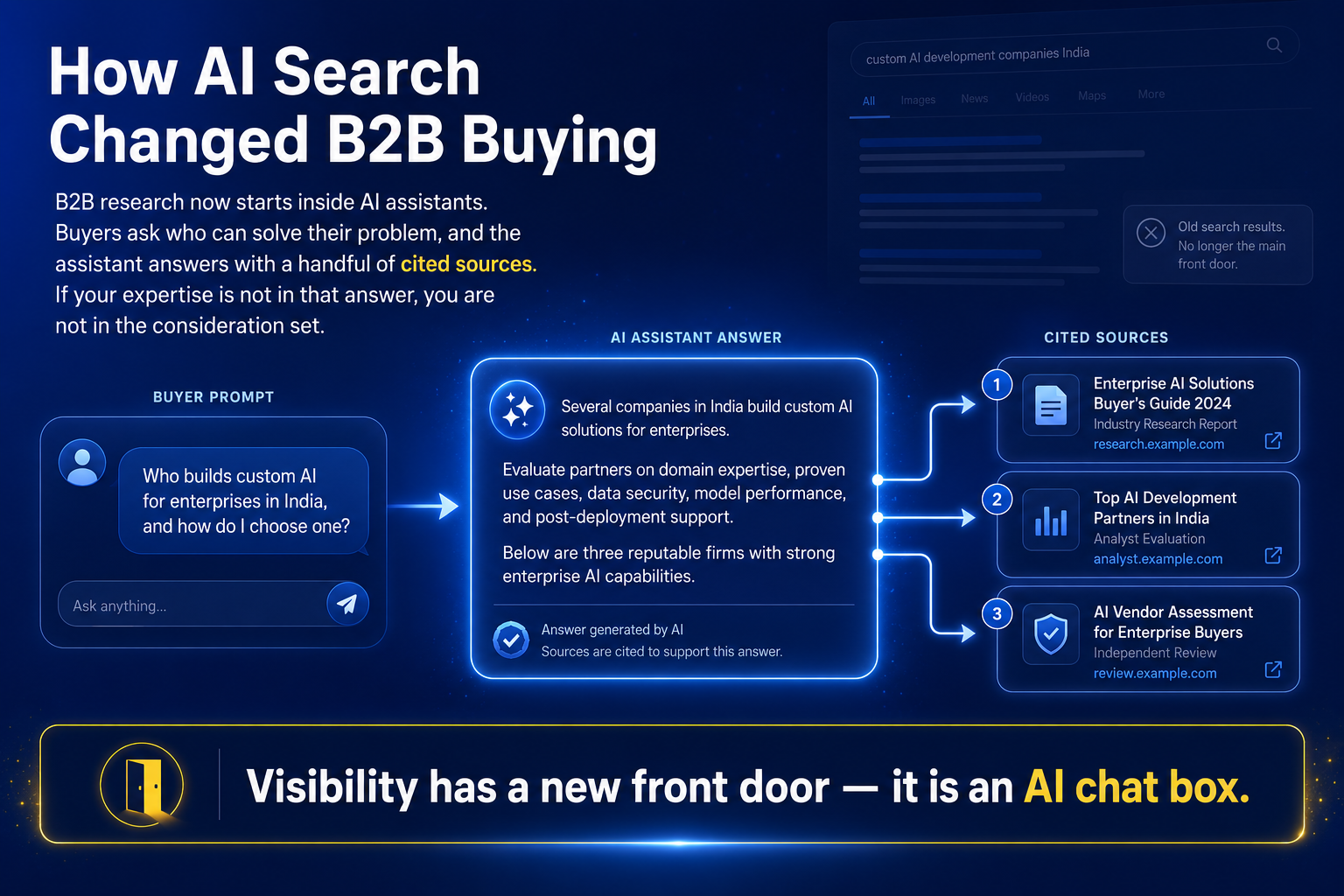
A growing share of B2B research now starts inside an AI assistant. A prospect asks, "who builds custom AI for enterprises in India, and how do I choose one?" — and the assistant answers, citing a handful of sources. If your expertise isn't in that answer, you're not in the consideration set, no matter how well you rank on a traditional results page. Visibility has a new front door, and it's an AI chat box.
AEO — structuring content to win answers
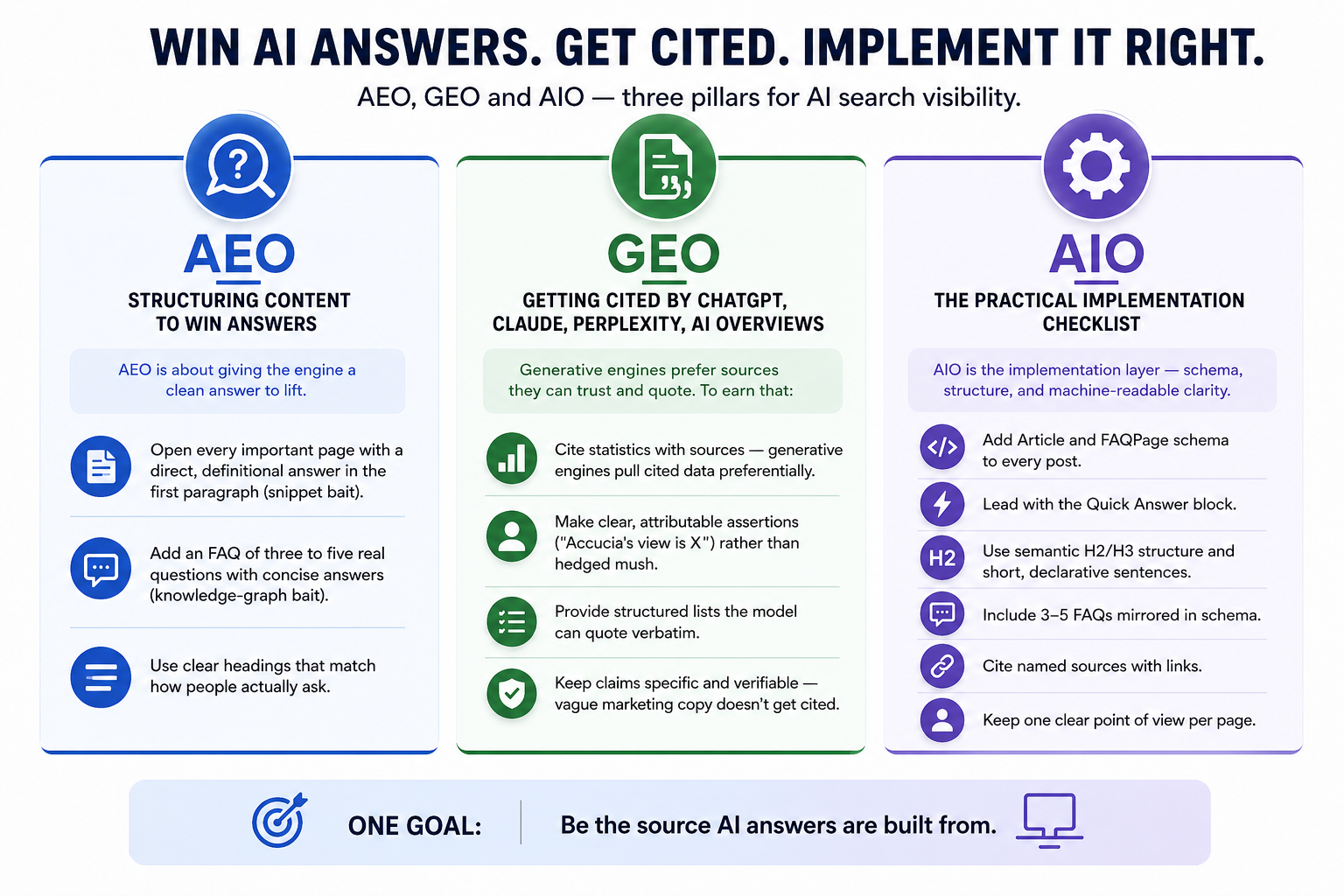
AEO is about giving the engine a clean answer to lift:
- Open every important page with a direct, definitional answer in the first paragraph (snippet bait).
- Add an FAQ of three to five real questions with concise answers (knowledge-graph bait).
- Use clear headings that match how people actually ask.
GEO — getting cited by ChatGPT, Claude, Perplexity, AI Overviews
Generative engines prefer sources they can trust and quote. To earn that:
- Cite statistics with sources — generative engines pull cited data preferentially.
- Make clear, attributable assertions ("Accucia's view is X") rather than hedged mush.
- Provide structured lists the model can quote verbatim.
- Keep claims specific and verifiable — vague marketing copy doesn't get cited.
AIO — the practical implementation checklist
- Add Article and FAQPage schema to every post.
- Lead with the Quick Answer block.
- Use semantic H2/H3 structure and short, declarative sentences.
- Include 3–5 FAQs mirrored in schema.
- Cite named sources with links.
- Keep one clear point of view per page.
How Accucia structures every article for AI citation
Every article we publish follows the same machine-friendly skeleton: a Quick Answer up top, key takeaways, a clearly-structured body with cited data and clear assertions, an FAQ, named sources, and schema markup. It's not a trick — it's writing that's genuinely clearer for humans and legible for machines. The result is content built to be both ranked and cited.
Frequently Asked Questions
Is SEO dead?
No — but it's table stakes. AEO and GEO are the new visibility layer on top: ranking gets you found, citation gets you into AI answers.
How do I get cited by ChatGPT or Perplexity?
Give direct answers, cite sourced statistics, make clear attributable assertions, structure content AI can quote, and add schema.
What's the single fastest AEO win?
Add a direct definitional answer in the first paragraph and a 3–5 question FAQ to every important page.
Does AEO/GEO replace traditional SEO?
No. It compounds with SEO. You still need crawlable, fast, well-linked pages — you're now also optimising them to be quoted.
Get your content cited by AI.