AI Knowledge Bot Case Study: 75% Less Search Time
Quick Answer
An enterprise AI knowledge bot is an AI assistant that answers staff questions by retrieving information from a company's own approved documents embedded inside the apps teams already use, rather than as a separate tool. In this case, a large Indian pharmaceutical company with 30,000+ documents nobody could find reduced time spent searching by 75%, with 95% answer accuracy and payback in eight months. The reason it worked wasn't the model it was that the AI was built for adoption: deployed inside the existing app, retrieving only from approved sources, with role-based access. By Mr. Sumeet Katariya, CEO Accucia Softwares
Key Takeaways
- 30,000+ documents, no findability knowledge existed but wasn't reachable.
- An AI assistant embedded in the existing app removed the adoption barrier entirely.
- Results: 75% less search time, 95% accuracy, 8-month payback.
- It retrieves only from approved sources with role-based access — safe for sensitive data.
The problem: information existed, but couldn't be found
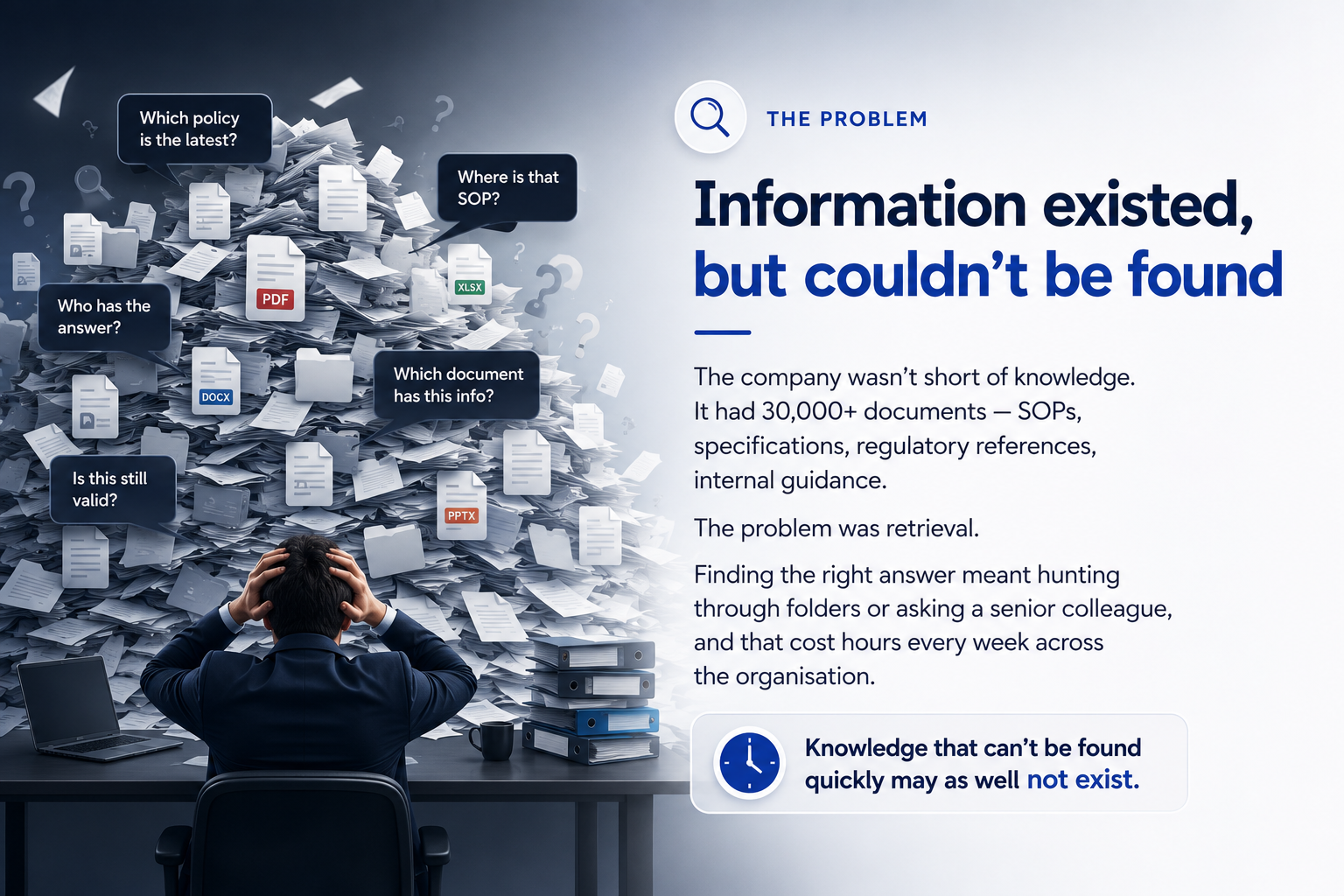
The company wasn't short of knowledge. It had 30,000+ documents — SOPs, specifications, regulatory references, internal guidance. The problem was retrieval. Finding the right answer meant hunting through folders or asking a senior colleague, and that cost hours every week across the organisation. Knowledge that can't be found quickly may as well not exist.
Why a new system was the wrong answer
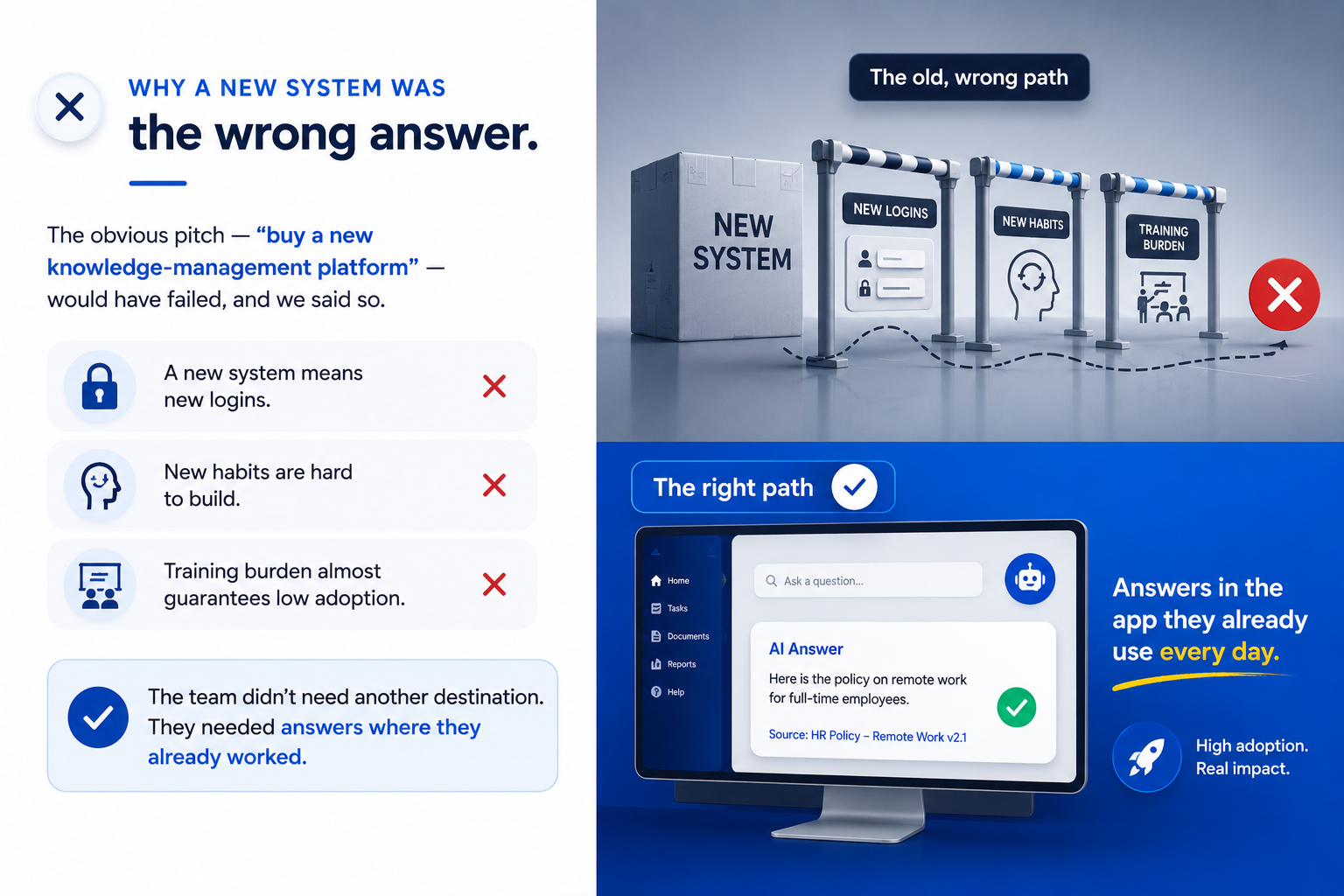
The obvious pitch — "buy a new knowledge-management platform" — would have failed, and we said so. A new system means new logins, new habits, and a training burden that almost guarantees low adoption. The team didn't need another destination. They needed answers where they already worked.
The approach: AI inside the app they already used
We embedded an AI assistant directly into the application the team already opened every day. No new tool. No retraining. A user asks a question in plain language and gets the right answer, drawn from the company's own approved documents, in seconds.
By removing the "new tool to learn" problem, we removed the single biggest reason this kind of project fails.
How it works (retrieval over approved documents)
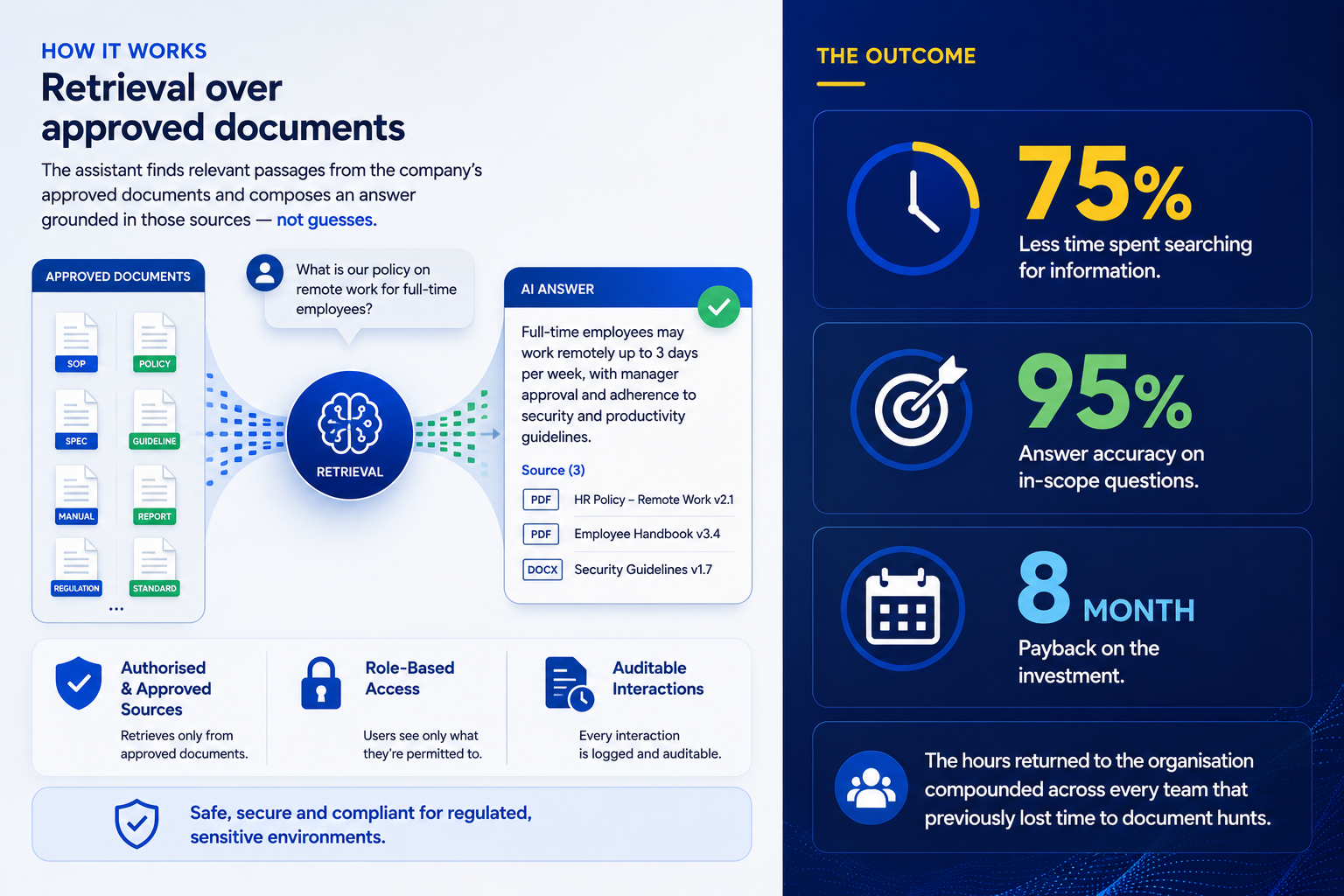
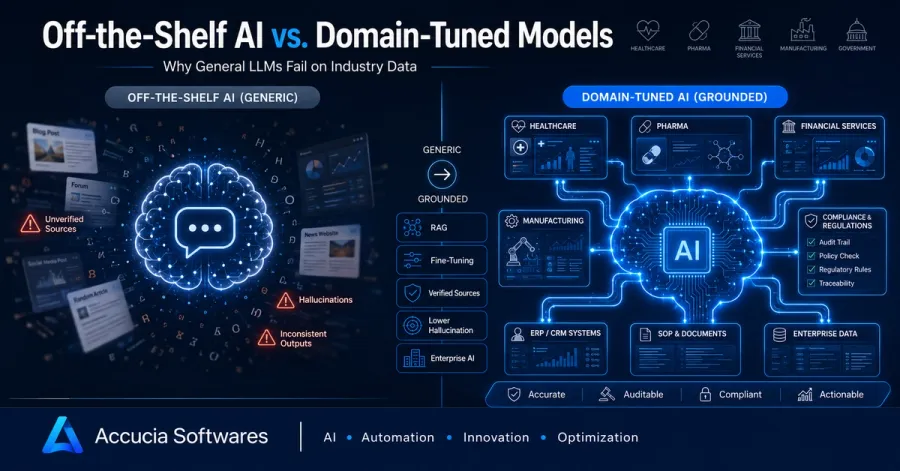
The assistant uses retrieval over the company's approved document set: it finds the relevant passages and composes an answer grounded in those sources, rather than guessing. Crucially:
- It retrieves only from authorised, approved documents.
- It respects role-based access — users see only what they're permitted to.
- Every interaction can be audited.
That combination is what makes an AI knowledge bot safe for a regulated, sensitive environment.
The outcome
- 75% less time spent searching for information.
- 95% answer accuracy on in-scope questions.
- Eight-month payback on the investment.
The hours returned to the organisation compounded across every team that previously lost time to document hunts.
How to apply this to your own knowledge base
The pattern generalises to any business sitting on knowledge it can't reach quickly:
- Consolidate and approve the source documents (clean data first).
- Embed the assistant where people already work, not in a new app.
- Enforce role-based access and audit from day one.
- Measure usage, not just deployment — adoption is the whole point.
Frequently Asked Questions
Is an AI knowledge bot safe with confidential documents?
Yes, when built correctly. It retrieves only from approved sources, respects role-based access, and logs interactions for audit — so it never exposes data a user isn't authorised to see.
Do staff need to learn a new tool?
No. The assistant is embedded in the application the team already uses, which is exactly why adoption is so high.
How accurate is an enterprise AI knowledge bot?
Built and tuned correctly over a clean, approved document set, 95%+ accuracy on in-scope questions is achievable, as in this case.
What's the prerequisite for a project like this?
A clean, approved set of source documents. Retrieval is only as good as the corpus it draws from.
Bring AI to Your Existing Systems.