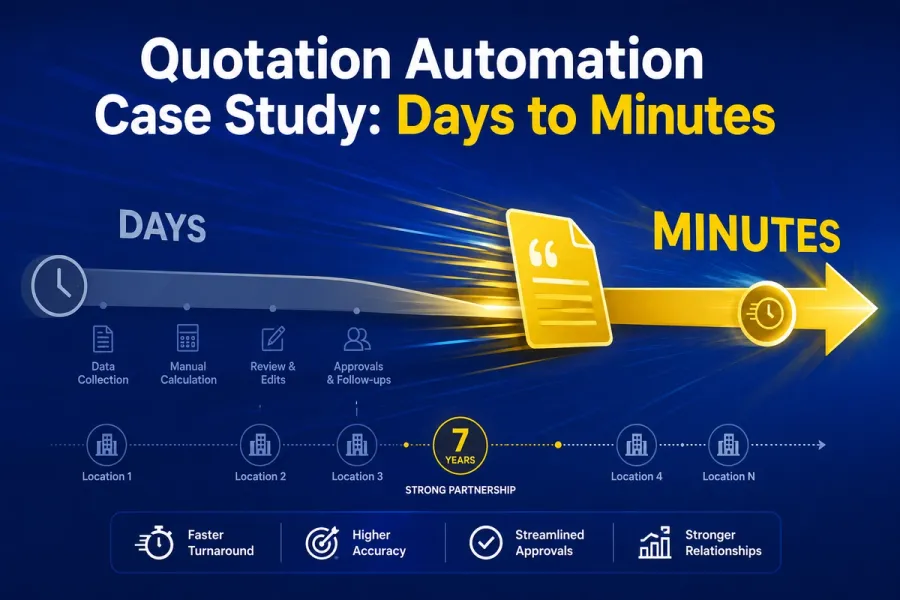
Manual Processes vs Automation Software: What’s Costing Your Business More?
The Hidden Cost Most Businesses Ignore
At first glance, manual processes seem cost-effective. No software investment, no onboarding, no technical setup.
But here’s the reality most businesses don’t see:
Manual work is silently draining your time, money, and growth potential.
From handling spreadsheets to tracking operations through calls and messages — businesses often operate in a reactive mode instead of a scalable system.
And in 2026, that’s no longer sustainable.
What Are Manual Processes in Business?
Manual processes are tasks performed without automation or centralized systems.
This includes:
- Managing data in Excel sheets
- Tracking operations through WhatsApp or calls
- Maintaining records manually
- Handling customer follow-ups without CRM
- Coordinating teams without structured systems
While this may work in the early stages, it becomes a major bottleneck as your business grows.
What Is Automation Software?
Automation software is designed to streamline, manage, and optimize business operations with minimal human intervention.
It helps businesses:
- Automate repetitive tasks
- Centralize data and operations
- Track performance in real-time
- Reduce errors and delays
- Improve team collaboration
In simple terms:
👉 Manual = Effort-based work 👉 Automation = System-based growth
Manual Processes vs Automation Software: Key Differences
1. Time Efficiency
Manual processes consume hours in repetitive work. Automation reduces hours into minutes.
👉 Example: Generating reports manually vs automated real-time dashboards.
2. Accuracy & Errors
Manual work increases the chances of human error. Automation ensures consistency and accuracy.
👉 One small mistake in manual data can cost thousands.
3. Scalability
Manual systems break as your business grows. Automation scales effortlessly with your operations.
👉 More clients = more chaos (manual) 👉 More clients = smooth operations (automation)
4. Cost Impact
Manual processes may seem cheaper initially. But hidden costs include:
- Time wastage
- Employee dependency
- Rework due to errors
- Missed opportunities
Automation, on the other hand, is an investment that reduces long-term costs.
5. Decision-Making
Manual systems lack real-time insights. Automation provides data-driven decisions instantly.
👉 No data = Guesswork 👉 Real-time data = Smart decisions
The Real Cost of Manual Processes
Let’s break it down clearly:
- ⛔ Delayed operations
- ⛔ Lack of visibility
- ⛔ Increased dependency on individuals
- ⛔ Poor customer experience
- ⛔ Missed growth opportunities
The biggest cost? → Lost scalability.
Because while you’re managing tasks manually, your competitors are automating and scaling faster.
How Automation Software Transforms Your Business
Automation is not just about saving time — it’s about building a system-driven business.
With the right software, you can:
✅ Manage operations from one platform ✅ Track performance in real-time ✅ Reduce manual errors ✅ Improve team productivity ✅ Deliver faster customer service ✅ Scale without operational chaos
When Should You Switch to Automation?
If you relate to any of these, it’s time:
- You are managing too many tasks manually
- Your team is overloaded with repetitive work
- You struggle with tracking data or performance
- You rely heavily on Excel, calls, or WhatsApp
- Your business growth feels slow or unstructured
👉 These are clear signs your system needs an upgrade.
Manual vs Automation: Final Verdict
Factor
Manual Processes
Automation Software
Time
Slow
Fast
Errors
High
Minimal
Scalability
Limited
High
Cost
Hidden losses
Long-term savings
Growth
Restricted
Accelerated
Conclusion: The Businesses That Win in 2026
In today’s competitive market:
👉 Businesses don’t fail because of lack of effort 👉 They fail because of lack of systems
Manual work might help you survive, but automation helps you scale.
Switch to automation today.