
Find out where AI actually pays back, before you spend a rupee building it.
A fixed-scope, two-week AI Readiness Audit of your systems, your data and the workflows quietly bleeding hours. You finish with a ranked list of use cases sized in rupees, one first project with a payback period, and a proposal you can take to any vendor you like. Rs 2 to 5 lakh, fixed.
Quick Answer
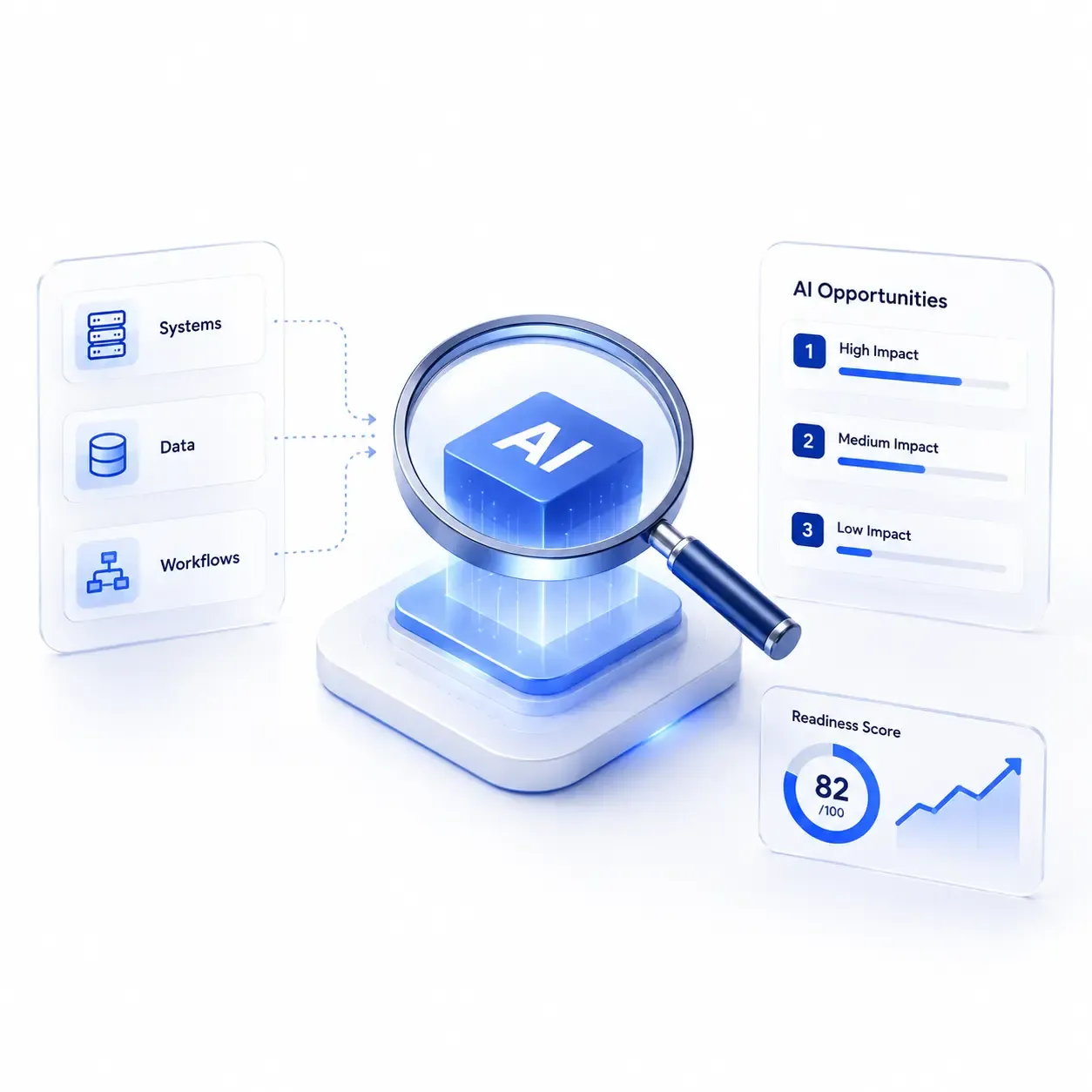
An AI readiness audit is a short, fixed-fee study that maps a company's systems, data quality and workflow leaks to find where AI will produce measurable payback before any build spending starts. Accucia Softwares Pvt. Ltd. runs one in two weeks for Rs 2 to 5 lakh. You receive a ranked list of 5 to 8 use cases sized in rupees per year, one recommended first project with its payback period, a data and integration readiness map, and a fixed-price proposal for that first project. Everything is vendor-neutral and yours to take to any partner you choose.
The problem
The pilot answers a question nobody is asking any more
Most enterprise AI budgets in 2026 still go to a pilot. Six to eight weeks, a demo, a room full of nodding heads, and then nothing. The pilot was built to answer "can this technology work?" That question was settled two years ago. It works.
The questions that actually decide whether AI produces money are different, and a pilot is a bad instrument for answering them:
- Which workflow in this business leaks the most money right now?
- Is the data that workflow depends on reachable, current and clean enough to feed anything?
- What can be integrated safely, given the systems you already run and the boundaries your CIO will enforce?
- What single number defines success, and whose name is against it?
A pilot costs a large cheque and answers none of those. An audit answers all four for a defined fee in two weeks. That is the whole argument.
One more thing worth saying out loud: most businesses use less than 30% of the software they already pay for. Before anyone buys something new, it is worth knowing what the existing stack is already capable of. The adoption gap in enterprise software.
Four layers, two weeks, one report
What the audit examines
Systems inventory
We list every system of record you run. ERP, CRM, HRMS, the ticketing tool, the reporting stack, and the spreadsheet nobody mentions until day three that half the operation actually depends on. For each one we map the integration surface: what API exists, what does not, where data can move and where it currently cannot. This is unglamorous work and it is the reason the later numbers hold up.
Build, buy or connect, and how to decide →Data reality check
The question is not do you have data. Everyone has data. The question is whether it is reachable, current, consistent and permissioned. We look for the things that quietly kill AI projects: two customer masters that disagree, fields the team stopped filling in three years ago, and process knowledge that lives entirely in one senior person's head and has never been written down. If your data cannot answer a question today, no model will answer it tomorrow.
How MCP turns your ERP into something AI can read →Workflow leak analysis
We follow where the hours actually go. Chasing approvals. Compiling the same report every Monday. Answering the same question from a different person for the fifth time. Follow-ups tracked in somebody's memory instead of a system. Each leak gets sized first in hours per week, then converted to rupees per year at your own cost base. That conversion is what turns a vague complaint into a business case.
Organisational readiness
Technology is the easy part. We work out who owns this after go-live, because a system with no owner drifts. We work out where the AI should live so people actually use it, which usually means inside a tool they already open every day rather than a new portal with a new password. And we get the security and compliance boundaries on paper early, so the CIO is not discovering them in week nine.
The adoption gap in enterprise software →Four deliverables, at the end of week two
What you receive
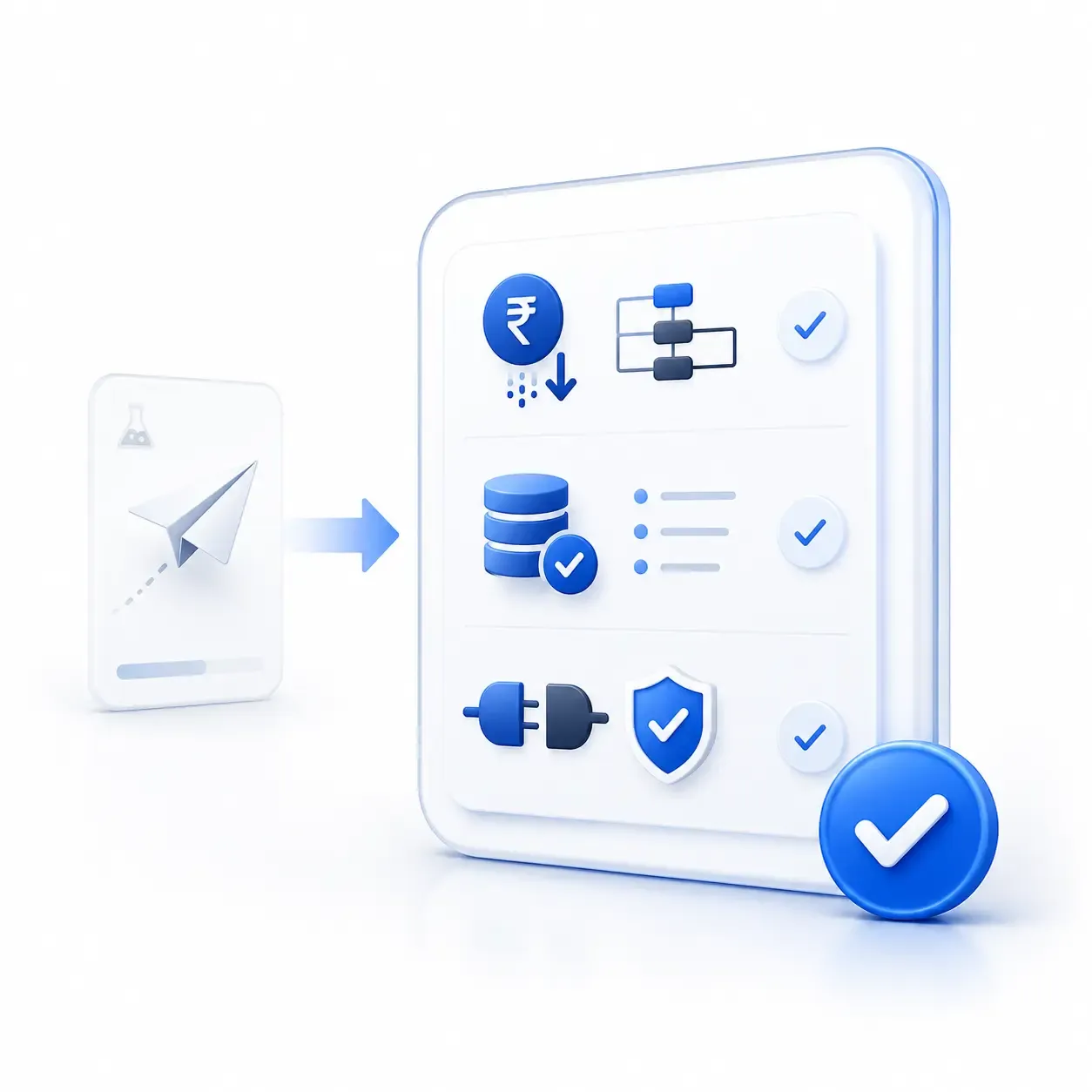
A ranked list of 5 to 8 use cases, each sized in rupees per year
Not a wish list. A ranked one, with the working shown.
One recommended first project, with its expected payback period
One. If a consultant hands you nine parallel workstreams, they are protecting their fee, not your outcome.
A data and integration readiness map
What is connectable today, what needs cleaning first, what needs a decision from you before anything can move.
A fixed-price proposal for that first project, with the metric it will be judged on
A number you can hold us to, and a number you can hold anyone else to.
Worth saying out loud
In roughly half the audits we run, the recommended first project is not the one the client came in asking about. The loud problem and the expensive problem are usually different problems. The loud one has someone complaining about it in every meeting. The expensive one is a quiet twenty minutes lost by forty people every day, and nobody has ever added it up.
The report is yours. Take it anywhere.
Everything the audit produces belongs to you. The use case ranking, the readiness map, the sizing model, the proposal. You can take all of it to another development partner, hand it to your internal team, run a tender with it, or put it in a drawer for a year.
We are not going to pretend this is charity. We would like to build the first project, and we think our proposal will be competitive. But the audit is priced to stand on its own, and it is written so it still makes sense in a room we are not in. If it only worked as a sales document it would not be worth Rs 2 lakh of your money.
Book the audit callPricing and timeline
Rs 2 to 5 lakh. Two weeks. Fixed.
The fee sits between Rs 2 lakh and Rs 5 lakh depending on how many systems and locations are in scope. We quote the exact number before we start and it does not move.
If you go ahead with a build afterwards, agent integrations start at Rs 15 lakh on fixed scope. Fixed scope is only possible because the audit already answered the questions that usually cause overruns.
What happens when the first project is the right one
A large Indian pharmaceutical company
An AI bot embedded inside the app employees already used every day. No new login, no new habit to build. Query handling time dropped 75%. Measured accuracy came in at 95%. New joiners reached productive speed 40% faster. The programme paid for itself in 8 months.
Lotus Imaging
Six clinics running on one platform instead of six sets of workarounds. Manual communication between sites fell by 80%. Opening the next clinic stopped being a project and became plug-and-play.
Utech Waterproofing
Quotation turnaround moved from days to minutes. The same platform later carried their multi-location US operations. The partnership is now past its seventh year, which we mention because most vendor relationships do not survive the second.
A government organisation in Maharashtra
Daily physical footfall at their offices dropped from over 2,000 people to under 700, in less than 45 days. Fewer people needing to turn up in person is the cleanest measure of a public service working.
Trusted By Industry Leaders


















For state departments
For State departments in Maharashtra, this is now policy
Maharashtra AI Policy 2026, Section 12, states it plainly:
"All State departments shall undergo an annual AI readiness audit."
GR No. POLICY-2026/C.R.64/IT (E-1604501), issued 6 May 2026
If you sit inside a State department, this is a compliance requirement with a clock on it, not an initiative to consider next year. Our audit is built to produce exactly what Section 12 describes, in a format your department can file and act on. We have delivered for government in Maharashtra before. One organisation we worked with cut daily footfall from over 2,000 to under 700 in under 45 days.
What the audit delivers for a State department
- Section 12 compliant AI readiness report
- Ranked use cases sized in citizen-service impact and cost savings
- Data and system readiness map across all departments in scope
- Fixed-price proposal for the highest-value first project
- Format your department can file and act on
Who this is for, and who it is not for
This is for you if
- You run 100 or more people, or fewer people across several locations or entities.
- You already have systems in place. ERP, CRM, hospital or clinic software, a plant system, something. The audit maps what exists.
- Someone in leadership has been asked what is our AI plan and does not want to answer it with a pilot.
- You are a State department in Maharashtra with a Section 12 obligation.
- You have a budget conversation coming and need a number with working behind it.
This is not for you if
- You want a proof of concept to show the board. We do not do those, and you can get one cheaply elsewhere.
- You have already picked the project, signed the vendor and just want validation. The audit will probably disagree with you, which is an expensive way to buy agreement.
- You are under 20 people with one system. The leaks are visible without us. Email services@accucia.com and we will point you at something free.
Questions we get asked before signing
Everything you need to know about the AI Readiness Audit
An AI readiness audit is a fixed-fee study that examines your systems, your data quality, your workflow leaks and your organisational readiness to find where AI will produce measurable payback. It is done before any build spending, so the money goes to the right project instead of the loudest one. Accucia Softwares Pvt. Ltd. delivers one in two weeks for Rs 2 to 5 lakh.
Accucia charges between Rs 2 lakh and Rs 5 lakh, fixed. The position within that range depends on how many systems, locations and business units are in scope. We give you the exact figure before the engagement starts and it does not change during the two weeks.
Two weeks end to end. From your side we typically need about 6 to 12 hours in total, spread across short interviews with the people who actually do the work, plus read access to the systems in scope. We schedule around your operations rather than asking you to clear calendars.
No. Every deliverable is vendor-neutral and yours to keep. You can take the ranked use cases, the readiness map and the fixed-price proposal to any development partner, hand it to your internal team, or run a formal tender with it. We would like to build the first project, and our proposal will be competitive, but the audit is priced and written to stand on its own.
Usually yes, and often uncomfortably so. In roughly half of the audits we run, the recommended first project is not the one the client arrived asking about. The loud problem and the expensive problem tend to be different problems. If the audit confirms your choice, you have gone into a large spend with a sized business case and a named success metric, which is worth having anyway.
Directly. Maharashtra AI Policy 2026, Section 12, states that all State departments shall undergo an annual AI readiness audit. The policy was issued on 6 May 2026 under GR No. POLICY-2026/C.R.64/IT (E-1604501). Our audit is scoped to meet that requirement. We have delivered for government in Maharashtra, including one organisation where daily footfall fell from over 2,000 to under 700 in under 45 days.
Two weeks from now you could have the number
Or you could still be in the meeting where everyone agrees AI is important and nobody can say what it is worth here. The audit costs less than the first month of a pilot and it tells you whether the pilot was ever worth running.
Prefer to write first? services@accucia.com. Founded 2018 by Mr. Sumeet Katariya, Accucia Softwares Pvt. Ltd. works from Pune with clients in India, the US, the UK, Europe, the Middle East, Australia and Southeast Asia.
Book the audit call
30 minutes. We respond within one business day.
We'll be in touch within one business day.
Check your inbox — and feel free to WhatsApp us if you'd like to move faster.