About Slum Rehabilitation Authority
The Slum Rehabilitation Authority (SRA), Brihanmumbai, established by the Government of Maharashtra in 1995, is responsible for implementing slum rehabilitation schemes across Mumbai. Serving millions of slum dwellers, developers, architects, and other stakeholders, SRA plays a crucial role in urban development and providing dignified housing to Mumbai's urban poor.
The Challenge
SRA's previous website, like many government portals, was outdated, slow, and difficult to navigate. With thousands of daily visitors seeking scheme information, circulars, and services, the website had become a bottleneck rather than a helpful resource.
Critical Pain Points:
Slow Performance and User Experience: Old website technology resulting in 10-15 second load times. Poor mobile experience with non-responsive design. Complex navigation confusing citizens and stakeholders. Outdated interface not meeting modern web standards. Frequent crashes during peak hours. Citizens abandoning website due to poor experience.
Limited Accessibility: No proper multilingual support despite serving Marathi and Hindi-speaking citizens. Poor accessibility for users with disabilities. Not optimized for low-bandwidth connections common in Mumbai. Text-heavy pages difficult to read and navigate. No clear information hierarchy. Search functionality inadequate or non-existent.
Content Management Difficulties: Static HTML pages requiring developers for every update. No content management system for staff. Delays in publishing circulars and notifications. Inconsistent formatting across pages. Difficulty maintaining content accuracy. High cost and time for minor updates.
Language Barriers: Website primarily in English excluding large citizen base. Poor quality translations when attempted. No easy language switching. Legal and scheme information not accessible to non-English speakers. Developers and citizens preferring regional languages had difficulty. Missing government mandate for multilingual access.
Scheme Information Chaos: Scheme details scattered across different pages. No structured scheme information portal. Difficult to find relevant schemes by location or type. Outdated scheme status and information. No search or filter capabilities. Citizens unable to find what they need.
Circular and Document Management: Hundreds of circulars with no organization. No search or filter by date, category, or topic. PDF downloads slow and unreliable. No preview capability. Broken links to important documents. Missing historical circulars and orders.
No Online Services Integration: Citizens still visiting office for information available online. No application status tracking. Forms not downloadable or fillable online. No integration with other government systems. Missing opportunities for digital service delivery. High administrative burden with physical visits.
Maintenance and Scalability Issues: Old technology stack difficult to maintain. Lack of documentation for legacy system. Cannot handle traffic spikes during important announcements. Security vulnerabilities in outdated frameworks. Expensive hosting and maintenance. Difficult to add new features.
The Solution: Modern, Fast, and Accessible Government Portal
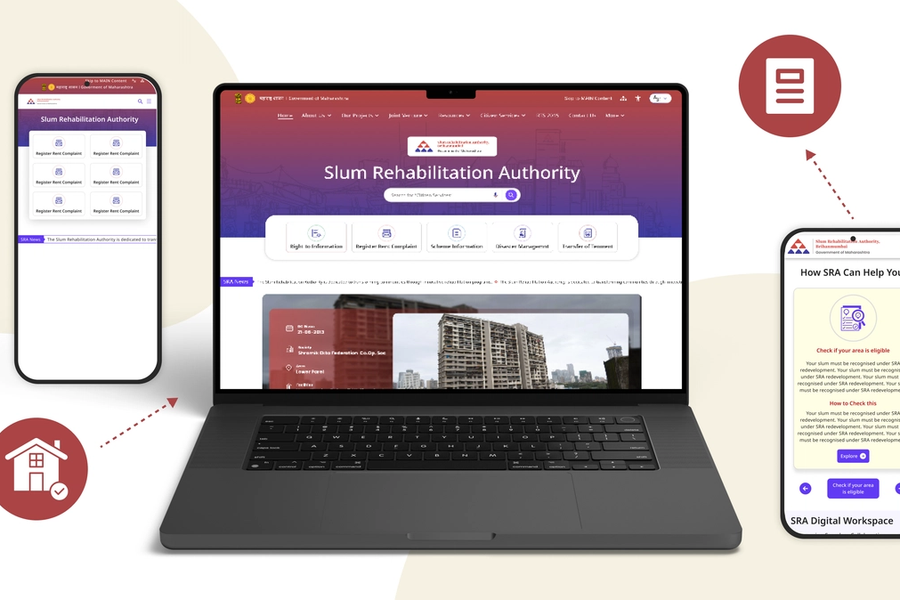
We rebuilt the SRA website from the ground up using modern web technologies - Next.js for blazing-fast frontend, NestJS for scalable backend, and MongoDB for flexible data management. The result is a citizen-centric portal that's fast, accessible, and easy to use.
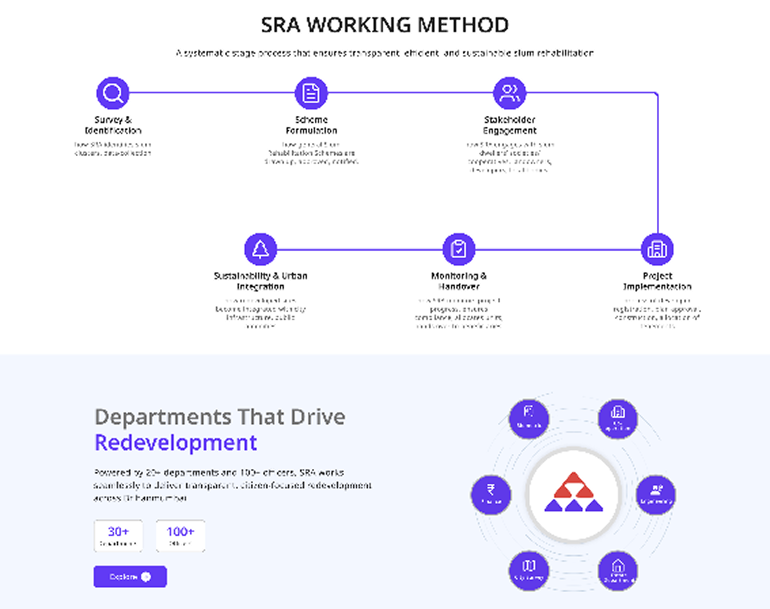
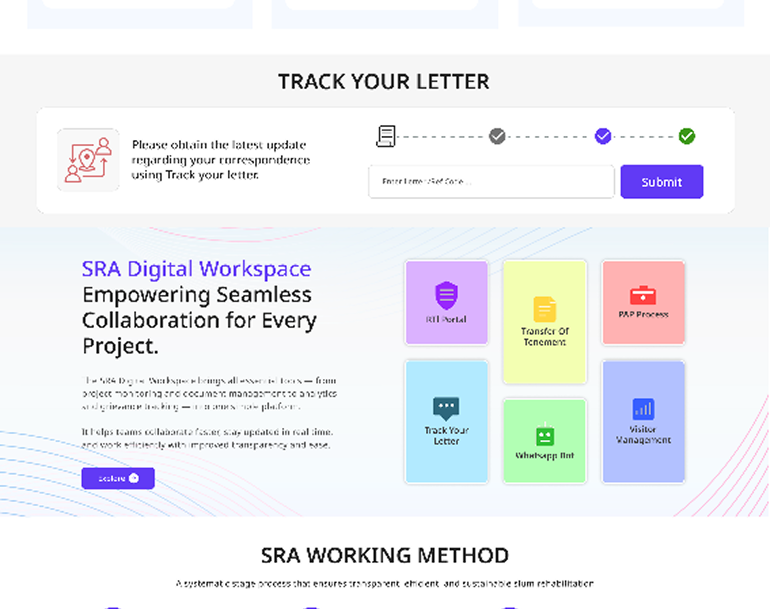
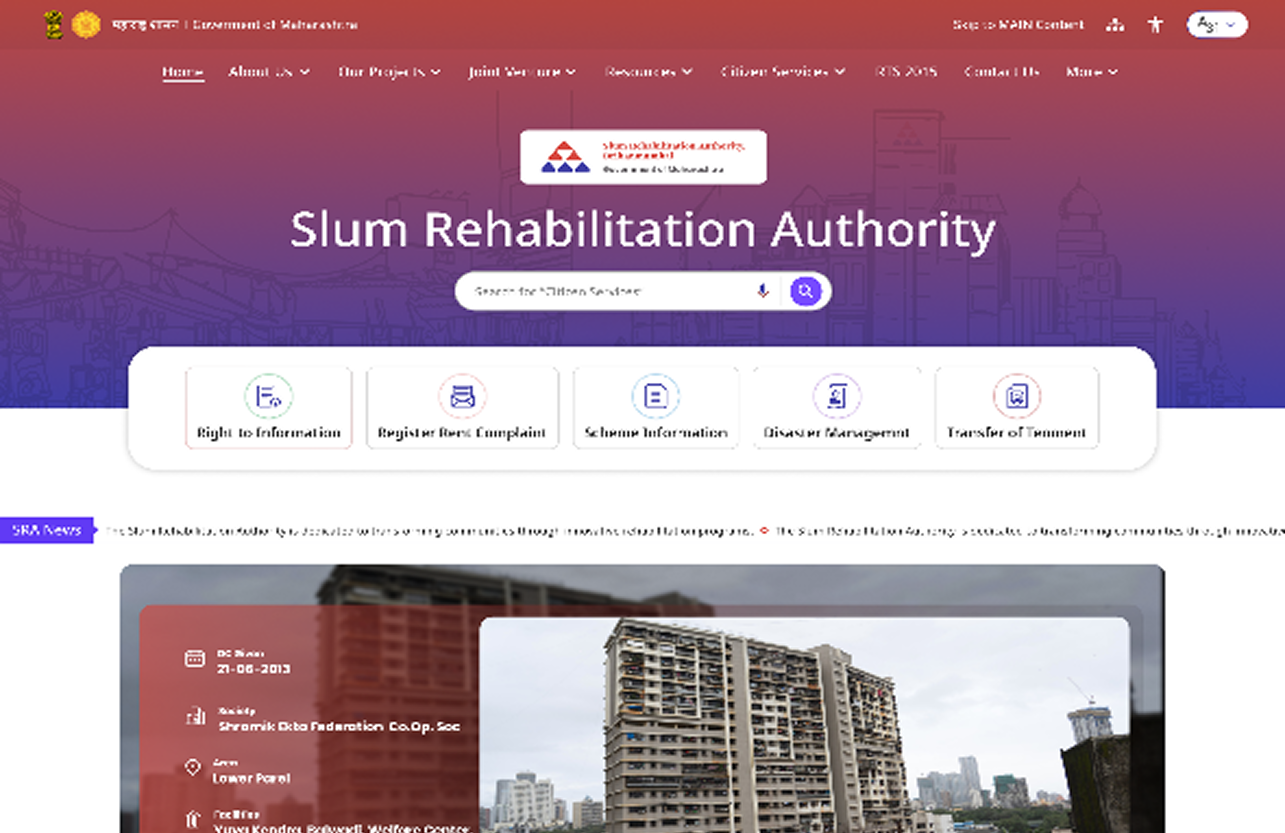
Website Showcase
High-Performance Frontend with Next.js
Lightning-fast user experience with modern React framework.
Server-Side Rendering (SSR): Pages pre-rendered on server for instant loading. Critical content visible in under 2 seconds. SEO-optimized for better discoverability. Dynamic content with static speed. Improved search engine rankings. Better social media sharing previews.
Static Site Generation (SSG): Static pages for circulars, schemes, and content. Built at deploy time for maximum speed. CDN distribution for global fast access. Zero database queries for static content. Instant page transitions. Reduced server load significantly.
Optimized Performance: Automatic code splitting loading only needed JavaScript. Image optimization with WebP and lazy loading. Prefetching of likely next pages. Minimal bundle sizes for fast downloads. Works excellently on 3G connections. Lighthouse score above 90/100.
Progressive Web App (PWA): Install on mobile home screen like native app. Offline capability for previously visited pages. Push notification support for announcements. Fast, app-like experience. Automatic updates in background. Works across all devices seamlessly.
Responsive Design: Perfect experience on desktop, tablet, and mobile. Mobile-first approach for primary users. Touch-friendly interface elements. Adaptive layouts for all screen sizes. Consistent experience across devices. Tested on 100+ device combinations.
Multilingual Support
Complete language accessibility for diverse citizens.
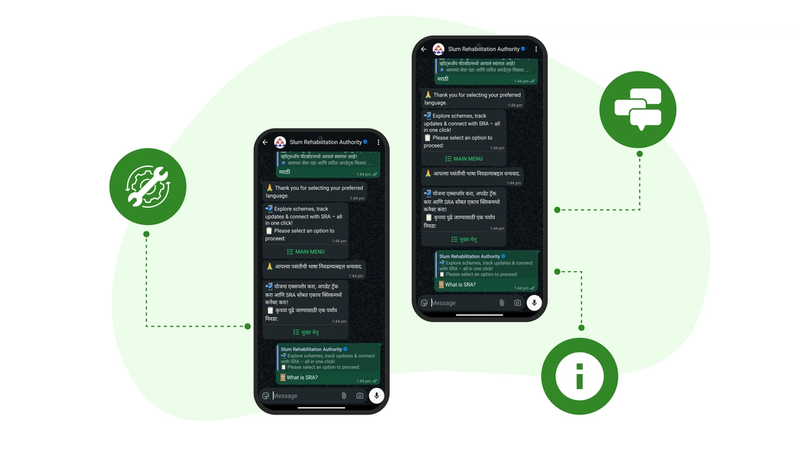
Three-Language Support: Full website available in English, Marathi, and Hindi. Professional translations by language experts. All content including UI, schemes, and circulars. Consistent terminology across languages. Cultural appropriateness in translations. Regular translation updates with new content.
Easy Language Switching: Prominent language selector on every page. Remembers user's preferred language. Smooth transition without page reload. URL structure supporting all languages. Search engine indexing per language. Language-specific SEO optimization.
Right-to-Left Support: Proper layout for Hindi content. Text alignment and direction correct. Interface elements positioned appropriately. Typography optimized for Indian languages. Font rendering for complex scripts. Accessibility in all languages.
Translation Management: Admin panel for managing translations. Easy content updates in all languages. Translation workflow with review process. Consistency checks across languages. Missing translation alerts. Export/import for professional translation services.
Scheme Information Portal
Organized, searchable repository of all SRA schemes.
Comprehensive Scheme Database: All active and historical schemes listed. Detailed information for each scheme. Scheme status and progress updates. Location-based scheme finding. Developer and architect information. Contact details for inquiries.
Advanced Search and Filters: Search by scheme name, location, or CTS number. Filter by ward, village, or area. Filter by scheme type and status. Date-based filtering. Combined filters for precise results. Search results with relevance ranking.
Scheme Detail Pages: Complete scheme information on dedicated pages. Timeline of approvals and milestones. Documents and plans available for download. Visual maps showing scheme location. Related schemes suggestions. Citizen feedback and queries section.
Interactive Maps: GIS integration showing scheme locations. Ward and village boundary visualization. Click on map to see schemes. Zoom and pan for exploration. Mobile-optimized map interface. Export map data for reports.
Document Access: Letters of Intent (LOI), approvals, and clearances. Building plans and layouts. Eligibility lists and allotments. Occupancy certificates. All documents searchable and downloadable. Version history for updated documents.
Circular and Notification Management
Organized system for official communications.
Structured Circular Repository: All circulars categorized by department and topic. Chronological and reverse chronological views. Latest circulars highlighted on homepage. Archive of historical circulars. Numbering and reference system. Status (Active, Superseded, Withdrawn) tracking.
Smart Search and Filter: Full-text search across all circulars. Filter by date range, department, category. Search within PDF contents. Related circulars suggestions. Popular and frequently accessed circulars. Bookmark circulars for quick access.
Notification System: Latest notifications on homepage. Email subscription for new circulars. SMS alerts for critical notifications. Category-based subscriptions. RSS feeds for automatic updates. Push notifications for mobile users.
Download Center: Organized downloads by category. Application forms and templates. Guidelines and manuals. Annual reports and publications. Tenders and RFPs. Media resources and logos.
Content Management System
Easy-to-use admin panel for staff to manage website.
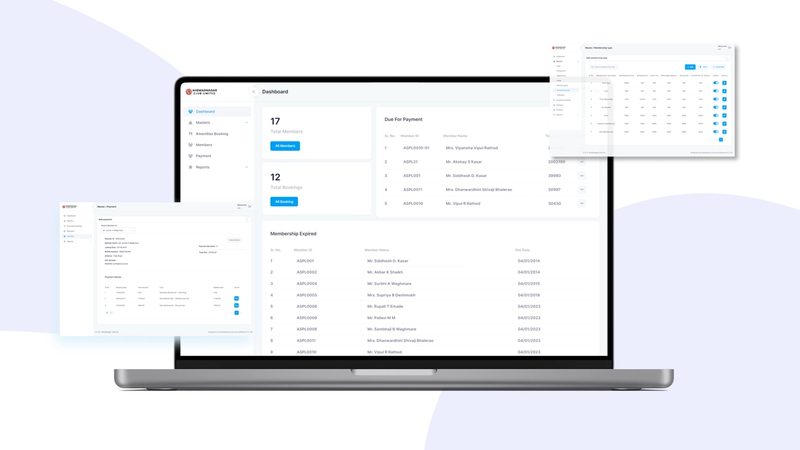
Intuitive Admin Dashboard: Simple interface requiring minimal training. Role-based access for different departments. Dashboard showing recent activities. Quick actions for common tasks. Analytics and usage statistics. Content approval workflows.
Easy Content Publishing: Rich text editor for news and pages. Drag-and-drop image uploads. Preview before publishing. Schedule content for future publication. Multiple authors and editors support. Version history and rollback.
Circular Management: Upload circulars with metadata. Categorize and tag for organization. Set expiry or supersede circulars. Bulk upload for multiple documents. Automatic PDF thumbnail generation. Track downloads and views.
Multilingual Content: Edit content in all languages side-by-side. Translation status tracking. Automated translation suggestions (human verified). Consistency checks across languages. Missing translation warnings. Easy content synchronization.
Media Library: Centralized repository for images and documents. Organize by folders and tags. Image editing and resizing tools. Automatic optimization for web. Reusable media across pages. Unused media cleanup tools.
Scalable Backend with NestJS
Enterprise-grade API architecture powering the portal.
RESTful API Architecture: Clean API design following best practices. Modular structure for easy maintenance. Versioned APIs for backward compatibility. Comprehensive error handling. Validation at every layer. Detailed API documentation.
Efficient Data Management: MongoDB for flexible schema design. Optimized database queries for speed. Indexing for fast searches. Caching frequently accessed data. Connection pooling for performance. Automatic backups and redundancy.
Security Features: Input validation and sanitization. Protection against SQL injection, XSS, CSRF. Rate limiting preventing abuse. Secure file upload handling. Encrypted sensitive data. Regular security audits and updates.
Admin Authentication: Secure login for administrators. Role-based permissions (Admin, Editor, Viewer). Session management with timeout. Two-factor authentication option. Activity logging for audit trails. Password policies and reset flows.
Integration Capabilities: API for mobile app integration. Third-party service connections. Payment gateway integration for future. GIS system integration. Email and SMS service integration. Analytics platform connection.
Technical Architecture
Frontend Stack: Next.js 14 with React 18 for modern UI. TypeScript for type safety and better development. Tailwind CSS for responsive styling. Server-side rendering and static generation. Progressive Web App capabilities. Accessibility built-in from start.
Backend Stack: NestJS framework for scalable Node.js backend. TypeScript for consistency across stack. Modular architecture for maintainability. Dependency injection for clean code. Comprehensive testing suite. API documentation with Swagger.
Database: MongoDB for flexible document storage. Mongoose ODM for data modeling. Indexed collections for fast queries. GridFS for large file storage. Replica sets for high availability. Automated backups every 6 hours.
Infrastructure: Cloud hosting with auto-scaling. CDN for fast global content delivery. Load balancing for high availability. SSL certificates for security. DDoS protection. Monitoring and alerting systems.
Development Practices: Git version control with branching strategy. CI/CD pipeline for automated deployment. Code review and quality checks. Automated testing (unit, integration, E2E). Staging environment before production. Regular security scanning.
Technology Stack
The Business Impact
Performance Improvement
- 85% reduction in page load time (15 seconds to 2 seconds) - 99.9% uptime vs previous 95% availability - Handles 10x more concurrent users without slowdown - Mobile page speed score improved from 30 to 92 - Zero downtime deployments for updates
User Experience Enhancement
- 10,000+ daily users accessing information smoothly - 70% reduction in bounce rate showing better engagement - 400% increase in mobile traffic due to responsive design - Citizens finding information in 2 minutes vs 15 minutes earlier - Positive feedback from 90% of surveyed users
Accessibility Achievement
- Three-language support serving diverse population - WCAG 2.1 AA compliance for accessibility - Works on 2G/3G connections effectively - Screen reader compatible for visually impaired - Keyboard navigation support throughout
Administrative Efficiency
- 80% reduction in time to publish circulars and news - Content updates done in minutes vs days - Zero dependency on developers for content changes - 5 staff members can manage entire website - Automated workflows reducing manual work
Cost Savings
- 60% reduction in hosting and maintenance costs - Eliminated need for separate mobile app initially planned - Reduced support calls by 50% due to better information access - Lower development costs for new features - Reduced office visits saving administrative time
Digital Transformation
- Foundation for future online services - Reduced physical office visits for information - Better citizen engagement through digital channel - Improved SRA's public image with modern portal - Platform ready for integration with other systems
What Made It Successful
1. Modern Technology Stack: Next.js providing performance and SEO benefits. Server-side rendering for instant page loads. TypeScript ensuring code quality and maintainability. MongoDB flexibility for evolving requirements. Cloud infrastructure for scalability and reliability.
2. User-Centric Design: Extensive user research with citizens and stakeholders. Simple navigation based on user mental models. Mobile-first approach for primary user base. Accessibility as core requirement not afterthought. Continuous feedback and iterative improvements.
3. Multilingual from Start: Professional translations for accuracy. Cultural appropriateness in content. Easy language switching encouraging usage. SEO optimization for each language. Government compliance with language mandates.
4. Content Management Empowerment: Non-technical staff can manage website independently. Quick publishing without bottlenecks. Approval workflows maintaining quality. Reduced dependency on IT department. Ownership by content owners.
5. Performance Focus: Lighthouse score optimization from start. Image and code optimization techniques. CDN distribution for fast global access. Caching strategies reducing server load. Regular performance monitoring and tuning.
6. Scalable Architecture: NestJS providing enterprise-grade backend. Modular design enabling easy feature additions. API-first approach for future integrations. Horizontal scaling capability for growth. Clean code and documentation for maintainability.
Key Challenges Overcome
Legacy Data Migration: Converting years of content from old system. Cleaning and organizing unstructured data. Maintaining URLs for SEO continuity. Ensuring no information loss. Validating migrated content accuracy.
Multilingual Implementation: Professional translation of 1000+ pages. Maintaining translation consistency. Handling dynamic content translation. UI text in multiple languages. Testing across all language combinations.
Government Accessibility Standards: Meeting WCAG 2.1 AA compliance requirements. Color contrast and text sizing. Keyboard navigation implementation. Screen reader compatibility. Regular accessibility audits.
Performance on Low Bandwidth: Optimization for 2G/3G connections. Progressive image loading. Minimal JavaScript for core functionality. Offline capability for important sections. Testing on actual low-speed networks.
Security Requirements: Government-grade security implementation. Data protection and privacy compliance. Penetration testing and vulnerability assessment. Regular security updates and patches. Compliance certifications.
User Adoption: Training administrative staff on CMS. Creating documentation and videos. Handling resistance to change. Gradual rollout with pilot users. Continuous support during transition.
Beyond SRA: Government Portal Expertise
While built for SRA, our approach applies to all government websites.
State Departments: Digital portals for any state department. Citizen service delivery platforms. Document management systems. Multilingual support across India. Mobile-first government websites.
Municipal Services: City corporation websites. Public utility information portals. Citizen grievance systems. Service application platforms. Integrated government services.
Educational Institutions: University and college websites. Student information portals. Online admission systems. Result publication platforms. Research and publication repositories.
Healthcare Services: Hospital information systems. Patient portal development. Health scheme information. Appointment booking systems. Medical record management.
Any Government Organization: If your department needs a modern, fast, accessible, and multilingual website, we have proven expertise in government digital transformation.
Need a Modern Government Website?
If your government department or public organization needs a website that serves citizens effectively, loads fast, works on mobile, and supports multiple languages, we can help transform your digital presence.
What We Can Build For You:
Modern government portals, citizen service platforms, multilingual websites, content management systems, document repositories, scheme information systems, online application platforms, and custom government solutions.
Transform Your Government Website
Let
Final Thoughts
Government websites are not just about putting information online - they're about serving citizens effectively, making services accessible, and building trust through transparency and efficiency.
The SRA website demonstrates that with modern technology, government portals can match or exceed private sector website quality while serving millions of citizens effectively. Fast performance, multilingual support, and easy content management aren't luxuries - they're necessities for effective digital governance.
As India advances in digital transformation, every government website should be fast, accessible, mobile-friendly, and easy to maintain. The technology exists, the benefits are clear, and the citizens deserve nothing less than excellent digital service delivery.