Web Application Development Government & Public Sector
Apex Grievance Redressal Committee - Unified Grievance Management Portal
Transforming Citizen Grievance Redressal with Transparency & Efficiency
Client: Apex Grievance Redressal Committee
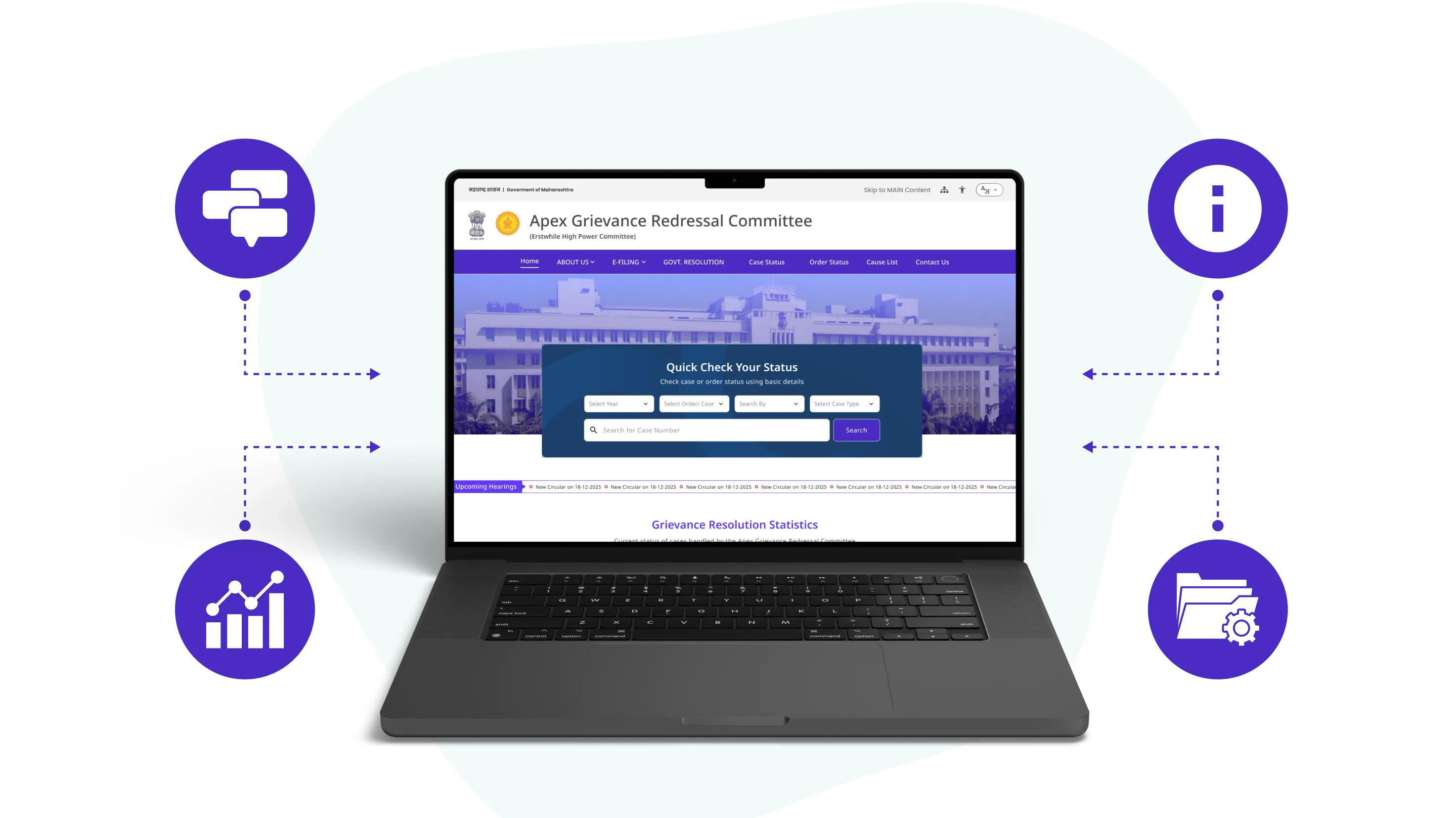
Transforming Citizen Grievance Redressal with Transparency & Efficiency
The Apex Grievance Redressal Committee (AGRC) is a government body responsible for addressing and resolving citizen grievances across various departments and services. Established to ensure administrative accountability and citizen satisfaction, the committee processes grievances ranging from public service complaints to policy-related concerns. The committee serves as the final appellate authority for grievance redressal.
The grievance redressal system operated with two distinct frameworks - 2007-2017 and 2017 till today regulations, each with different procedures, forms, and processing workflows. This duality created confusion for citizens and administrative burden for staff.
Dual System Complexity:
Grievances from 2007-2017 followed a legacy manual submission process with paper-based forms, physical submission at government offices, manual record keeping in bound registers, and limited tracking mechanisms. Grievances from 2017 till today introduced new regulations with different forms, updated procedures, modified timelines, and separate databases. Staff had to constantly switch between two systems based on grievance date. Citizens were unsure which system applied to their case. Training new staff on both workflows was difficult. Reporting required consolidating data from two sources.
Limited Citizen Access:
Grievance submission required physical presence at government offices. Working citizens couldn’t file during office hours. Rural residents traveled long distances to submit grievances. No online submission facility existed. Forms were only available in physical locations. Incomplete forms caused rejection and repeat visits. Queue buildup at submission counters. No acknowledgement receipt guarantee.
Opaque Processing:
Citizens had no visibility into grievance status after submission. No way to know which officer was handling the case. Unclear timelines for resolution. Difficulty knowing if action was being taken. No communication on delays or requirements. Citizens felt grievances disappeared into black hole. Trust deficit in grievance mechanism. Repeated inquiries burdening staff.
Manual E-Filing Challenges:
The existing e-filing process was cumbersome with multiple steps. Complex interface confusing to ordinary citizens. Frequent system errors and timeouts. Limited document upload functionality. No save and continue option. Session expiration losing data. No mobile-friendly interface. Browser compatibility issues. Poor user experience discouraging use.
Data Silos and Reporting Issues:
2007-2017 data in legacy database format. Post-2017 data in modern database. No unified view of all grievances. Difficulty generating comprehensive reports. Trend analysis impossible across time periods. No insights into recurring grievance types. Department performance couldn’t be compared holistically. Historical precedents difficult to research. Statistical reporting required manual consolidation.
Transparency and Accountability Gaps:
No public dashboard showing grievance statistics. Department-wise resolution rates not visible. Performance metrics not published. Citizen satisfaction not measured. No mechanism for grievance feedback. Delayed grievances not flagged publicly. Officer accountability not transparent. No escalation matrix visible to citizens. Limited recourse for unresolved grievances.
Compliance and Audit Requirements:
Strict regulatory compliance for both 2007-2017 and 2017-today periods. Audit trail requirements for each grievance. Document retention policies varying by period. Data protection regulations to follow. RTI requests for grievance information difficult to fulfill. Historical data preservation mandatory. System changes required documentation. Migration of legacy data complex.
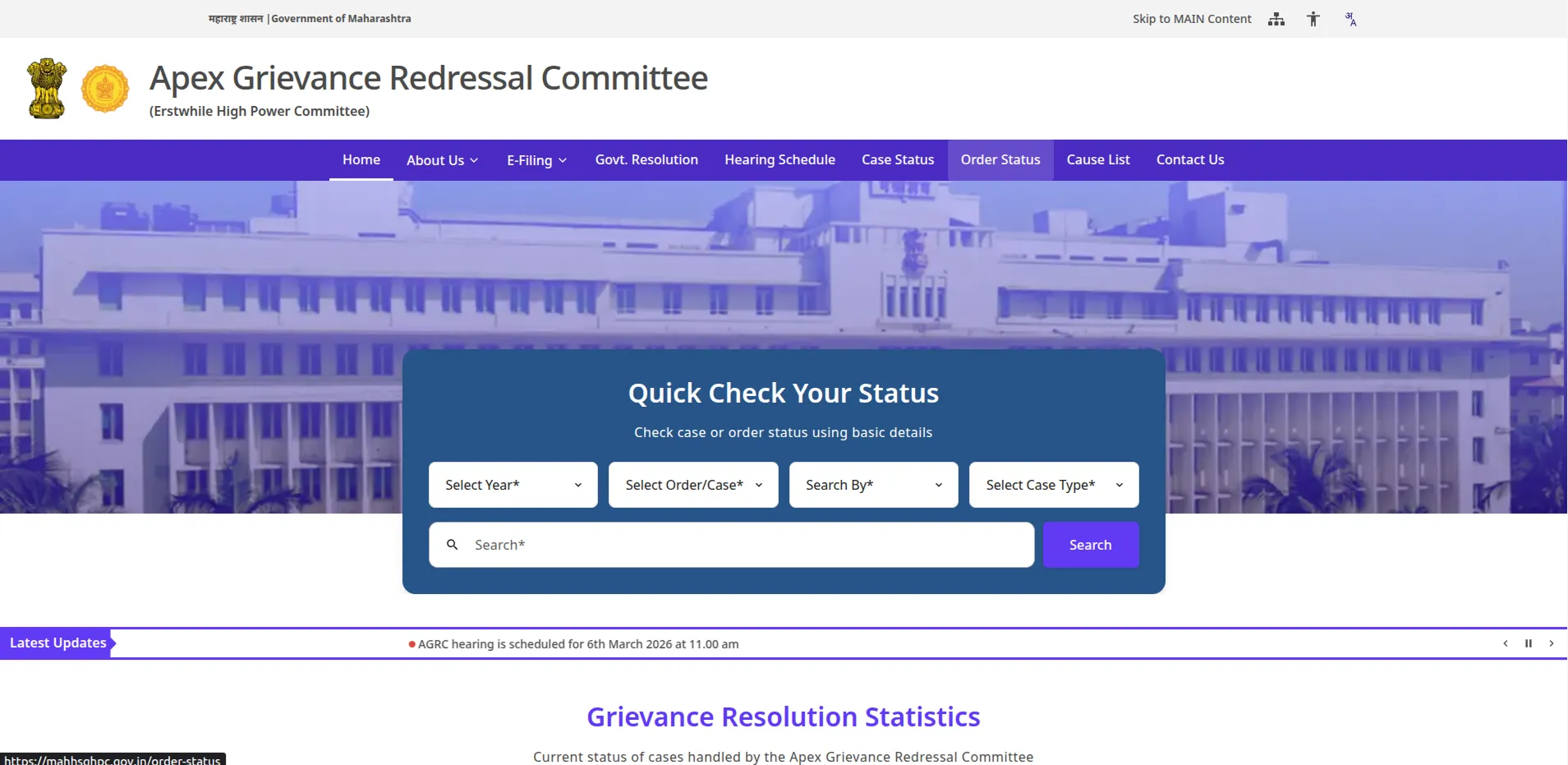
We developed a comprehensive web-based portal unifying both 2007-2017 and 2017-today grievance systems into a single, transparent, and user-friendly platform with enhanced e-filing capabilities.
Unified Grievance Dashboard:
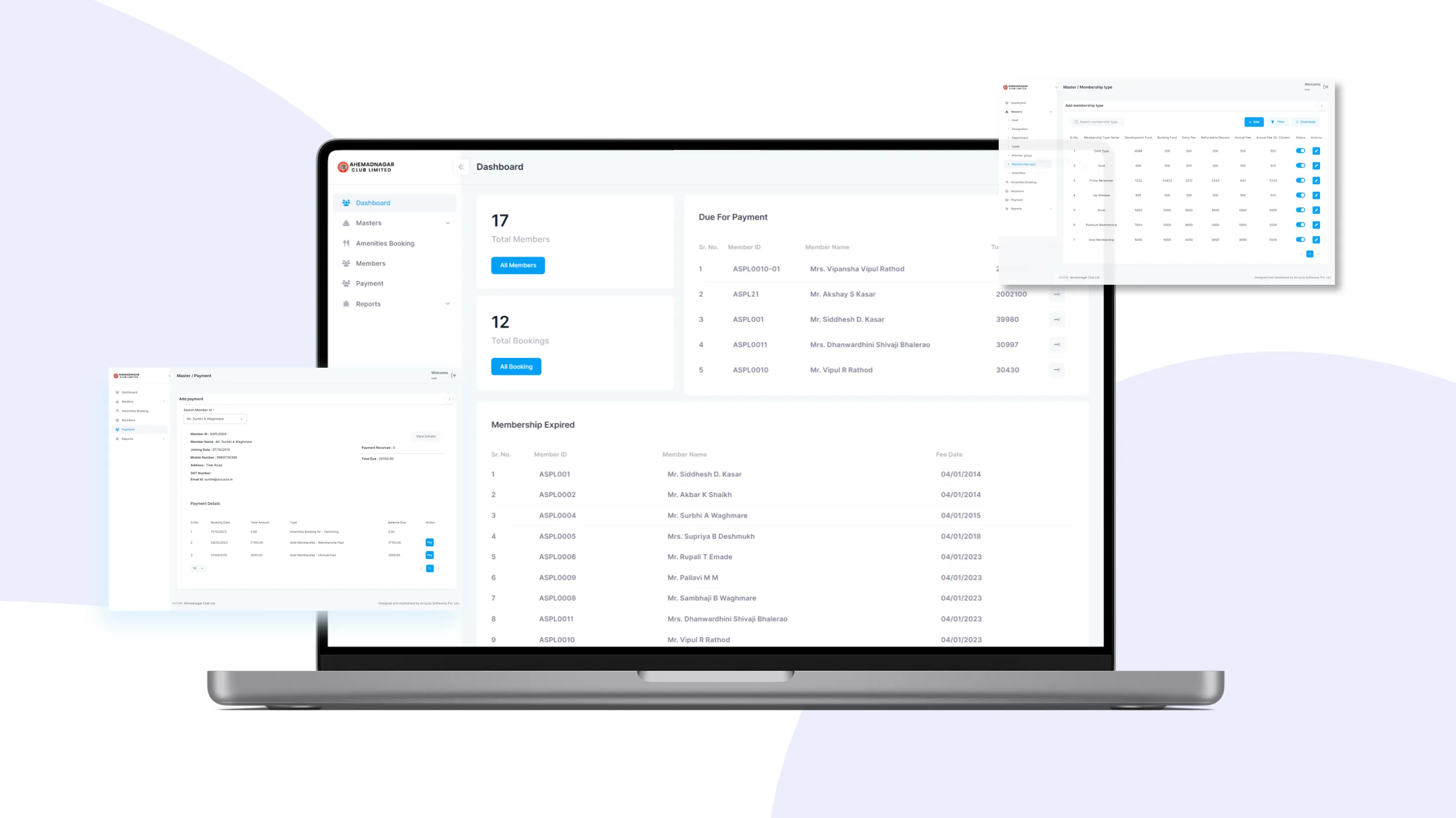
Single entry point for all grievances regardless of regulation period. Intelligent system detection of applicable framework based on grievance date. 2007-2017 grievances displayed with legacy workflow options. 2017-today grievances shown with updated procedures. Consistent user experience across both systems. Unified search across all historical grievances. Comprehensive statistics spanning entire dataset. Admin view distinguishing system types clearly.
Simplified E-Filing Process:
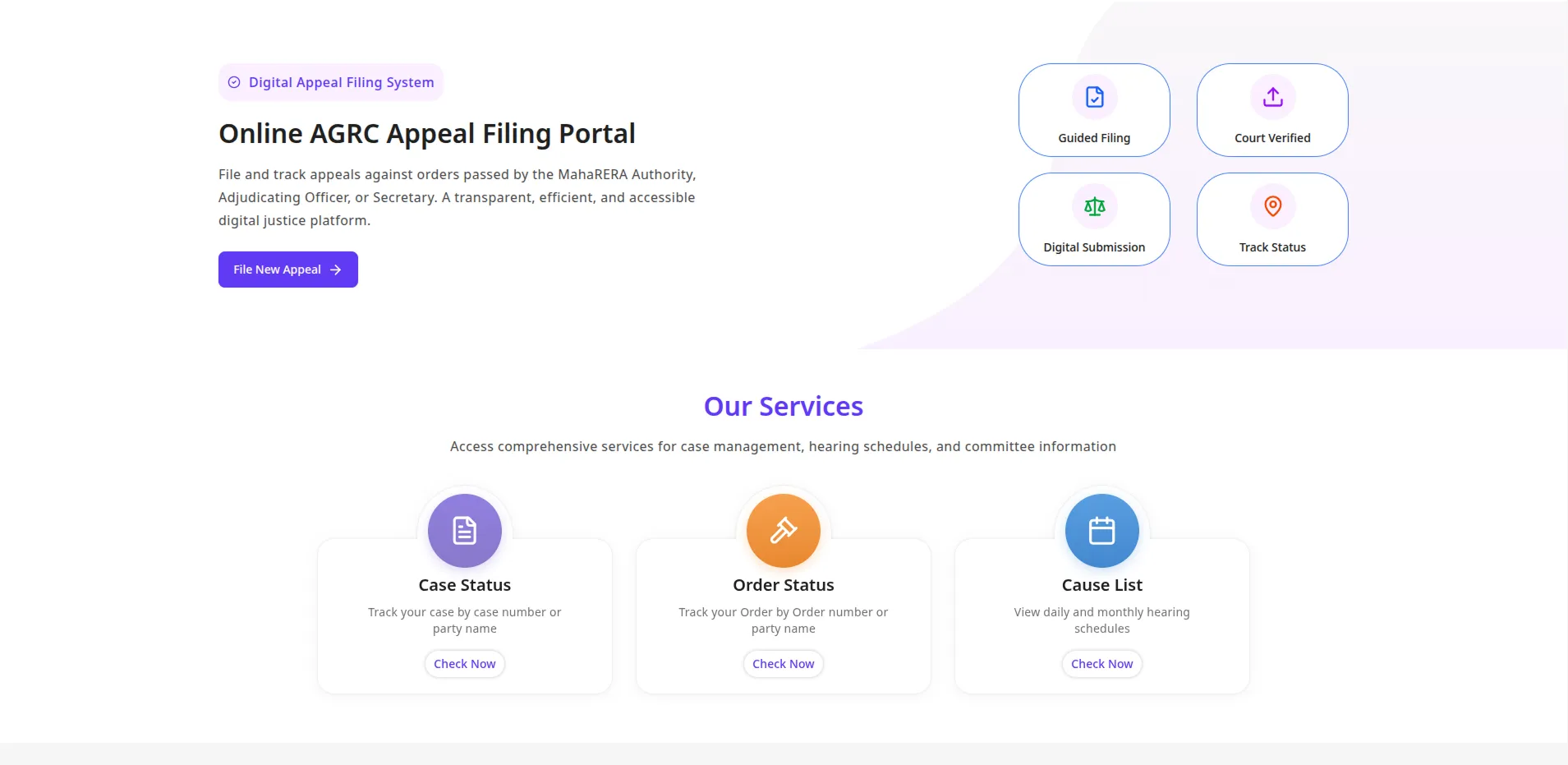
Streamlined online grievance submission in under 5 minutes. Smart form adapting questions based on grievance type. Auto-detection of 2007-2017 or 2017-today applicability. Guided step-by-step submission process. Document upload with drag-and-drop functionality. Multiple file formats supported (PDF, JPG, DOCX). File size validation with clear error messages. Save as draft feature for completing later. Mobile-responsive design working on all devices. Progress indicator showing submission stages. Form auto-save preventing data loss.
Smart Grievance Categorization:
Department-wise classification for routing. Sub-category identification for specialist assignment. Severity level tagging for priority handling. Geographic tagging for regional coordination. Keyword extraction for pattern analysis. Similar grievance detection preventing duplicates. Category-specific required document checklist. Auto-routing based on category rules.
Real-Time Status Tracking:
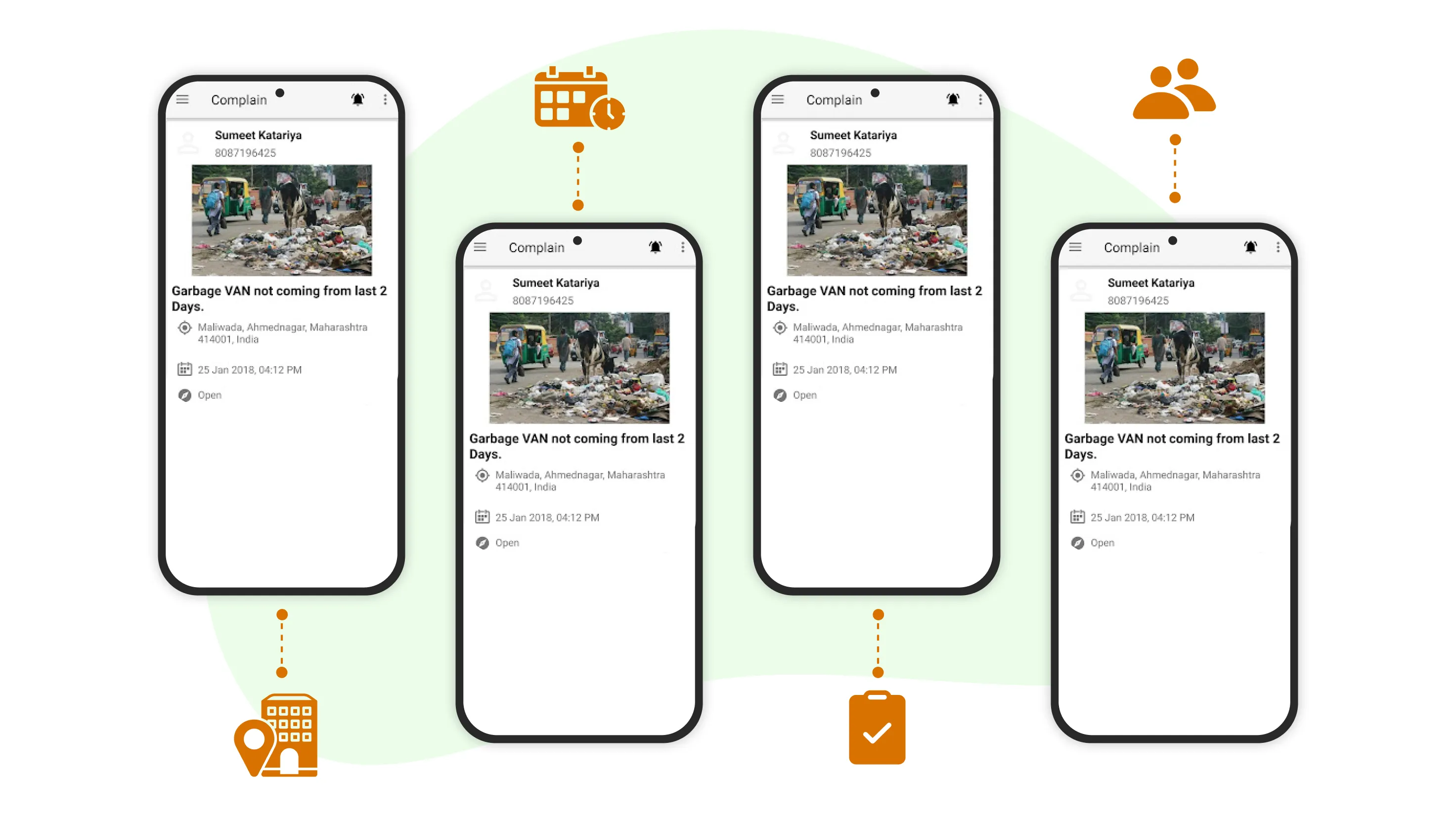
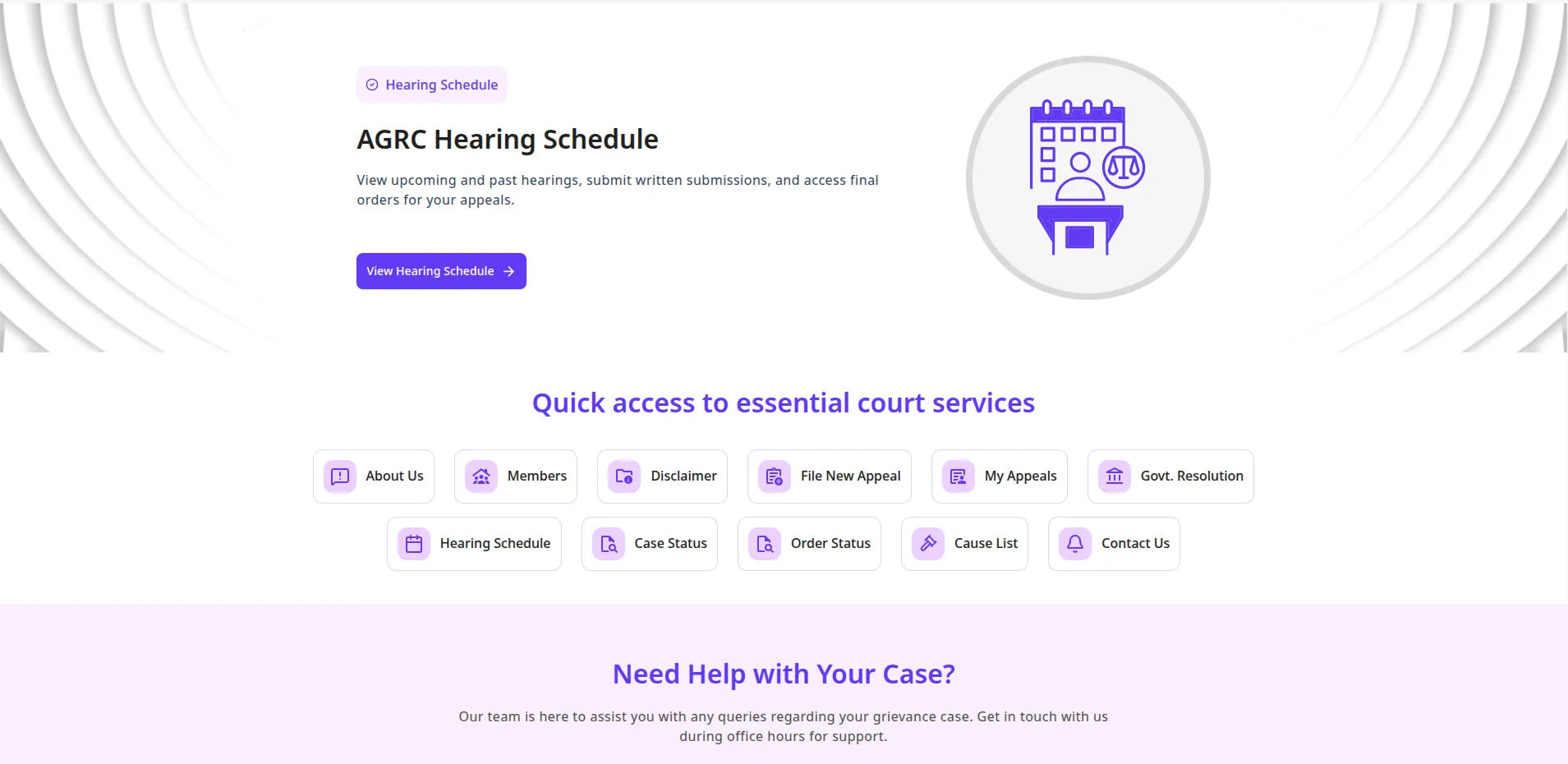
Live status updates at each processing stage. Clear status definitions - Submitted, Under Review, Assigned, In Progress, Resolved, Closed, Rejected. Timeline showing grievance journey. Current handling officer displayed with contact. Expected completion date based on category averages. Delay alerts if exceeding normal timeline. SMS/email notifications on status change. Complete audit trail of all actions.
Enhanced Transparency Mechanisms:
Public dashboard showing aggregate statistics. Department-wise resolution rates displayed. Average resolution time by category. Monthly grievance disposal numbers. Pending grievance count by department. Officer performance metrics accessible. Citizen satisfaction scores published. RTI-friendly data export options. Visual charts and graphs for easy understanding. Downloadable reports in multiple formats.
Historical Data Integration:
Seamless integration of 50,000+ legacy records. Pre-2017 data migrated and indexed. Full-text search across historical grievances. Research precedents from similar past cases. Trend analysis spanning decades. Pattern recognition for recurring issues. Historical officer assignment data preserved. Audit trail maintenance for legacy records. Data integrity validation post-migration.
User Account Management:
Citizen registration with mobile/email verification. Single sign-on for multiple grievances. Profile management saving repeated information. Grievance history grouped by account. Document repository for reuse across filings. Communication preferences management. Password-protected access control. Guest filing option for one-time users. Aadhaar-based authentication integration.
Document Management System:
Secure upload supporting multiple documents per grievance. Document type categorization - evidence, identity, supporting. Virus scanning on upload. Document preview in browser. Version control for resubmissions. OCR for searchable text within documents. Document retention based on regulations. Secure download for authorized users. Audit log of all document access.
Communication Hub:
In-app messaging between citizen and officer. Email notifications for all updates. SMS alerts for critical status changes. Query submission and response tracking. Clarification request handling. Document request from officer to citizen. Response deadline reminders. Complete communication history maintained.
Escalation Matrix:
Automatic escalation of delayed grievances. Time-based escalation rules per regulation. Officer hierarchy for escalation path. Escalation request initiation by citizen. Committee-level review for stuck cases. Escalation history tracking. Intervention alerts for committee members. Final appeal mechanism clearly defined.
Analytics and Reporting:
Real-time dashboards for administrators. Custom report builder with filters. Department performance comparison. Resolution time analysis by category. Citizen satisfaction trends. Grievance volume trends over time. Geographic heat maps of grievance density. Scheduled automated report delivery. Export to Excel, PDF, CSV formats. Print-ready report formats.
Admin and Officer Panels:
Role-based access control - admin, officer, committee member. Work queue showing assigned grievances. Bulk action capabilities for common tasks. Grievance reassignment workflow. Note-adding for internal communication. Document request generation. Resolution submission with document attachment. Closure approval workflow. Performance metrics by officer.
Mobile Accessibility:
Fully responsive design for smartphones and tablets. Touch-optimized interface. Mobile app for citizens on Android and iOS. Push notifications for status updates. Offline mode for viewing grievance details. Camera integration for document capture. Location-based department suggestion. Biometric login support.
Multi-Language Support:
Interface available in multiple languages. Regional language support for local citizens. Grievance submission in preferred language. Auto-translation for officers reading grievances. Language toggle accessible from any page. Localized date and number formats. Language-specific document templates.
Frontend Stack: React-based web application with component architecture. Material-UI for consistent design system. React Router for navigation. State management with Redux Toolkit. Form handling with React Form Hook. File upload with Dropzone integration. Chart.js for data visualization. Responsive design with CSS Grid and Flexbox. Progressive Web App capabilities.
Backend Infrastructure: Node.js with Express framework. RESTful API architecture. Microservices for modularity. Authentication with JWT tokens. Role-based access control middleware. Request validation and sanitization. API rate limiting and throttling. Cron jobs for scheduled tasks. Webhook handlers for external integrations.
Database Design: PostgreSQL as primary database. Optimized schema for grievance data. Full-text search capabilities. JSONB columns for flexible attributes. Database indexing for fast queries. Partitioning for historical data. Referential integrity enforcement. Automated backup and restore. Read replicas for reporting queries.
Legacy Data Migration: ETL pipeline for legacy database. Data validation and cleansing. Transformation logic for format conversion. Batch processing for 50,000+ records. Transaction integrity during migration. Rollback capability if needed. Post-migration verification scripts. Historical accuracy preservation.
Cloud Infrastructure: AWS hosting with high availability. EC2 instances for application servers. RDS for managed PostgreSQL. S3 for document storage. CloudFront CDN for static assets. Route53 for DNS management. Load balancing with ALB. Auto-scaling for traffic spikes. Multi-AZ deployment for redundancy.
Document Storage: Secure S3 buckets with encryption. Lifecycle policies for archival. CloudFront for fast document delivery. Thumbnail generation for previews. Virus scanning pipeline. Document metadata in database. Access-signed URLs for security. CDN caching for public documents.
Notification System: Email service integration with SendGrid. SMS gateway for text messages. Push notification service for mobile app. In-app notification system. Notification preferences per user. Template engine for message formatting. Delivery status tracking. Retry logic for failed notifications.
Search Engine: Elasticsearch integration for advanced search. Full-text search across grievances. Faceted search with filters. Auto-suggestion for search queries. Search result highlighting. Relevance ranking algorithm. Search analytics for insights.
Security Implementation: HTTPS/TLS for all communication. Password hashing with bcrypt. SQL injection prevention. XSS protection headers. CSRF tokens for forms. Regular security audits. Penetration testing. OWASP compliance. Data encryption at rest.
Audit and Compliance: Complete audit trail logging. User action tracking. Document access logs. System change history. Regulatory compliance reports. Data retention policies. Privacy compliance (GDPR-like). Right to erasure implementation. Data portability features.
Unified System Benefits:
E-Filing Transformation:
Transparency and Trust:
Operational Efficiency:
Cost Savings:
Regulatory Compliance First: Thorough understanding of both 2007-2017 and 2017-today regulations. Workflow designed to satisfy each framework’s requirements. Audit trail capturing all compliance needs. Documentation for audit purposes. Retention policies properly implemented. Data migration preserving legal validity.
Citizen-Centric Design: E-filing designed for ordinary citizens, not bureaucrats. Simple language avoiding legalese. Visual guides and tooltips. Progress indicators reducing anxiety. Helpful error messages guiding corrections. Mobile accessibility for masses. Multi-language for inclusivity.
Unified Experience Despite Dual Systems: Smart abstraction layer hiding complexity. Consistent user interface regardless of backend. Citizens unaware of underlying system differences. Staff trained on single interface. Unified search, reporting, analytics. Seamless transition at regulatory boundary.
Transparency Through Design: Public dashboard by default, not afterthought. Open data principles applied. Visualization making data understandable. Push notifications keeping citizens informed. Communication channels always open. Feedback loops built-in. Trust-building through openness.
Scalable Architecture: Microservices allowing independent scaling. Database partitioning for large datasets. CDN for global document delivery. Caching strategies for performance. Async processing for heavy operations. Queue systems for background jobs. Ready for future growth.
Historical Data Respect: Legacy data treated with care. Migration preserving original timestamps. Original document formats maintained where possible. Search across all data. Precedent research enabled. Historical trends visible. Past informs present decisions.
Dual System Integration: Understanding two different regulatory frameworks. Designing workflows for both without complexity. Data migration preserving legal validity. User training for unified approach. Search across disparate data structures. Reporting combining both systems. Solved with intelligent abstraction layer.
Legacy Data Migration: 50,000+ records in varied formats. Data quality issues in legacy system. Missing or incomplete records. Reference data changes over time. Migration without downtime. Validation post-migration. Handled with careful ETL design and validation.
User Adoption: Citizens comfortable with paper forms. Digital literacy varying across demographics. Trust in online systems initially low. Resistance from staff to change. Training needs across levels. Overcome with excellent UX, training, and support.
Performance at Scale: Fast search across 50,000+ records. Quick loading of document-heavy pages. Real-time updates with concurrent users. Report generation on large datasets. Mobile performance on slow networks. Addressed with proper indexing, caching, and optimization.
Security and Privacy: Sensitive citizen data protection. Document access control. Audit trail requirements. Compliance with regulations. Secure file storage. Implemented with defense-in-depth approach.
Browser and Device Compatibility: Supporting older browsers for government offices. Mobile devices with varying capabilities. Slow internet in rural areas. Offline functionality needed. Progressive enhancement strategy applied.
The AGRC portal demonstrates how unifying legacy systems with modern technology can dramatically improve transparency, efficiency, and citizen satisfaction in grievance redressal.
Our Grievance Management Solutions:
Unified grievance redressal portals, e-filing systems for complaints, real-time status tracking platforms, transparency dashboards for public, multi-regulation framework integration, historical data migration and unification, analytics and reporting tools, and mobile applications for citizens.
Organizations We Serve:
Government departments and agencies, public sector undertakings, municipal corporations, regulatory bodies, citizen service commissions, ombudsman offices, and any organization handling public grievances.
Let's discuss how a unified grievance management portal with e-filing and transparency features can transform citizen service delivery at your organization.
Grievance redressal is the cornerstone of responsive governance. When citizens can easily file grievances, track progress, and see resolutions, trust in public institutions strengthens. The transformation from fragmented, opaque systems to unified, transparent platforms isn’t just about technology - it’s about respecting citizens’ concerns and demonstrating accountability.
The AGRC portal proves that legacy systems and modern regulations can coexist beautifully through intelligent design. By unifying 2007-2017 and 2017-today frameworks on a single platform, we eliminated confusion while enhancing transparency. Citizens now experience a simple, respectful process that treats their concerns with the seriousness they deserve.
E-filing, real-time tracking, and public dashboards aren’t luxuries - they’re expectations of modern citizens. Government organizations that embrace these technologies see improved satisfaction, reduced workload, and restored trust. The future of grievance redressal is unified, transparent, and accessible to all.
Explore more of our work