Learning, Teamwork, and AI: My Journey as a Software Tester
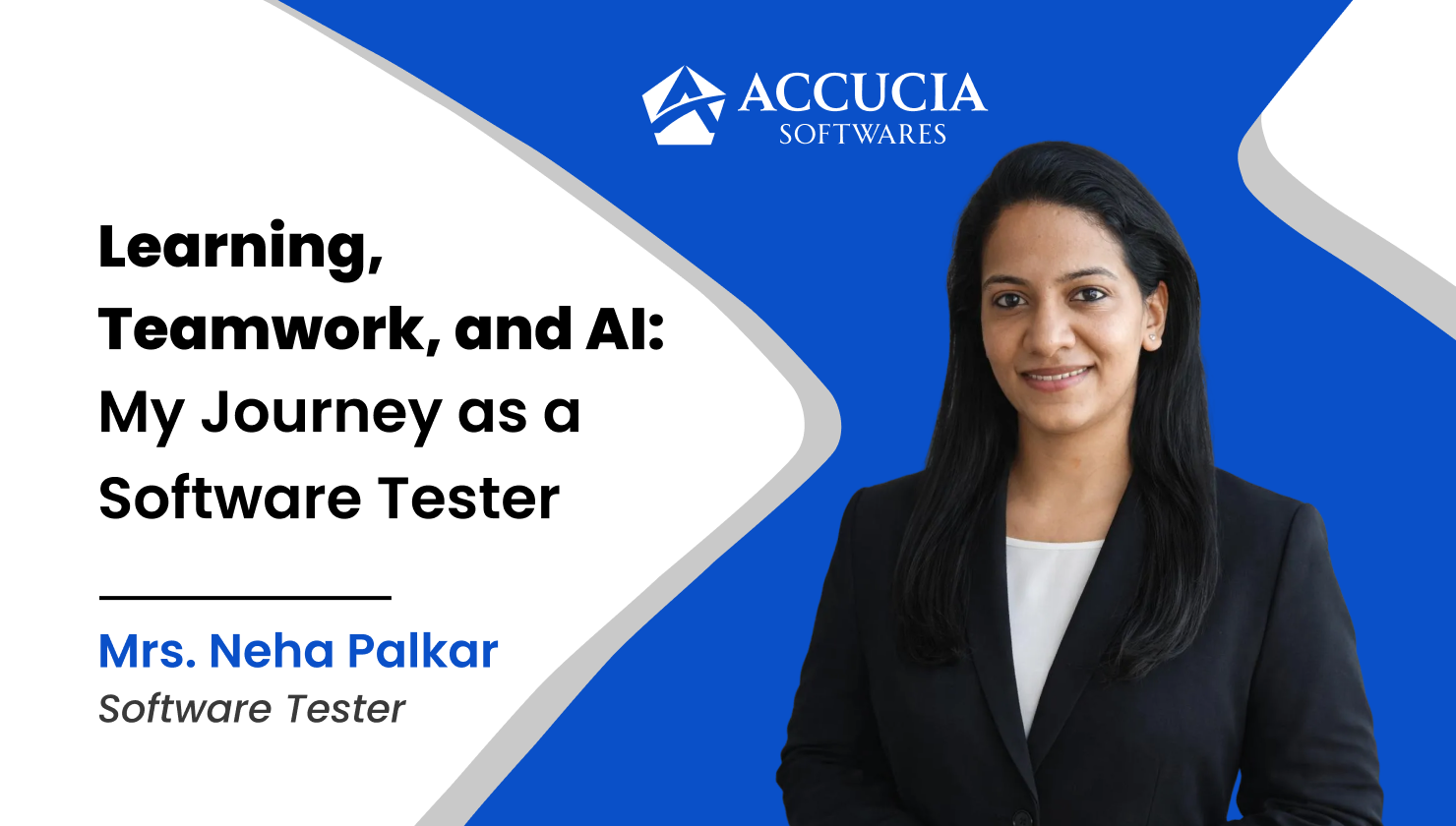
Neha Palkar
Software Tester
When I began my journey in software testing, I joined the organization as a Software Trainee—curious, eager to learn, and ready to take on every opportunity that came my way. What started as a learning phase gradually evolved into a journey defined by confidence, ownership, and real-world impact.
Over time, I realized that software testing goes far beyond validating features or identifying defects. It is about understanding systems end-to-end, enabling teams to move forward with confidence, and ensuring quality delivery within real business constraints. This perspective has fundamentally shaped how I approach my work today.
Real-World Learning Through the Roswalt Realty Project
Currently, I am working on the Roswalt Realty project, and it has been a deeply enriching experience. This project demonstrated how structured collaboration, clear ownership, and strong support systems directly influence successful outcomes.
With a shared vision and aligned responsibilities, our team was able to deliver a high-quality product within defined timelines. The experience reinforced a key lesson for me: when communication is clear and teams are aligned, even complex requirements become manageable and execution becomes smoother.
Understanding the True Role of Testing
One of the most valuable learnings in my journey has been understanding how testing truly functions in real-world projects. Testing is never an isolated activity—it is closely intertwined with development, business logic, and delivery timelines.
Effective testing enables teams to:
- Move faster with confidence
- Reduce rework and last-minute surprises
- Deliver stable, reliable, and scalable products
For me, testing has evolved into a role focused on enabling success, not just identifying problems.
AI in Testing: Empowerment, Not Replacement
A key factor that elevated our delivery was the adoption of AI in testing workflows. By applying AI-driven approaches thoughtfully, we improved efficiency without compromising quality.
This experience strengthened my belief that AI is not here to replace software testers. Instead, it empowers us—automating repetitive tasks, improving accuracy, and freeing up time for critical thinking, exploratory testing, and risk analysis.
Just as AI supports sales teams in CRMs by ensuring no opportunity is missed, AI supports testers by ensuring no critical scenario is overlooked, even in fast-changing systems.
Growing Through Diverse Projects
Within a year, I’ve had the opportunity to contribute to multiple impactful projects, including:
- ElevatorPlus
- SRA
- Roswalt Realty
Each project introduced new challenges, workflows, and system complexities. Every challenge pushed me to grow—both technically and professionally—and strengthened my confidence in handling production-grade applications with clarity and accountability.
A Supportive Environment Makes the Difference
What truly elevates this journey is the environment I work in. The organization has provided a strong platform to learn, experiment, and contribute meaningfully. Guidance from seniors, openness to ideas, and a positive team culture have consistently motivated me to improve and take ownership.
Such an environment, especially early in one’s career, plays a critical role in building confidence and encouraging continuous growth.
Staying Future-Ready with AI-Driven Tools
To stay aligned with evolving technology, I have actively started upskilling in AI-driven testing tools. I am currently practicing Playwright with MCP, focusing on improving:
- Test efficiency
- Regression stability
- Feedback speed
- Overall delivery confidence
My goal is to implement these tools in real projects to enhance test quality, scalability, and delivery speed in a sustainable way.
Closing Reflection
This journey—from starting out as a software trainee to confidently handling real-world, production-level projects—has fundamentally shaped how I view software testing.
I’ve learned that true impact doesn’t come from tools alone, nor from effort in isolation. It comes from using AI-driven testing tools with intent, building strong fundamentals, and collaborating closely with the team. When applied thoughtfully, AI reduces repetitive effort, improves visibility, and allows testers to focus on what truly matters—quality, risk, and user trust.
- AI has shown me that testing is evolving from execution to intelligent quality engineering. It empowers testers to move faster, make better decisions, and support teams more effectively—without ever replacing the human judgment that quality depends on.
When continuous learning, teamwork, and AI-enabled tools come together, delivery becomes more reliable, scalable, and future-ready.
That belief now guides how I approach testing, growth, and every project I take on.
Connect with us to grow together.